Categories
Art and Photographic History German Matters Literature

European Cultural History and personal interactions!

Arte produces cultural programmes in English, French and German. The following programme which is in relatively easy German is well illustrated with drawings, original photographs and film clips and centres around Paris in the 1930s.

It is the period leading up to the Second World War and is particularly interesting on the splits between the Surrealists and the Communists leading up to the fight against Fascism particularly in the Spanish Civil War. It is also good on the developments in different forms of photography and the relationships of key figures like Louis Arragon, Max Jacob, the writer Andre Gide, Miro and of course, Picasso. The programme is worth watching for Picasso’s preliminary sketches of Guernica alone.

From the Arte Website we read that:-

Im Juni 1936 reist André Gide nach Moskau, wo er mit großem Pomp empfangen wird. Angesichts der sowjetischen Realität ist ihm der Prunk eher unangenehm. Kurz nachdem er nach Paris zurückgekehrt ist, trifft er sich mit André Malraux, der gerade aus Spanien eingetroffen ist, das sich im Bürgerkrieg befindet. Malraux hat die Fliegerstaffel „España“ aufgebaut und kämpft auf der Seite der Republikaner gegen Franco. Gide möchte den Reisebericht „Retour de l’U.R.S.S.“ veröffentlichen, der hart mit Moskau ins Gericht geht, doch seine Freunde und Malraux halten den Zeitpunkt für ungünstig. Der Aufstieg des Faschismus erfordere es, die UdSSR als einziges Bollwerk gegen den Nationalsozialismus zu unterstützen. Das Buch erscheint dennoch. Die Sowjets sind außer sich, die Deutschen jubeln.

Ab Mod Kunst

This may be found with more detail at http://ankeengelke.de/event/die-abenteurer-der-modernen-kunst-56 and the whole series is available on 2 DVDs at http://www.amazon.de/Die-Abenteurer-Modernen-Kunst-DVDs/dp/3848840464

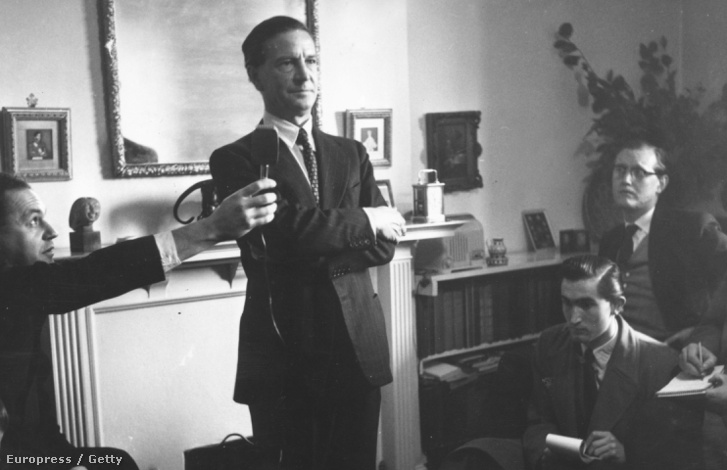
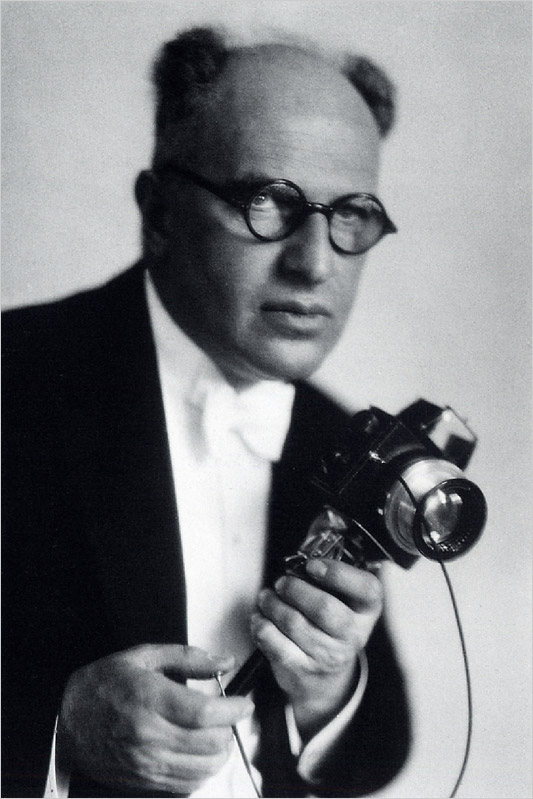
Two interesting figures from this period were Andre Malraux and Louis Aragon. Malraux himself was an Art Historian and significantly helped to build part of the Spanish Republican Air Force- and author of La Condition humaine (Man’s Fate) and himself the subject of biographies by Olivier Todd and also Harold Bloom. He was always close to De Gaulle and became a Minister of Culture from 1958-1969. There is an interesting review of Todd’s book at http://www.nytimes.com/2001/05/31/style/31iht-malraux_ed3_.html (Photograph below)


Here is a poem by Louis Aragon; it is in French and English translation-


Malraux

Categories
Art and Photographic History Penwith Uncategorized

The pleasures of Pinterest- art education for the digital age

Cig

There is a simple and naive pleasure in collecting things as any fule doth know! When I was knee-high to a grasshopper, so to speak, I can dimly recall swopping cigarette cards with sepia images. Well perhaps not sepia. However, I seem to remember that fantastic summer when Laker and Lock, not to mention Colin Cowdrey and Peter May played wonderful Cricket against the West Indies and recall collecting cigarette cards with their heroic images of those players. Another series of cards carried the proud images of Her Majesty’s ships. Several of these I first saw as the Fleet assembled in Mount’s Bay in 1952. Such cards were sometimes ranked with stars; battleships carrying the full 5 stars and light cruisers maybe 3. Innocent of both imperialism and the devastation of weaponry we carried collections that were stuffed into our school blazer pockets.
Just a few years before, the great collections of European intellectuals such as Walter Benjamin and Stefan Zweig were being impounded by the fascists in Germany, Italy and Austria. Zweig had written a moving story over a collector who became blind as his family were forced to deceive driven by the dire necessity for bread. His valuable etchings in his “Sammlung” (collection- but also interestingly composure) had been replaced by plane paper, which he takes lovingly and unknowingly from his folder, and extols from memory the detailed wonder of each image. Whatever the pleasures of making collections, and John Fowles has reminded us of the darker side of that psychology, it seems on the whole a masculine foible. I am sure that feminists would correctly point out, that indeed it was the men that had the money to pursue their interests. It seems that in their great salons clever women as varied as Rahel Varnhagen and Lady Ottoline Morrell collected persons, rather than things, to cultivate the exchange of ideas. How far such aspirations are from today’s hurried pinning of electronic images onto simulated pin boards!

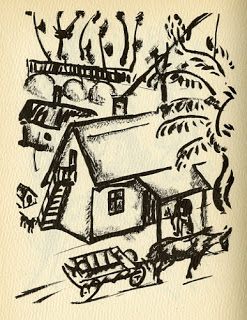
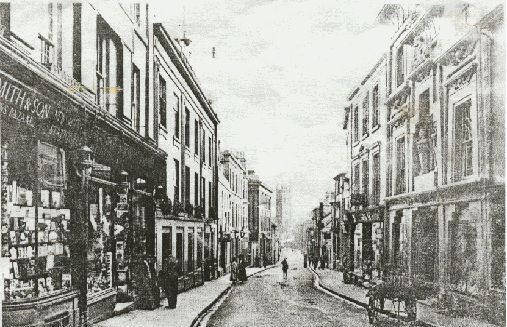
Anton Pieck (1895-1987) was a Dutch painter and graphic artist

However, being now just short of 250 followers myself on Pinterest, have I using the network, acquired any useful knowledge of paintings and photography? Might it serve as a useful vehicle for learning, even though the collections of great museums are now shrunk to images which are just the size of an i-phone screen? There are at least three ways, which I might justify to myself, the huge amount of time building my own portfolio that collection has taken.

Firstly, it has enabled me to discover significant new artists. Looking under my own heading of “Works for further consideration”, I find the delightful sketch of a city street by Anton Pieck. The person who originally pinned this usefully informs me that Pieck was well known for the nostalgic and fairytale quality of his work which included sculpture and graphic art. He was Dutch and lived from 1895 until 1957. The image which I have pinned vaguely reminds me of the street in Truro which runs beside the city’s relatively recent Benson cathedral. Next to this, in the random manner of my collection, I have pinned the wanly evocative sculpture of a young girl with a suitcase by Berit Hildre, a French sculptor who I now go on to discover has a delightful and tender portrayal of her work on You Tube. Then too there are the delightful colours of the work of Hope Gangloff and I notice that I have pinned several of her pictures; their bohemian portraits being thoroughly engaging. The person who first mounted the work on Pinterest has usefully added the comment,”Stumbled into this exhibit in Chelsea the other day. I have never seen her work in person. Quite enjoyed the pattern overload! Hope Gangloff at Susan Inglett Gallery”.

by Berit Hildre
by Berit Hildre

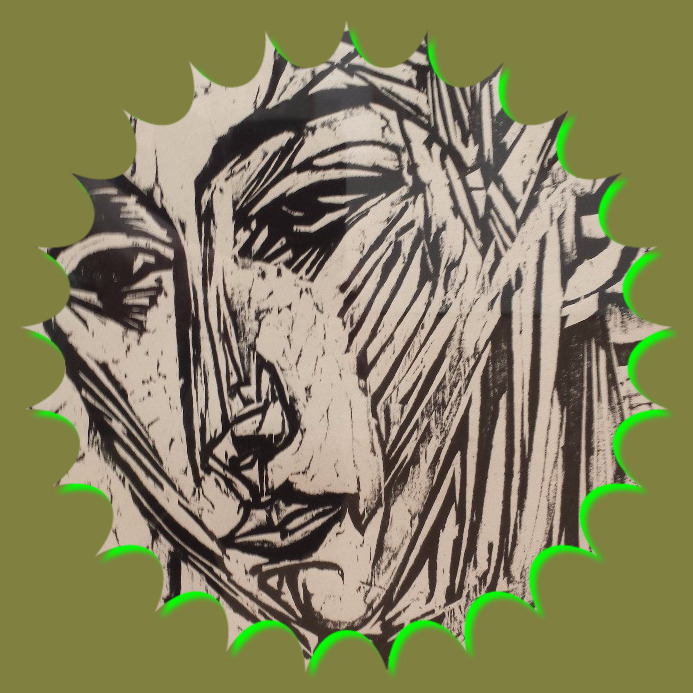
In addition to aiding the discovery of new artists, I also find some of my so-called pins are a stimulus to my own attempts at sketching. For instance, I enjoy the work of the Neue Sachlicheit, particularly Christian Schad. This interest led to my discovery of the print work of the Dresden painter, Conrad Felixmuller. I have done a little printing in the recent past and the lyrical lines of Felixmuller’s 1927 Woodcut portrait of Christian Rohlfs prompted me to making a copy in red biro and red ink. Because the images are so easily available and to some extent a prompt to experiment, Pinterest is a useful encouragement, at least to someone rather lazy like myself, to get sketching. I find that drawing, for someone like myself who spends a fair amount of time with reading and language, is a delightful change.

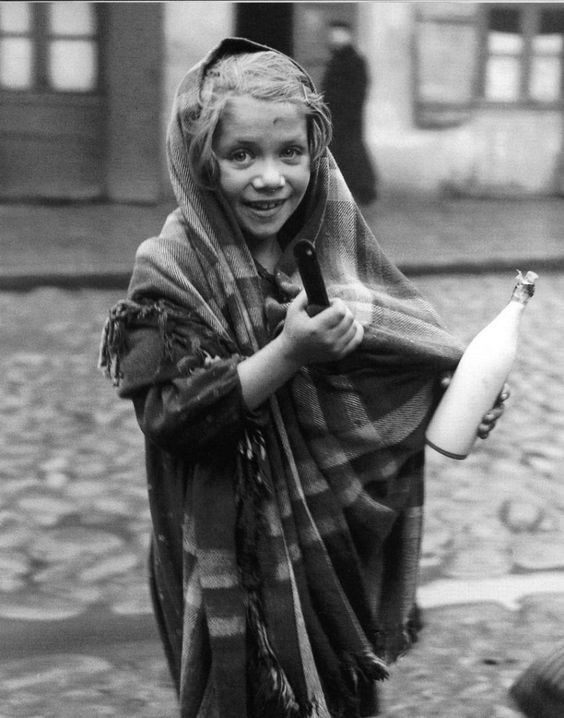
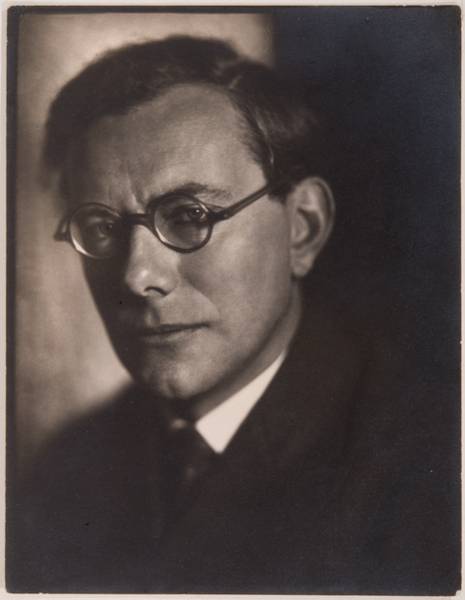
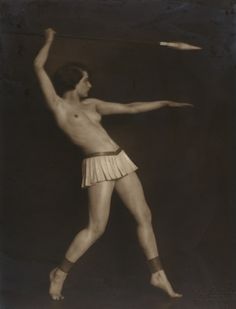
Stimulated by a course of lectures by a friend and cultural historian, Robin Lenman, I have taken a deeper interest in photographic history. Pinterest photographs provide a useful resource for those who are interested in the stage and screen, entertainment and political change throughout the upheavals of the twentieth century. Black and white photographs too have their own appeal. Here, I already knew of the work of Roman Vishniac of the vanished world of the Stehtl but was fascinated to find photographs of many individual artists, composers and indeed scientists. It can be seen that Man Ray and Tzara’s work influenced photography as well as art. Film stars evidently influence how bathing beauties are portrayed. It is curious but perhaps not surprising to notice how similar the photographs of Egon Schiele and Paul Klee themselves actually resemble some of their portrait work.

by Hope Gangloff
by Hope Gangloff

Can Pinterest be of any use in education? I am not entirely sure. The wealth of imagery might well be useful to many designers. It may also form an entry point for younger students who are reluctant or unable to visit galleries, especially if these are expensive or in foreign cities. Certainly, some galleries might make better use of this technology. However, the lack of detail and face-to face discussion of paintings and their techniques provided by “pinning” limit its use. As Pinterest is so very easy to use however, it provides a mechanism which encourages the exchange of images by say Rembrandt, and if it then prompts users to see the original, then certainly it has got to be understood as a very useful tool.

“Hope Gangloff, born in Amityville New York in 1974, is known for creating vibrant and truthful portraits of his friends as a way to share his vision of modern American life. The theme often captures a generation in the process of change, a certain type of youth affected by the crisis economy and the obsession for material goods. His portraits, highly detailed, show the mood of a moment in his characters. Its very different colors go from very pale tones to others almost supersaturated. Sometimes his work reminds Maurice Denis and others, by their way of drawing, their representation sometimes sexual reminiscent of Egon Schiele” (Source Inesvigo on Youtube)

Categories
Art and Photographic History

Marie Bronislava Vorobieff-Stebelska and Dimensionalism

Marie Bronislava Vorobieff-Stebelska1I have only just discovered the work of this interesting Russian woman artist by means of an on-line video. Her work is discussed on another blog at http://lyghtmylife.tumblr.com/post/21243308522/catonhottinroof-marie-vorobieff-marewna-marie. Several of her works have the classical vivacity of the pointillist technique and the influence upon her painting of Diego Garcia, her lover in Paris, and just as possibly her upon him is recognisable too. Her pictures also remind me of that of Tamara de Lempicka as well as those of Zinadia Serebriakova-mentioned in an earlier posting on this blog. Possibly her most well known work is the portrait of Chagall completed in 1956. She was herself painted by Amedeo Modigliani in 1919.Marie Bronislava Vorobieff-Stebelska2

A brief biography is available at http://www.marevna.co.uk/Biography.html

Categories
Art and Photographic History German Matters Literature West Cornwall (and local history)

The Woman in Gold

I watched and thoroughly enjoyed but was also saddened by this brilliant film viewed as a DVD last night. I visited Vienna in October last year including the Belvedere. The first posters I saw going down into the U-bahn in Munich. Although the places and the actors too were sort of familiar as was the historical context, for instance from reading Eva Menase http://www.goethe.de/ins/au/lp/prj/bkm/rev/aut/men/enindex.htm and George Klaar http://www.independent.co.uk/news/obituaries/george-clare-memoirist-who-recalled-life-in-nazi-vienna-and-postwar-berlin-1726060.html

20141009_104321

The Jewish life in Vienna was so evocatively and poignantly rendered that it brought tears to my eyes. The music was interesting too for obvious reasons and the director’s commentary equally moving. Hence it was particularly interesting to discover in the Penwith Gallery to discover the work of Albert Reuss, who not only was in Vienna at this time but ended his life in Truro having lived in Mousehole nearby. Further info at http://www.artistsandart.org/2010/01/albert-reuss-1889-1976-austrian-artist.html

http://www.bbc.co.uk/arts/yourpaintings/artists/albert-reuss

Wig3

The film is also useful for people learning German as the Untertitel in English are so klein!!!

(This article also provides an opportunity to refer to my friend, Susan Soyinka on her family and researches at https://susansoyinka.wordpress.com/)

(c) Newlyn Art Gallery; Supplied by The Public Catalogue Foundation
Categories
Art and Photographic History Art Exhibition Reviews German Matters

The Berlin Art Fair 2015 (15th-20th September)

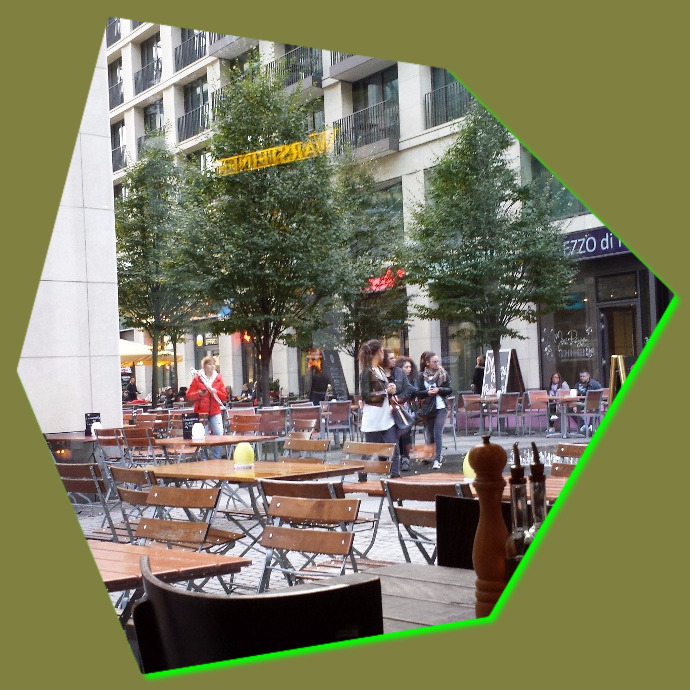
KLEISTER-Görlitzer-Straße-2014Berlin Art Fair actually lasts, not a week, but just five days. It is an event which stretches across the whole of central Berlin with for instance, more than 40 openings on just one evening. It comprises several separate art fairs; the ABC fair itself contains works from a hundred separate galleries and from 17 different countries. Another complete section is the POSITIONS fair and is a similarly large event spread across several large halls. Little wonder therefore that the brochure introduction by Christiane Meixner says, “Kunst kann schoen anstrengend sein”-art can certainly become stressful and hard on the feet too, as there is such a wide variety of art on display, and such a large quantity to see. There are, after all some 400 galleries in Berlin.

The significant fact that emerges from these crowded halls with a welter of visual display units and ingenious installations is the priority given to current social and political events. Much of the art on display concerned the ecology, relationship issues, gender identity, media simulacra but significantly as the refugees were streaming into Bavaria there were sketchess that addressed to designing buildings of safety for immigrants. As I write this review today, I have just heard too that the Berlinische Gallery will be making entry free to those escaping from strife in Africa and the Middle East.PG2

Perhaps, the artist who has attracted the most attention was Cindy Sherman. Her show displayed more than 60 photographs from every stage of the renowned American artist’s lengthy career. Sherman played both subject and artist by turns, displaying herself as a magazine centrefold, film starlet, or unhappy housewife, uncannily mimicking cultural stereotypes. She also experiments in exciting ways with the tropes of art history within her conceptual portraiture. Famed for the quiet horror of some of her images, these were works throughout her career which have been collected by the octogenarian Berlin collector, Thomas Olbricht. The works shown included the remarkable black and white “untitled film stills”.

PG3U.S. artist Paul McCarthy exhibited at the Schinkel Pavillon, a magical venue designed by the Bauhaus architect, Richard Paulick, once an official city guest house of the GDR. McCarthy worked with his son Damon for the Volksbühne, a program of walk-in installation, film, performance, music and painting, “Rebel Dabble Babble Berlin”(described as a meditation on architypes and oedipal tensions within family dynamics) accompanied by concerts, performances and discussions on Viennese Actionism, it was curated by Theo Altenberg under the motto “existence Palace”. In the Schinkel Pavillon, Paul McCarthy’s work dealt with the human body and its transitions; going to sleep, life and death, presence and illusion.

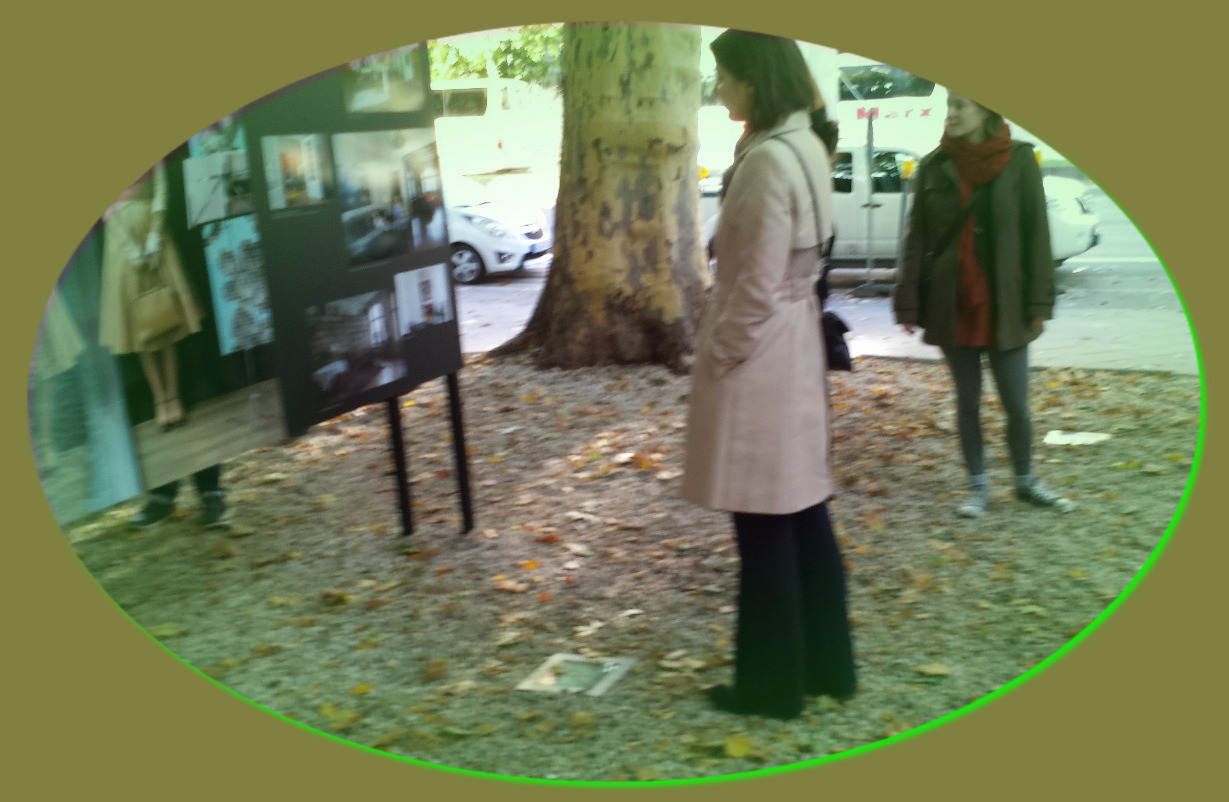
Many Berlin collectors grant the general public access to their spectacular collections, known as “Sammlungen”, during Berlin Art Week. Once the interest of famous critics and writers like Walter Benjamin and Stefan Zweig, this tradition is continued by wealthy software developers and Parisian architects. They all experience pleasure (Zeigefreude) in showing their magnificent assemblies. Naturally, their interests vary from concept art to retro-charm. The venues are equally spectacular from the brick dominated Backsteinarchitektur of what was once a margarine factory, with magnificent views over the Spree, to the claustrophobic walls of a former East German bunker now covered with works by Ai Weiwei (http://www.telegraph.co.uk/art/artists/inside-ai-weiweis-berlin-bunker/) and Alicja Kwade.( http://www.artberlin.de/kuenstler/alicja-kwade/)

The prospective joys of East Berlin

One of the encouraging developments during the Berlin Art Week was the emphasis placed upon independent and non-conformist work. There are many happenings taking place throughout the week and some of these may be referenced on You-tube. When I left Berlin, after a two week stay, I had to pay something like an extra 50 Euros in city-tax. I feel a little better about this now having discovered that one of its uses is to support a diverse network of Free Berlin Project Spaces. Since 2009 there have been something like 200 spaces around the city which retain the oddness and originality of an era when William Reich was being read in communes. Two are worthy of special mention. A park wall in Görlitzer Strasse in Kreuzberg has designed an outside project called “Kleister” or wallpaper paste. A group of photographers have stuck posters of their pictures on a park wall. The result will be marked soon by sun, rain, graffiti and theft! Another exhibition of interest because of its connection between places and images was the work of Stefan Schneider at Kurt-Kurt in the district of Moabit. One of images taken of old wooden boats on the beach at Dungeness has a particular lyrical charm.

Stefan Schneider at Kurt-Kurt

The whole art week is a tribute to the importance given to art in the capital city. The Art Week largely runs outside the exhibitions in the main galleries. However, the exhibition at the delightful Berlinische Galerie called “Radikal Modern” shows the incredible redevelopments of buildings and planning in general since 1960. The recovery of this city from the years of Nazi terror, bombing and Cold War division by The Wall is a tribute to the courage and imagination of its inhabitants that have recovered and built a new life from out of the rubble of the past. (http:/berlinischegalerie.de/ausstellungen-berlin/aktuell/radikal-modern/

From Radikal Modern at the Berlinische Galarie

)


Categories
Art and Photographic History German Matters Poetry

Kopfkino from Shakespeare

Weary with toil, I haste me to my bed,
The dear repose for limbs with travel tired;
But then begins a journey in my head,
To work my mind, when body’s work’s expired:
For then my thoughts (from far where I abide)
Intend a zealous pilgrimage to thee,
And keep my drooping eyelids open wide,
Looking on darkness which the blind do see:
Save that my soul’s imaginary sight
Presents thy shadow to my sightless view,
Which, like a jewel hung in ghastly night,
Makes black night beauteous and her old face new.
Lo, thus, by day my limbs, by night my mind,
For thee, and for myself, no quiet find.

From Max Radler, Radio Listener, 1930

One translation of which into German is:-

Sonett 27

Von Müh’n erschöpft such’ ich mein Lager auf,
Die holde Ruhstatt reisemüder Glieder,
Doch dann beginnt in meinem Kopf ein Lauf,
Wach wird der Geist, sinkt schwach der Leib danieder.

Denn sehnsuchtsvoll sucht mein Gedanke Dich
Aus weiter Fern’ auf frommer Pilgerfahrt.
Die müden Augenlider öffnen sich
Und sehn nur, was der Blinde auch gewahrt.

Nur daß der Seele einbildsame Macht
Dem innern Auge Deinen Schatten beut,
Der wie ein strahlendes Juwel die Nacht
Verschönert und ihr alt Gesicht erneut:

So daß um Deinethalb am Tag die Ruh
Die Glieder flieht und Nachts den Geist dazu.

Übersetzt von Friedrich Bodenstedt (1866)

Kopfkino

and from another source http://gutenberg.spiegel.de/buch/sonette-2186/27 we have:-

Erschöpft werf’ ich mich auf mein Lager nieder
Zur Rast, die wohl nach langer Reise tut,
Doch dann beginnt in meinem Haupte wieder
Die Wanderschaft, ob auch der Körper ruht.
Zu dir gehn die Gedanken dann zurück
Von hinnen auf der Sehnsucht Pilgerfahrt,
Sie halten offen meinen müden Blick,
Der, wie der Blinde, Dunkel rings gewahrt;
Nur daß der Blick der traumbeschwingten Seele
Dein Bild vor meines Geistes Auge stellt,
Das in dem Graun gleich flammendem Juwele
Die Nacht verschönt und jugendfroh erhellt.
So wird um dich und mich, vom Schlaf gemieden,
Am Tag dem Leib, der Seele nachts kein Frieden.

For more information on the fascinating Max Radler go to https://prezi.com/w5qlyzsd6z7y/max-radler-radio-listener-1930/


)

Categories
Art and Photographic History Art Exhibition Reviews Penwith West Cornwall (and local history)

Kitchen sink dramas from Los Angeles -Robert Therrien at The Exchange

(No Title) Pots and Pans II 2010

Robert Therrien’s work is being displayed at the Exchange Gallery, Penzance until 26th September 2015. Working in Los Angeles, this 68 year old artist is displaying his work in collaboration with ARTIST ROOMS, an organisation which is a venture  of both the Tate and the National Galleries of Scotland of con temporary art, which is international, that is on tour currently.

(No Title) Oil Can 2004 and (No Title) Stacked Plates 2010
A selection from Srubbrush Bird Book

ARTIST ROOMS is travelling with this exhibition and showing at 17 museums and galleries  across the U.K. An artist’s biography can be found at http://www.tate.org.uk/art/artists/robert-therrien-2312 and details about ARTIST ROOMS and this artist is at http://www.artistrooms.org/roberttherrien with a short explanatory video clip.

Further images may be seen at http://artnet.com/artists/robert-therrien/

(No Title) Large Red Brick Drawing 2003
Categories
Art and Photographic History German Matters

Sehnsucht nach Wien und Egon Schiele

Nearly 125 years from the birth of Egon Schiele whose work I was recently perusing when I came across this evocative and soulful painting of a captured Russian Officer. The expression and demeanour clearly express his sense of resignation and the general apathy induced by the futility of war. In Vienna 1916 there were clearly many Russian prisoners and they appear to have been painted with the same compassion. The drawing of the girl also seems to convey this a similar human quality.ES2

Russian prisoner of war 1916

ES3ES5

Categories
Art and Photographic History Art Exhibition Reviews Penwith St Ives West Cornwall (and local history)

Jessica Cooper (RWA) Interviewed

Jessica’s own website is at http://www.jessicacooper.co.uk/JC


JC1Further information on Jessica and her work may be seen at http://www.edgarmodern.com/Artist-Info.cfm?ArtistsID=188&Collection=&info=CV&ppage=6

JC2

Categories
Art and Photographic History German Matters Literature Poetry

Ein Frühlingsgedicht, geschrieben Im kältesten Februar- Joachim Ringelnatz

ringelnatz1Die Bäume im Ofen lodern.

Die Vögel locken am Grill.

Die Sonnenschirme vermodern.

Im übrigen ist es still.


Es stecken die Spargel aus Dosen

Die zarten Köpfchen hervor.

Bunt ranken sich köstliche Rosen

In Faschingsgirlanden empor.

Ein Etwas, wie Glockenklingen,

Den Oberkellner bewegt,

Mir tausend Eier zu bringen,

Von Osterstören gelegt.


Ein süßer Duft von Havanna

Verweht in ringelnder Spur.

Ich fühle an meiner Susanna

Erwachende neue Natur.


Es lohnt sich manchmal, zu lieben,

Was kommt, nicht ist oder war.

Ein Frühlingsgedicht, geschrieben

Im kältesten Februar.

Heimweg im Nebel -Ringelnatz
Heimweg im Nebel
-Ringelnatz


Es interessiert mich, das dieser Link befindet sich in Cuxhaven. http://www.ringelnatzstiftung.de/