Speech by Spy Novelist John Le Carré, Oxford German Olympiad awards
German places and poetry and my humble attempts at translation- oh and yes, politics!
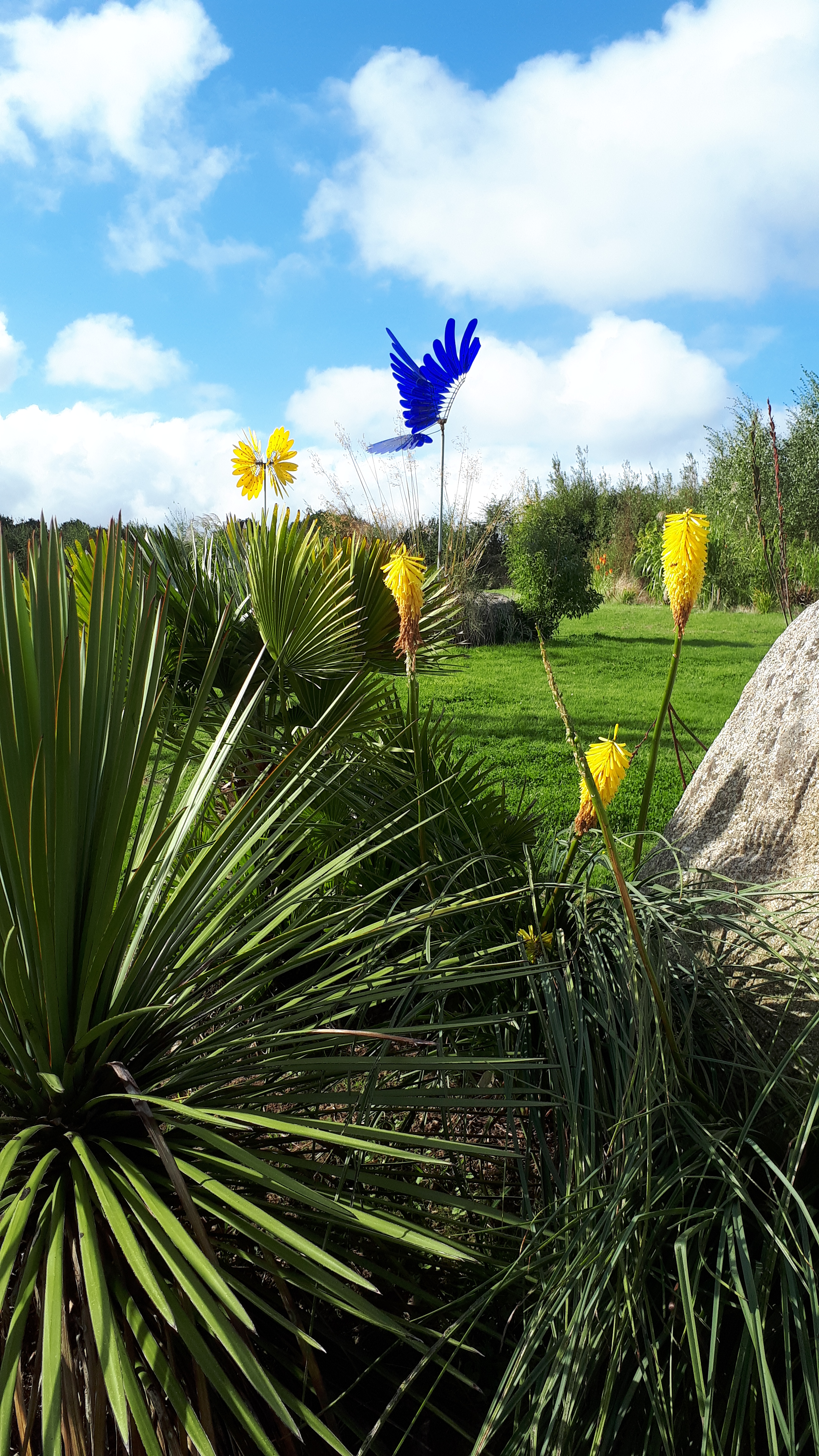
“Der September
Das ist ein Abschied mit Standarten
aus Pflaumenblau und Apfelgrün.
Goldlack und Astern flaggt der Garten,
und tausend Königskerzen glühn.
Das ist ein Abschied mit Posaunen,
mit Erntedank und Bauernball.
Kuhglockenläutend ziehn die braunen
und bunten Herden in den Stall.
Das ist ein Abschied mit Gerüchen
aus einer fast vergessenen Welt.
Mus und Gelee kocht in den Küchen.
Kartoffelfeuer qualmt im Feld.
Das ist ein Abschied mit Getümmel,
mit Huhn am Spieß und Bier im Krug.
Luftschaukeln möchten in den Himmel.
Doch sind sie wohl nicht fromm genug.
Die Stare gehen auf die Reise.
Altweibersommer weht im Wind.
Das ist ein Abschied laut und leise.
Die Karussells drehn sich im Kreise.
Und was vorüber schien, beginnt.”
(Aus: Kästner, DIE DREIZEHN MONATE)
Well here is a rough translation by a good friend.
It´s September
This is a farewell with flags
coloured plum-blue and apple-green.
The garden is flagging wallflowers and asters,
and thousand mulleins glow.
This is a farewell with trombones,
with guldize and farmers´ ball.
Tolling their cowbells the brown
and colourful herds are stable bound.
This is a farewell with scents
of a long forlorn world.
Jams and Jellies simmer in the kitchens.
Potato fire smoulders in the field.
This is a farewell with turmoil,
with chicken on skewer and beer in jug.
Swingboats want to go to heaven
But they might not be piously enough.
The starlings start their journey.
Gossamer waves in the wind.
This is farewell noisy and gentle.
The merry-go-rounds are spinning in circles.
And what seemed past, starts.

The first flight over Penzance was a short affair lasting just 3 minutes at a height of 200 feet. This was achieved in a rather fragile biplane called a Farman with a propeller in the rear. This was around 6.00 p.m. on Saturday July 23rd, 1910. The pilot was the renowned Claude Grahame-White whose purpose was to fly over the three fleets assembled in the bay where they were expected to be informally reviewed by the recently crowned King George V. Poor weather had delayed the flight and high winds curtailed this first effort.
Grahame-White’s second flight from Marazion at 9.00p.m. that same evening was more impressive. It lasted some 15 minutes over the now illuminated fleet. Among the 200 ships present he was able to identify the flagship of the Home fleet, The Dreadnought, and the Admiralty yacht, The Enchantress. It had been his intention to show the vulnerability of the Navy to aerial attack. He had been supported in this endeavour by the photographer of The Daily Mirror, Vaughan T Paul. Grahame-White had learnt to fly at Reims under Bleriot who was the first to cross the Channel, the previous year in 1909. The next month Grahame-White flew his Farnham biplane over Washington landing close to the White House.
Despite the attention which it attracted this was not the first heavier than air flight to take place in the Duchy. Jack Humphries, a Dental Surgeon from Fowey had observed bird flight and made at least two flights with gliders from nearby cliffs. In 1912, the French aviator Henri Salmet, with the financial support of Lord Northcliffe arrived with his Bleriot machine on the 14th of June in Falmouth. He had intended to fly over Lands End, however the headwinds proved too strong for the monoplane.
On 24th September 1913, the Hamburg born Gustav Hamel, just 24 years old, arrived at Trengwainton from whence he flew his Bleriot monoplane over Penzance where he could be seen clearly from the Market Place, Market Jew Street and then to Newlyn Coombe and on to St Ives and was greeted by a large crowd upon his return. After meeting Lord and Lady St Leven and the local M.P., Mr T. Bedford Bolitho who examined his aircraft. The energetic Hamel flew off once more at 5.30 and returned having fulfilled his ambition of being the first aviator to have flown over Lands End.
Hamel and Grahame-White collaborated in the development of Hendon airfield which became a flying school, a site for aircraft manufacture and later taken over by the R.A.F. and is now its museum. Ballooning at Hendon had taken place as early as 1862. Airship bases were built in Cornwall during 1915 and 1916. For example, the Royal Naval Air Station Mullion was developed on a 320-acre site near the village of Cury and the first airship transported here by train. This Lizard Airship Station was later to contain a hydrogen producing plant and a small Marconi transmitter. Its situation was ideal for attacking U-boats in accordance with the intentions of the First Sea Lord, Lord Fisher.

Perusing the London Illustrated News from early 1933, is to immerse oneself in a world which seems remote from our own yet the events shape our modern attitudes. The Empire appears secure with photographs of Imperial India, the Viceroy and his family surrounded by flunkies. Trouble is afoot in Moscow where staff from the British Embassy have been arrested and there are sketches of the process of interrogation where the accused stands and the commissar slouches at his desk. There are photographs of new pontoons in Venice, new aircraft -flying boats with generous accommodation and strange giro-copters whose instability proves as unsurprising as their appearance. Compared with the same publication twenty years before there are regular pages on the “kinema” and engravings are no longer to be seen. Platinum blondes are much in vogue as the photographs of beauty queens clearly portray and the permanent wave has arrived everywhere. The photographs of the rise of the Nazis and their integration with members of the German ruling class made more and more obvious. Marches stream through Potsdam and already in New York 20 000 people assemble and crowd in a square to protest at the persecution of Jews. Street signs are being changed near the Tiergarten in Berlin to celebrate the German “victory” at Jutland.
The desperate state of the unemployed and the slum conditions in South London are a constant theme. A conference on the world depression is held with representatives from 66 countries is held in London at the Geology museum then in Jermyn Street- https://en.wikipedia.org/wiki/London_Economic_Conference. It will be torpedoed by the American President-the dispute relates to the exchange rates between the dollar and other currencies. This all bespeaks a world portrayed by the artist George Grosz whose sketchbooks can be seen at the V and A just across from the Natural History Museum, where the Geological museum now resides. However, the Illustrated News had its own artists and illustrators who like Grosz captured the atmosphere of the times.

Prominent on these pages is the work of Steven Spurrier RA (13 July 1878 – 11 March 1961) whose work may be glimpsed at the Tate. He was educated at Heatherley’s, an independent Art School off Baker Street which specialised in portraiture. https://en.wikipedia.org/wiki/Heatherley_School_of_Fine_Art

The next artist whose work proliferates on the pages in 1933 was a brilliant caricaturist and lithographer whoc came from the Channel Isles. He has been called the English Daumier and at the age of 19 was employed by the Daily Chronicle – this was Edmund Blampied (30 March 1886 – 26 August 1966). Blampied was particularly fine at depicting the social conditions at this period of poverty and dire exigence. https://en.wikipedia.org/wiki/Edmund_Blampied Ink and sepia wash being particularly suited to this subject. There is an interesting interview with Blampied at https://www.theislandwiki.org/index.php/Edmund_Blampied_-_an_interview


The third artist who worked for the London Illustrated News and made sketches at the London Economic Conference was Werner Knoth(1895-1981) who was a trained businessman and a draftsman, at first self-taught, then studied from 1934 to 1938 in Paris. He was an art dealer in Spain, later a press artist in Hamburg and exhibition organizer. During the Second World War he was taken prisoner of war; his works were destroyed in the bombing. Returning to Hamburg, he drew portraits, theatre and opera sketches. A German citizen employed by the Illustrated News in 1933 and educated at https://de.wikipedia.org/wiki/Hochschule_f%C3%BCr_bildende_K%C3%BCnste_Hamburg


The portrait on the right is of Ulrich Erfurth (1910–1986) who was a German film director.
Auf einmal ist aus allem Grün im Park
man weiß nicht was, ein Etwas fortgenommen;
man fühlt ihn näher an die Fenster kommen
und schweigsam sein. Inständig nur und stark
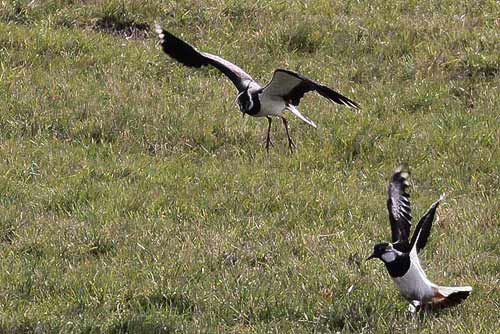
ertönt aus dem Gehölz der Regenpfeifer,
man denkt an einen Hieronymus:
so sehr steigt irgend Einsamkeit und Eifer
aus dieser einen Stimme, die der Guß
erhören wird. Des Saales Wände sind
mit ihren Bildern von uns fortgetreten,
als dürften sie nicht hören was wir sagen.
Es spiegeln die verblichenen Tapeten
das ungewisse Licht von Nachmittagen,
in denen man sich fürchtete als Kind.
Before the Summer Rain
Suddenly, from all the green around you,
something-you don’t know what-has disappeared;
you feel it creeping closer to the window,
in total silence. From the nearby wood
you hear the urgent whistling of a plover,
reminding you of someone’s Saint Jerome:
so much solitude and passion come
from that one voice, whose fierce request the downpour
will grant. The walls, with their ancient portraits, glide
away from us, cautiously, as though
they weren’t supposed to hear what we are saying.
And reflected on the faded tapestries now;
the chill, uncertain sunlight of those long
childhood hours when you were so afraid.
More analysis of this poem in German may be found at http://www.rilke.de/forum/viewtopic.php?t=137
 I am finding this an excellent read and an interesting and moving cultural experience. Having just seen “Ladybird” which moved me to both tears and laughter, this story is broadly a similar coming of age story. I suppose it could be termed a Bildungsroman but that is a weighty term for the evocative and indeed provocative text which is ideal for someone wanting to learn German. Essentially it is a prose poem in German about a 13 year old girl coming from Poland to Coventry.

Geisha
Though the partition opens at a touch
She makes a pin-hole and watches people
Watching the sky where a heavy bomber
Journeys to her mirror and jar of rouge.

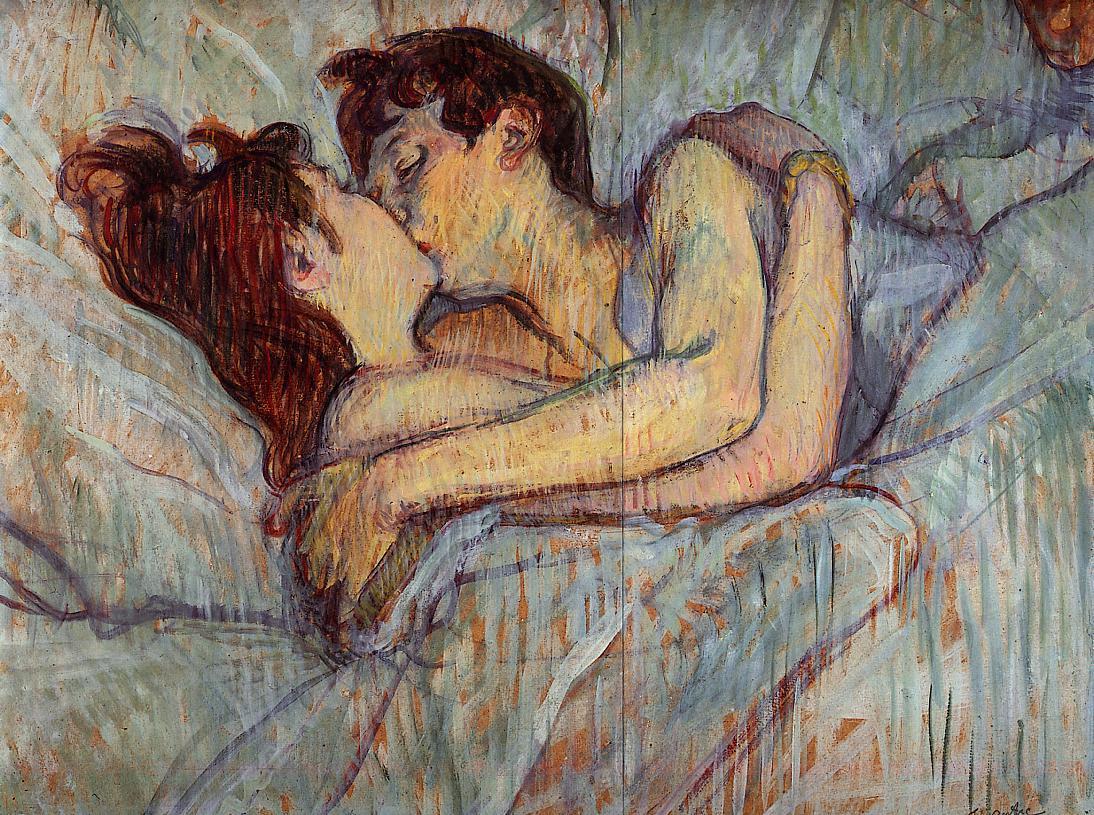
Gern hab’ ich die Frau’n geküsst,
hab’ nie gefragt, ob es gestattet ist;
dachte mir: nimm sie dir,
küss sie nur, dazu sind sie ja hier!
Ja, glaubt mir: Nie nahm ich Liebe schwer.
Ich liebe heiss, doch treu bin ich nicht sehr,
bin ein Mann, nicht viel dran,
Liebchen fein: ich schau’ auch andre an!
Ich kenn’ der wahrhaften Liebe Glut,
ich weiss, wie weh oft die Falschheit tut,
ich kenn’ die Wonnen,
begonnen mit Freud,
ich sah ihr wenden und enden mit Leid!
Ich kenn’ die Liebe in Dur und Moll,
ich kenn’ sie selig, verrückt und toll,
ich schau’ erwachend und lachend zurück
und such’ im Rausche, im Tausche mein
Glück!
|
With prune-dark eyes, thick lips, jostling each other Thinking, each of them, the worst is over Here if anywhere is feasible. Their glances Into the hinterland of their own future With faces of people’s friends. But these are mostly And meanwhile the city will go on, regardless Being endorsed on a vulcanite table, lines of washing To a bouquet that is bound for somebody’s beloved Till something or other turns up. Something-or-Other Gangways – the handclasp of the land. The resurrected, And officialdom greets them blankly as they fumble |

This poem appeared just about a year after MacNeice visited America where he met Auden and Isherwood amongst other prominent figures during a short lecture tour. It appeared at a time of extreme danger for Britain:- Dunkirk was a recent event and The Blitz too was starting. I am of the opinion that Auden and Isherwood need little justification for having left the country. They had worked bravely on “Journey to War” in Manchuria and Isherwood’s novels gave a clear insight into the rise of the Nazis and the persecution of leftists, Jewish people and so on. That is by the way, since although this poem could be considered in some ways slight, it has interesting parallels with the comparable plight of refugees today. Given Trump, entering America has become extremely difficult in the past year. In addition, it gives an insight into the New York seascape and skyline which I seem to remember has been written about movingly by two Jewish exiles, Rose Ausländer (Januar in New York) and I think, Mischa Kalako.
The poem itself is obviously of it’s time and the first line is rather brutal on facial characteristics. There are some interesting words like ‘milliner’ and ‘vulcanite’ that have dropped out of common parlance rather. I particularly like-‘Into the hinterland of their own future’ which suggests the confusion of trying to find in a new environment some reference to the land left behind. It also contains, I think, perhaps unconsciously, reference to MacNeice’s hinterland as an Irish born poet as well as much effective and ambivalent use of religious imagery. His father became a bishop of the Anglican Church of Ireland.
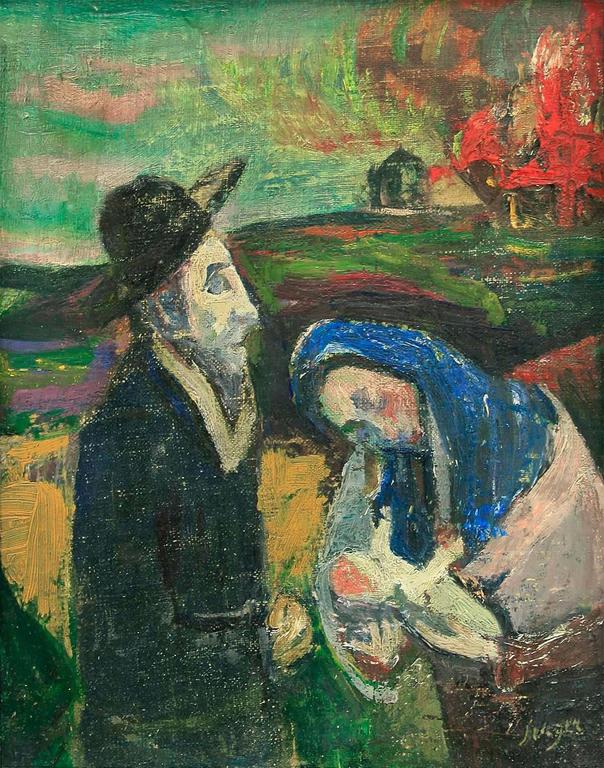
A historian friend has written me about a Jewish woman who left Berlin, and saved her life, coming to England and starting her training in 1939. She had free board and bed and earned just 36/- per month. That is £3 and 6s. By November 1943 she was fully qualified and working in a General Hospital and her new salary became £5 and 5s-nurses were considered professionals before the NHS was formed and were paid in Guineas (I Guinea= £1 and 1s). In order to fathom what this might have bought I looked up some figures in a couple of hours in a local newspaper archive. The following is what I discovered there.


 penwithlit