I have been thinking a little about Winnicott and meaning to read a book about him by the redoubtable Adam Philips. However, having sufficient reading material in the form of poetry collections, journals, novels and criticism I still find myself scrolling/chillaxing on You Tube where I found this extraordinarily interesting account by Mark Vernon which repays listening through.
I found Vernon’s approach so engaging that I then found myself intrigued by the following clip where his philosophical and theological approach carries some imaginative and enlightening comments. It is also deeply moving.
After several months studying and discussing poetry, Christmas has offered me the opportunity to reconsider the poetry I like and just why I like it. Christopher Reid has been a firm favourite for some time. I find him quite accessible or offering other compensations when he seems harder to understand. As I believe I mentioned previously, I find his slim volume Katerina Brac particularly interesting. Even the plain yellow cover with ionly the author and title in letters seem thrilling.
Here are two stanzas from a poem in this collection which is called Epithalamium–
Something as homely
as a cat or a clock.
But what you leave unsaid
sustains you
like the net of the heavens.
Man and wife
with your life between you
like a chessboard:
a palimsest
of innumerable possibilities.
A very interesting analysis of this book may be found at-
However, although this lengthy essay is both fascinating and illuminating in respect of the Eastern European persona of the poetess, Katarina Brac, it may be difficult to accept in one respect. Viz, that the abstract politico-philosophical elements sit uneasily with the personal feminine viewpoint which Reid is attempting to emulate.
One of the best regarded poems in this collection is “Tin Lily”. It is discussed, for instance, in Ruth Padel’s collection of 52 Poems. It is also given a useful interpretation and the poem may be read at
I particularly like …..”It is difficult to separate the words from the razzmatazz” and applies here in 2022 as in Eastern Europe in 1985 when this collection was published first in 1985.
In the early morning hours when between plaster and the crystal of Heaven the elegant skyscrapers stand like gems on the salmon ground
Beautiful is New York in the morning, most beautiful early Sunday when sirens and wheels sleep, little voices from park trees coo to the Hudson adapting to the ocean
A person comes upon you and you see is really a PERSON and you see it is really NEW YORK; a fable beautifully devised subtle and strong
The eight million sleeping Sunday dreamers have not yet shaken off the nightmare of the week. Too late they seek when already shadows embrace the streets, seek the PEOPLE too late, NEW YORK the azure-dreamed fable New York.
New York faszinert
New York fasziniert in den fruehen Morgenstunden wenn zwischen Pflaster und Himmelskristall die eleganten Wolkenkratzer gemmengleich stehn auf lachsrotem Grund
Schoen ist New York am Morgen am schoensten Sonntag frueh wenn Sirenen und Raeder schlafen kleine Stimmen von Parkbaeumen kollern der Hudson sich anpasst dem Ozean
ein Mensch dir begegnet und du siehst es ist wirklich ein MENSCH und du siehst es ist wirklich NEW YORK ein Maerchen schoen ersonnen subtil und stark
Die acht Millionen schlafenden Sonntagstraeumer haben noch nicht abgeschuettelt den Alpdruck der Woche
Zu spaet suchen sie wenn schon
Schatten die Gassen umarmen den MENSCHEN suchen
zu spaet NEW YORK
das blaugetraeumte Maerchen New York
I really like the sense of place in this poem of a stranger awaking to a new environment and its fairy tale quality. The word “kollern” apparently can mean goobled up – presumably by the flowing Hudson entering the sea. Derek Mahon and of course, W.H.Auden give voice to similar sensations too.
I came across my volume of Doshi’s poems, Girls Are Coming Out of the Woods, in the Oxfam shop and retired to the Cinema’s attatched bar to peruse it. leaving aside the huge question of how we should finance our poets- surely another test of our degree of civilization- I was delighted to acquaint myself with a new poet whose website may be found at http://www.tishanidoshi.com/
Monsoon Poem
Because this is a monsoon poem
expect to find the words jasmine,
palmyra, Kuruntokai, red; mangoes
in reference to trees or breasts; paddy
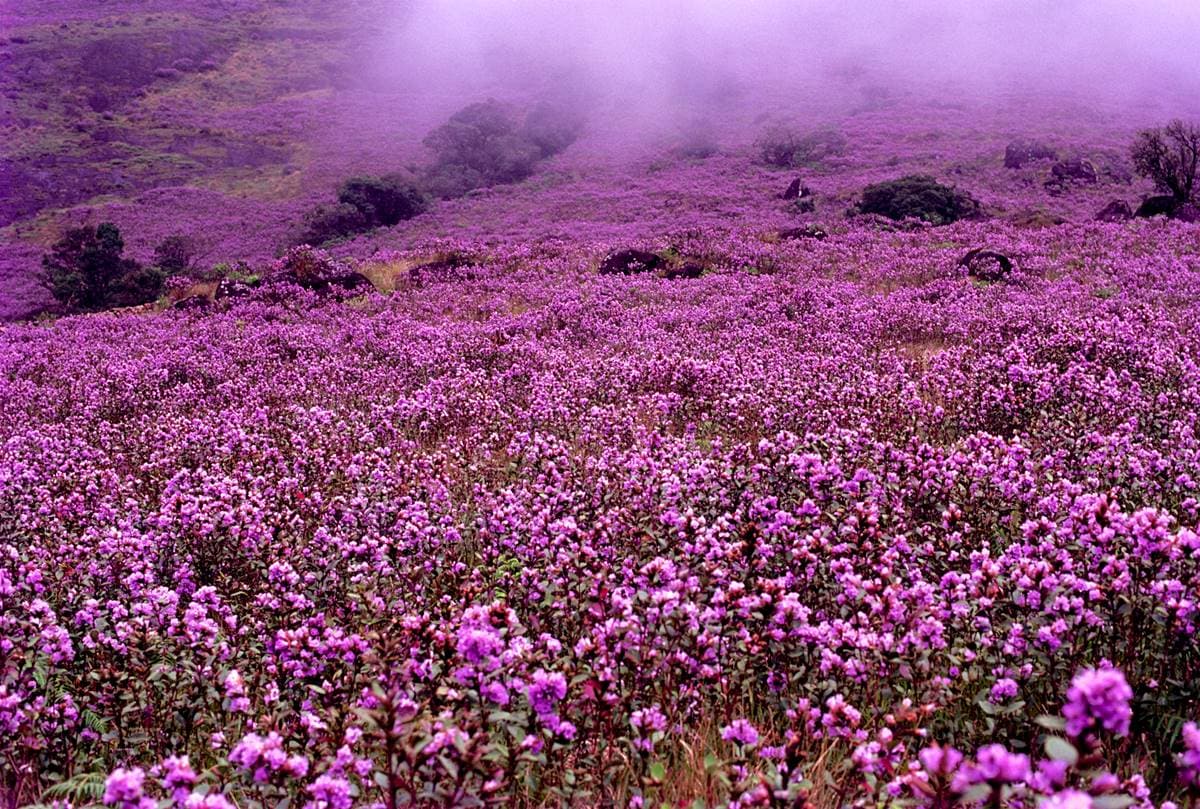
fields, peacocks, Kurinji flowers,
flutes; lotus buds guarding love’s
furtive routes. Expect to hear a lot
about erotic consummation inferred
by laburnum gyrations and bamboo
syncopations. Listen to the racket
of wide-mouthed frogs and bent-
legged prawns going about their
business of mating while rain falls
and falls on tiled roofs and verandas,
courtyards, pagodas.
The flood of insistent images together with their sounds strikes the reader as with heavy persistent rain. This type of rainfall seems charged too with eroticism from pendulous mangoes to rutting frogs. Throughout this poem this type of rain is held in contrast to the earth itself. It indicates how in one experience and its associated feeling, another mode of being may be temporarily forgotten. It does this with beauty and subtlety.
It ends by speaking of dreams and old poems we forget that –
led us to believe that men were mountains,
that the beautiful could never remain
heartbroken, that the rains arrive
we should be delighted to be taken
in drowning, in devotion.
Here is the start of another Doshi poem which is engaging:-
Jungian Postcard
Dear Carl, the days here are impossible:
all silence, and the sea. Yesterday we saw
the horizon unstitch itself from the sky
so delicately, and further down the beach,
two stray dogs materialised like lost souls
from a genie’s lamp. I just had to cry.
Our anima and animus! My love cried,
being philosophically inclined and impossible
to argue with. But the way those bony animal souls
took ownership of us – one black, one gold, and saw
fit to flex their paws on that deserted beach,
unmoved by the disentangled sky
that had banished all its birds. The sky
that slumped so languidly into the sea. I had to cry
for all my complexes.
The poem sets up an intuition of homelessness and alienation which only can be overcome by an inner resolution with the poet’s lover.
The London Review of Books is a wonderful fortnightly pleasure. I am particularly drawn to articles that have maps and also to any item which elucidates the background to a problem in the world which has escaped my previous attempts to understand it. The problem in this case being the distressing war in Nagorno~Karabbakh. However, in reading this article by Abdul~Ahad, I came across a few lines which I found deeply poetic.
Nagorno~Karabakh Nagorny is Russian for ‘mountainous’;Karabakh Turkish for ‘black garden’~is a region in the South Caucasus with a predominantly Armenian population. It was a province of ancient Armenian kingdoms before coming under the successive suzerainty of Sassanids, Muslim Arabs, Turkmen tribes and the Persian Safavids with pockets controlled by Armenian meliks, prices who used outside powers to bolster their claims to authority. In the mid~18th centuary following the decline of the meliks, a khanate was established with Persian support by the Javanshirs, a Turkic Karabakh clan, who built the city of Shusha. The region was absorbed into the Russian Empire in 1813 after the first Prussian war, and Persia ceded the rest of the Transcaucasus to Russia a decade or so later.
Karabakh maintained a strong Armenian religious and cultural identity through the centuries, but like all frontier regions it was a place where cultures and peoples converged. Armenian, Persian, Arabic and Turkic influences produced a unique cultural heritage, manifest in food, music. art and architecture. Armenian churches and monasteries dotted the hills while Azerbaijani composers and writers flourished in Shusha. Armenians, Azerbaijanis, and Kurds both Yazidi and Muslim, lived side by side in towns and villages set among pine and birch forests, orchards, vineyards and highland pastures, Mulberry groves supported thriving silk industries.
Having just typed it in maybe it is not exactly a poem but it reads very elegantly to my ear. This appeared in an article entitled Each rock has two names in the London Review of Books 17th June 2021. You can read more about this prize winning journalist at https://en.wikipedia.org/wiki/Ghaith_Abdul-Ahad
Next to my laptop propped against the now never used printer is a postcard which I bought at the remarkable Musée Jacquemart–André. This lovely gallery is grandly situated in the Boulevard Haussman in the 8th Arrondissment (huitieme). The postcard shows what a Scotsman might have called a fair bonny lassie.
This Italian Baroque painter was born in Verona and died in St Petersburg. His paintings are remarkable for both their astonishing beauty but also for their realism as can be judged from the following clip.
Looking at these lovely paintings gives me the same feeling as reading this-
The orchards half the way From home to Ludlow fair Flowered on the first of May In Mays when I was there; And seen from stile or turning The plume of smoke would show Where fires were burning That went out long ago.
The plum broke forth in green, The pear stood high and snowed, My friends and I between Would take the Ludlow road; Dressed to the nines and drinking And light in heart and limb, And each chap thinking The fair was held for him.
Between the trees in flower New friends at fairtime tread The way where Ludlow tower Stands planted on the dead. Our thoughts, a long while after, They think, our words they say; Theirs now’s the laughter, The fair, the first of May.
Ay, yonder lads are yet The fools that we were then; For oh, the sons we get Are still the sons of men. The sumless tale of sorrow Is all unrolled in vain: May comes to-morrow And Ludlow fair again.
I had recently been perusing Cavafy – particularly reading the essay on him written by that doyen of Dons, Maurice Bowra in his book, The Creative Experiment. Bowra, of whom it has been said, ” …..either the most distinguished or the most notorious Oxford don of the early twentieth century. Classicist, poet, wit, raconteur extraordinary, and Warden of Wadham College for over thirty years, he met nearly everyone of consequence in the worlds of literature and politics” He remarks of Cavafy’s abilility to find pathos in quite simple situations and quotes, The Melancholy of Jason poet in Kommagini, a.D. 595–
The aging of my body and my beauty is a wound from a merciless knife. I’m not resigned to it at all. I turn to you, Art of Poetry,
n these all-white courtyards where the south wind blows Whistling through vaulted arcades, tell me, is it the mad pomegranate tree That leaps in the light, scattering its fruitful laughter With windy wilfulness and whispering, tell me, is it the mad pomegranate tree That quivers with foliage newly born at dawn Raising high its colors in a shiver of triumph?
On plains where the naked girls awake, When they harvest clover with their light brown arms Roaming round the borders of their dreams — tell me, is it the mad pomegranate tree, Unsuspecting, that puts the lights in their verdant baskets That floods their names with the singing of birds — tell me Is it the mad pomegranate tree that combats the cloudy skies of the world?





 penwithlit