Categories
German Matters Literature Poetry

Goethe among the Italian Lemon Groves

Kennst du das Land, wo die Zitronen blühn,
Im dunkeln Laub die Gold-Orangen glühn,
Ein sanfter Wind vom blauen Himmel weht,
Die Myrte still und hoch der Lorbeer steht?
Kennst du es wohl?
Dahin! dahin
Möcht ich mit dir, o mein Geliebter, ziehn.

Kennst du das Haus? Auf Säulen ruht sein Dach.
Es glänzt der Saal, es schimmert das Gemach,
Und Marmorbilder stehn und sehn mich an:
Was hat man dir, du armes Kind, getan?
Kennst du es wohl?
Dahin! dahin
Möcht ich mit dir, o mein Beschützer, ziehn.

Kennst du den Berg und seinen Wolkensteg?
Das Maultier sucht im Nebel seinen Weg;
In Höhlen wohnt der Drachen alte Brut;
Es stürzt der Fels und über ihn die Flut!
Kennst du ihn wohl?
Dahin! dahin
Geht unser Weg! O Vater, laß uns ziehn!

Image result for lemon groves in italy

There is a very nice translation of this famous poem  here at http://poemsintranslation.blogspot.co.uk/2010/11/goethe-mignons-longi

Categories
German Matters Literature Poetry Uncategorized

“Was war das?” und “Dich” von Erich Fried

Was war das?

Ohne dich sein
ganz ohne dich

und langsam
zu vergessen beginnen
wie es mit dir war
ganz mit dir

und dann halb
halb mit und halb ohne

und ganz zuletzt
ganz ohne

Erich Fried

Dich
dich sein lassen
ganz dich

Sehen
dass du nur du bist
wenn du alles bist
was du bist
das Zarte
und das Wilde
das was sich losreißen
und das was sich anschmiegen will

Wer nur die Hälfte liebt
der liebt dich nicht halb
sondern gar nicht
der will dich zurechtschneiden
amputieren
verstümmeln

Dich dich sein lassen
ob das schwer oder leicht ist?
Es kommt nicht darauf an mit wieviel
Vorbedacht und Verstand
sondern mit wieviel Liebe und mit wieviel
offener Sehnsucht nach allem –
nach allem
was du ist

Nach der Wärme
und nach der Kälte
nach der Güte
und nach dem Starrsinn
nach deinem Willen
und deinem Unwillen
nach jeder deiner Gebärden
nach deiner Ungebärdigkeit
Unstetigkeit
Stetigkeit

Dann
ist dieses
dich dich sein lassen
vielleicht
gar nicht so schwer.

English notes

sich an jdn./etw. anschmiegento cling to sb./sth.

Vorbedacht=premeditated

Verstand= understood

Starsinn= headiness

to gesticulate
27

gebärden

skittishness Ungebärdigkeit {f}

Stetigkeit=Continuity


Categories
German Matters Literature Poetry

Erich Fried – “Wollen”

Wollen

Bei dir sein wollen
Mitten aus dem was man tut
weg sein wollen
bei dir verschwunden sein

Nichts als bei dir
näher als Hand an Hand
enger als Mund an Mund
bei dir sein wollen

In dir zärtlich zu dir sein
dich küssen von außen
und dich streicheln von innen
so und so und auch anders

Und dich einatmen wollen
immer nur einatmen wollen
tiefer tiefer
und ohne Ausatmen trinken

Aber zwischendurch Abstand suchen
um dich sehen zu können
aus ein zwei Handbreit Entfernung
und dann dich weiterküssen

Erich Fried
Wanting

Wanting to be with you
in the middle of what I’m doing
wanting to be gone
lost within you

Nothing but with you
closer than hand to hand
more intimate than lips to lips
wanting to be with you

Being tender within you
kissing you from the outside
and caressing you from within
this and that way and also differently

And wanting to inhale you
nothing but inhaling
deeper deeper
and to drink without exhaling

And while doing so searching the distance
to see you
just two hands away
and then kiss you again

Translation by Günter Ehweiner

Erich Fried was born on 6 May 1921 in Vienna. He began writing early until the German Anschluss in March 1938 transformed him “from an Austrian high school pupil into a persecuted Jew.” His father was murdered by the Gestapo, and Fried fled to London, where he helped his mother and 70 other people escape.

After the war Fried became a co-worker for numerous newly founded journals, later a commentator in German-language programs at the BBC. He gave up this position in 1968 because of the Cold War posture adopted by the BBC.

He made a name for himself with various poems and his only novel (“A soldier and a girl” 1960) and also making translations (including, among other things, the translation of almost the entire works of Shakespeare) – but also his work conflicted with public opinion on political issues, which was reflected in many of his poems. It was not until the end of his life that he received the recognition he deserved in the form of awards such as the Bremen Literary Prize, the Austrian State Prize and the Georg Büchner Prize.

Erich Fried died after a long and serious illness on 22 November 1988 and was buried at the Kensal Green Cemetery in London.

Categories
German Matters Literature Poetry

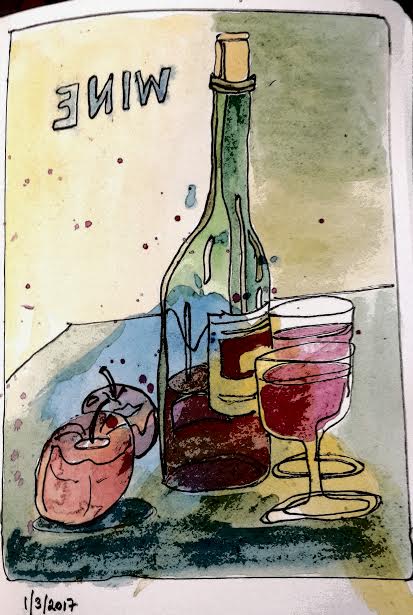
Two poems about drinks!

From the interesting poem from https://saetzeundschaetze.com/2017/04/02/lili-gruen-maedchenhimmel-2014/ by the Viennese poet Lili Grün.

Elegie to a cup Mocha (extract)

“My last boyfriend was a lawyer.
I am since that time against lawyers.
Lawyers are all false, heartless and wicked,
I can not hear this word, it makes me nervous.
Therefore I want for myself another admirer
For example, an elementary school teacher. “

Elegie bei einer Tasse Mokka (Auszug)


“Mein letzter Freund war ein Jurist.
Ich bin seit dieser Zeit gegen Juristen.
Juristen sind alle falsch, herzlos und bös,
Ich kann dieses Wort gar nicht hören, es macht mich nervös.
Darum wünsch` ich mir zum nächsten Verehrer
Beispielsweise einen Volksschullehrer.“

Now for something later in the day from a Latvian Romani Poet from  http://poemsintranslation.blogspot.co.uk/2017/04/leksa-manush-to-wine-from-latvian-romani.html?utm_source=feedburner&utm_medium=email&utm_campaign=Feed:+PoemsFoundInTranslation+(Poems+Found+in+Translation)


To Wine
Leksa Manush
Translated by A.Z. Foreman

A cup of wine does anything you will: 
It gives a manly courage to shy men,
And to the weakest man a strength of will.
Wine knocks strong men out cold beyond their ken. 

And wine bonds strangers unknown to each other. 
They sit as friends, and each one drinks his fill.  
With song, wine calls them up to dance together. 
A good life, lived with wine, is better still.  

Sons and daughters of the sun and earth!
The grape born of the vine has given birth
To wine, to make us happy and at home. 

May vineyards never empty of the vine
And may the jug forever fill with wine
To the happiness and health of every Rom. 

Or in Latvian-

Моляке
Лекса МанушТахтай моляса, со камэс, кэрэл:
Ладжякунэскэ дэл о муршипэн,
Конэскэ зор нанэ, зоралипэн,
Кон зорало сас — мол лэс пэравэл.

Пхандэл ёй кхэтанэ бипинджярдэн,
Бэштэ, сар амала, тэ сако пьел.
Мол тэ кхэлэн гилэнца лэн кхарэл.
Бахталэдыр моляса джиипэн.

Кхамэски и пхувьяки чяёри,
Дракхэндар бияндёл ёй, молори,
Пэ бахт тэ лош дыны ёй си амэнгэ.

Мэ на чючёл дракхэнги барори!
Моляса тэ пхэрдёл дурулори
Пэ бахт тэ састыпэн сарэ ромэнгэ!

Moljáke
Leksa ManušTaxtaj moljása, so kames, kērel:
Lādžakuneske del o muršipen,
Koneske zor nane, zoralipen,
Kon zoralo sas — mol les pēravel.

Phandel joj khetane bipindžarden,
Bešte, sar amala, te sako pjel.
Mol te khelen gilenca len khārel.
Baxtaledîr moljasa džiipen.

Khameski i phuvjáki čhajōrí,
Drakhendar bijandźol joj, molōri,
Pe baxt te loš dînî joj si amenge.

Me na čučol drakhéngi bārōri!
Moljasa te pherdźol durulōri
Pe baxt te sastîpen sāre romenge!


Categories
German Matters Literature

Schmetterlingstraum- Chuang Tse

Chuang-tzu träumte einmal, er sei ein Schmetterling.

In glücklicher Selbstzufriedenheit gaukelte

und flatterte er umher und tat einfach das,

was ihm gefiel.

Und er wusste nicht, dass er Chuang-tzu war.

Plötzlich erwachte er aus seinem Traum und schau – da war er wieder er selbst: echt und unverkennbar Chuang-tzu.

Aber dann wurde er sehr nachdenklich. Er wusste mit einem Male nicht mehr, ob er nun Chuang-tzu war, der eben träumte ein Schmetterling zu sein oder ob er vielleicht ein Schmetterling war, der träumte, Chuang-tzu zu sein.

bu

Categories
Art and Photographic History German Matters Literature Penwith West Cornwall (and local history)

Philby, Zoltan Kodaly and István Szegedi Szüts

First let us get ourselves into the right mood with some Hungarian Music –from :-Szegedi Szűcs Judit: Három sós perec

Now translated from the Hungarian version of Index against Censorship by means of the partially garbled Google translate we read of a certain man -István Szegedi Szüts being bound up somehow with the Fourth Man, Kim Philby:-

“Probably never know how mixed up next to each other Szűts Szeged and Philby because Philby one word did not remember the incident, as a later joint útjaikról not, in fact never down either by Szegedi Szűts name, just “Hungarian” referred to as hinted. Nevertheless Szűts Szegedi could play a significant and important role in his life, has recently come of age since the 1930 Easter led Philby’s first trip to Hungary. Motorcycle arrived, but that where you’ve been, shrouded, but much seems certain that Szűts Szegedi’s company reached the Low Countries and Subotica surroundings, where the Black Country is very similar conditions met, but are not industrial workers, but the manual peasants life seen with your own eyes.

kp

Philby same year appeared again in Budapest, this time in the company of Tim Milne, who first hired King Street apartment and a car repair shop encamped, which was for the owner than George Szűts Szeged. Philby and Milne very well felt in the capital: fried meat ate, swam the Danube, which have been removed and used at the time, watched the Blue Angels (was Marlene Dietrich’s first major success in 1930, the German sound film made Heinrich Mann’s novel, first pool by way of ), they walked along the Margaret Island and Milne’s memoir, according to Philby never once gave signs of increasing political beliefs. Szegedi Szűts not name popped up ever again; if there was a secret painter mid-thirties established in England in 1959 when the death took to the grave with him. Philby’s commitment towards the working class and communism found it a few years later confirmed in Vienna, where two Hungarian also participated actively in the consciousness of Philby spy and of becoming.”

Which is very interesting and suggests the possibility that to an unknown extent, Philby was involved with a Hungarian painter who knew the Russian spy and was possibly a contact in his activities. This was not just any painter but an artist who has been compared with Paul Nash, was an excellent woodcut printer and also a talented writer, István Szegedi Szüts. He was born in Budapest and lived for a large portion of his life in the small south Cornwall fishing village of Mullion. István Szegedi Szüts was a member of an Olympic fencing team in 1912 and a brave officer fighting the Russians in the Carpathians during the First World War. It was at this time that he was ordered to shoot any straggelers among his own men to prevent a more horrid death from persuing wolves. His fascinating prints recording his experiences in the K and K forces can be seen at http://www.bhandl.co.uk/articles/2013/03/19/viewer.aspx.

ss2

István Szegedi Szüts, a self-portrait at the age of about 32

Images from the First World War may be seen at Barnes, Hampton and Littlewood where they say:”Szuts first visited England in 1929 and held a solo exhibition at the Gieves Gallery, London in the same year. In 1936 he moved to Cornwall with his partner Gwynedd Jones-Parry, whom he married in 1937. The couple lived at Caunce Head near Mullin on The Lizard and remained there for the rest of their lives. Szuts exhibited with The Newlyn Society of Artists and The Penwith Society of Arts.” The link is at http://www.bhandl.co.uk/articles/2013/03/19/viewer.aspx

Wordless Book,"My War" showing a village during WW1
Wordless Book,”My War” showing a village during WW1


A teacher and educational philosopher he was also a friend of a friend of the composers Béla Bartók, Zoltán Kodály and György Ránki.


ss1

Categories
German Matters Poetry

Ich schlaf am besten neben Dir -Max Raabe

Image result for Max RaabeIch tiger einsam durch das Haus,
Fernseher an, Fernseher aus.
Dann setz ich mich vor den PC,
steh wieder auf und mach mir Tee.
Ganz egal, was ich tu, ich komm einfach nicht zur Ruh. –
Ich starre Löcher in die Wand,
ich zähl die Flaschen und das Pfand.
Du lässt mich viel zu lang allein,
und auch mein Kaktus geht schon ein.
Es ist schon wieder so spät,
und ich bin viel zu aufgedreht. ~

Mehr songtexte: http://www.songtextemania.com/ich_schlaf_am_besten_neben_dir_songtext_max_raabe.html
Alle Infos über Max Raabe: http://www.musictory.de/musik/

….und auch

Categories
German Matters Literature Poetry

In der Flucht -Nelly Sachs

In der Flucht

welch großer Empfang

unterwegs-


Eingehüllt

in der Winde Tuch

Füße im Gebet des Sandes

der niemals Amen sagen kann

denn er muß

von der Flosse in den Flügel

und weiter-


der kranke Schmetterling

weiß bald wieder vom Meer

Dieser Stein

mit der Inschrift der Fliege

hat sich mir in die Hand gegeben-


An Stelle von Heimat

halte ich die Verwandlungen der Welt-


Empfehlung  http://literatur-schweden.blogspot.co.uk/2013/05/nelly-sachs-und-die-gedichte-zur-flucht.html

Categories
German Matters Literature Poetry

Georg Trakl -“Abendland”

Mond, als träte ein Totes

Aus blauer Höhle,

Und es fallen der Bluten

Viele über den Felsenpfad.

Silbern weint ein Krankes

Am Abendweiher,

Auf schwarzem Kahn

Hinüberstarben Liebende.
Oder es läuten die Schritte

Elis’ durch den Hain

Den hyazinthenen

Wieder verhallend unter Eichen.

O des Knaben Gestalt

Geformt aus kristallenen Tränen,

Nächtigen Schatten.

Zackige Blitze erhellen die Schläfe

Die immerkühle,

Wenn am grünenden Hügel

Frühlingsgewitter ertönt.
So leise sind die grünen Wälder

Unsrer Heimat,

Die kristallene Woge

Hinsterbend an verfallner Mauer

Und wir haben im Schlaf geweint;

Wandern mit zögernden Schritten

An der dornigen Hecke hin Singende

im Abendsommer, In heiliger Ruh

Des fern verstrahlenden Weinbergs;

Schatten nun im kühlen Schoß

Der Nacht, trauernde Adler.

So leise schließt ein mondener Strahl

Die purpurnen Male der Schwermut.
Ihr großen Städte

gt


Steinern aufgebaut

In der Ebene! So sprachlos folgt

Der Heimatlose

Mit dunbler Stirne dem Wind,

Kahlen Bäumen am Hügel.

Ihr weithin dämmernden Ströme!

Gewaltig ängstet

Schaurige Abendröte

Im Sturmgewölk.

Ihr sterbenden Völker!

Bleiche Woge

Zerschellend am Strande der Nacht,

Fallende Sterne.


There is an analysis at http://wikifarm.phil-fak.uni-duesseldorf.de/Moderne/index.php/Trakl,_Georg:_Abendland

Categories
Art and Photographic History Book Reviews German Matters

Heidegger Reframed by Barbara Bolt

Martin Heidegger (September 26, 1889 – May 26, 1976 is renowned for the complexity and subtlety with which his thoughts on the philosophy of being (ontology) is expressed. His ideas are inspired by numerous sources from the pre-Socratics, Plato, Aristotle and much of his thought dependent upon his early training as a Jesuit. He read and imbibed St Augustine and Duns Scotus. He trained under the phenomenologist, Edmund Husserl at Freiburg and his approach is deeply engaged with German philosophers like Kant, Schopenhauer and Nietzsche. He also read Kierkegaard with close attention.

h


His ideas about the nature of being are in stark contrast with those of Descartes which involve a split between consciousness and the external world. This Cartesian framework or dualism is embedded in modern science and Western thought generally. One result of Descartes philosophy is that Nature is subject by the mind to measurement and calculation and also to manipulation. This borders on what is termed instrumentalism and indeed the consequent exploitation of the environment. This, Heidegger with his alternative view of the direction of philosophy, he deeply and radically opposed. The implication of Heidegger’s thought for the creative artist and the making and meaning of art forms the thrust of Barbara Bolt’s text. His project is illustrated with specific reference to international artists like Sophie Calle, Anish Kapoor and Anselm Kiefer.


Generally considered as a great classic of Twentieth Century philosophy Sein und Zeit, 1927 is not an easy book to read even if you are thoroughly fluent in German. Concerned with existence and the nature of being, it is equally interested in associated questions about time. This central text focuses on the nature of reality and the being-right-there of existence for which Heidegger uses the term Dasein. Part of the difficulty of understanding this central work is that language almost seems to break down under the pressure of difficulty in communicating the awesome nature of human existence, which many would see as essentially spiritual. Barbara Bolt provides a thoroughly useful glossary to such terms in support of her guide.


This glossary contains some eighty terms; it is relatively clear but illustrates some of the difficulties in expounding Heidegger’s collected work,Gesamtausgabe, which itself runs to more than eighty volumes. Barbara Bolt explains in her early chapters concepts associated with Dasein which involvecare for the self and other beings, Sorge, and in the face of personal and certain knowledge of death, the termination of existence on Earth, anxiety or Angst. For Heidegger there are two possibilities, it seems either falling into immersion in the day to day, which he terms ontic existence or striving with resoluteness for authenticity. This bears upon artistic endeavour in several ways; the acceptance of strife when faced with unsettling artworks, the necessity of praxis in art education and research which hopefully produces a practical and respectful understanding of materials by a heuristic approach. Bolt is interesting and thought-provoking in her exposition on this.


A perhaps greater difficulty in appreciating Heidegger, which Bolt mentions, perhaps too briefly, continues in current debate. This was his active involvement with Nazism and his eulogy of Hitler involving praise for his moral regeneration of the Fatherland. This has been, not surprisingly, a sticking point in the appreciation of the Heidegger canon. A discussion of this may be found inInauthenticity: Theory and Practice, contained in JP Stern’s essays on literature and ideology, The Heart of Europe. There is particular concern over his treatment of his German-Jewish teacher, a Christian convert and former colleague, the proponent of phenomenology Husserl, to whom Sein und Zeithad initially been dedicated. He also took a renowned student, Hannah Arendt as his mistress and she it was who later to testified on his behalf at a denazification hearing in opposition to Karl Jaspers.


In a key chapter, Barbara Bolt uses two central concepts of Heidegger to evaluate particular art works. These are ‘enframing’ (Gestellung) and ‘poiesis’-a Greek term for making from which the word poetry is derived. Enframing, according to Heidegger, has negative connotations and is applied to methods like those of modern technology which treats nature solely as a means to an end and shows Heidegger to be an early proponent of environmentalism and certainly a critic of agribusiness. This seems to be echoed by concerns about the manner in which the business of art has been cheapened and debased by commercialisation and celebrity culture. There is, she explains an unholy alliance developing between advertising in late capitalism as evidenced, for instance, by Tracey Emin selling Bombay Sapphire Gin. Enframement also appears to include a criticism of managerialism; disapproval of the manner in which humans are treated often with statistical techniques as mere available resources. Before examining the concept of ‘poesis’, it is worth noting that this book is actually entitled ‘Heidegger Reframed’ and is one in a general series. This tends to give framing a different, presumably positive connotation that sits uneasily with the particular use of the term by Heidegger. Unfortunately, there appears to be no general series editor that could add guidance and cohesion to this demanding project of applying the thought of modern philosophers to art.h1


Bolt sometimes writes convoluted sentences in a somewhat orotund style which may be an understandable effect of propounding the concepts of this demanding, intriguing philosopher. Nevertheless, the style invites the reader to question some of the propositions expounded. There is no doubt that Heidegger had a particular view about the dominance of the scientific method as he conceives it. Also mathematics seems deemed uncongenial, whereas language, and also history with its different conception of time and certainly etymology are viewed by Heidegger as more relevant to his project. It is interesting to speculate how much he might have responded to philosophers of science like Thomas Kuhn whose views on paradigm shift, and those too of Paul Karl Feyerabend, might have influenced him had he been fully aware of them. Heisenburg, a contemporary and also a controversial figure, might have influenced Heidegger on his notion of how preconceived theories operate in science.


Heidegger as Bolt explains was inspired by poetry and must have been sensitive to its lyricism. This makes the reader question his apparent failure to respond to the beauty of mathematics which is in a sense a universal language. In general he was at pains to oppose certain notions of aesthetics associated particularly with the Enlightenment and Romanticism and the artist as an inflated, self-dramatising subject. In his conception of poesis, Heidegger approaches another mode of artistic appreciation and indeed gratitude which is guided by sympathy. The term, as Bolt makes clear is Greek in origin and involves openness to the bringing-forth or unconcealment of being. It is, for example, the sense of wonder when a butterfly emerges from a chrysalis or in the transformation when a flower blossoms from a bud. Heidegger spent a year in 1942 lecturing on Hölderlin’s Hymn “The Ister” which relates to the Danube and examined the limitations of a metaphysical interpretation of art and appears to argue the case for spiritual values in art together with a feeling for place attained by intimate journeying. George Steiner emphasises elsewhere how Heidegger’s titles are those of peregrination and comments, “He has been an indefatigable walker in unlit places”.


Barbara Bolt has written an interesting book on a difficult topic. The publishers might have supported her with somewhat better illustrations than the few disappointing images provided. However, she has shown how Heidegger can illuminate the work of prominent international artists. She has provided an introduction to a highly influential and controversial thinker supported with a sound biography. This work encourages the reader to bravely question art and promote radically innovative ways of observing and researching related issues.