Categories
German Matters Poetry Uncategorized

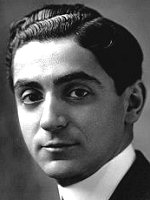
Irving Berlin – Spiel mir eine alte Melodie

Spiel mir eine alte Melodie
voll Gefühl und Harmonie
Himmelblau und rosa möcht ich sie
zärtlich und voll Poesie

Spielen auch heut ganz andre Lieder die Leut als in der Postkutschenzeit
nichts auf der Welt war so schön als sich zur Polka zu drehn
Man steckte Veilchen ans Kleid die Röcke waren ganz weit o Gott war das eine Zeit
die alte Bahnmelodie ja die vergesse ich nie

Spiel mir eine alte Melodie
voll Gefühl und Harmonie
Himmelblau und rosa möcht ich sie
zärtlich und voll Poesie

Man steckte Veilchen ans Kleid die Röcke waren ganz weit o Gott war das eine Zeit
die alte Bahnmelodie ja die vergesse ich nie

Spielen auch heut ganz andre Lieder die Leut als in der Postkutschenzeit
nichts auf der Welt war so schön als sich zur Polka zu drehn
Man steckte Veilchen ans Kleid die Röcke waren ganz weit o Gott war das eine Zeit
die alte Bahnmelodie ja die vergesse ich nie

Irving Berlin
Irving Berlin


Categories
Art and Photographic History German Matters Literature

European Cultural History and personal interactions!

Arte produces cultural programmes in English, French and German. The following programme which is in relatively easy German is well illustrated with drawings, original photographs and film clips and centres around Paris in the 1930s.

It is the period leading up to the Second World War and is particularly interesting on the splits between the Surrealists and the Communists leading up to the fight against Fascism particularly in the Spanish Civil War. It is also good on the developments in different forms of photography and the relationships of key figures like Louis Arragon, Max Jacob, the writer Andre Gide, Miro and of course, Picasso. The programme is worth watching for Picasso’s preliminary sketches of Guernica alone.

From the Arte Website we read that:-

Im Juni 1936 reist André Gide nach Moskau, wo er mit großem Pomp empfangen wird. Angesichts der sowjetischen Realität ist ihm der Prunk eher unangenehm. Kurz nachdem er nach Paris zurückgekehrt ist, trifft er sich mit André Malraux, der gerade aus Spanien eingetroffen ist, das sich im Bürgerkrieg befindet. Malraux hat die Fliegerstaffel „España“ aufgebaut und kämpft auf der Seite der Republikaner gegen Franco. Gide möchte den Reisebericht „Retour de l’U.R.S.S.“ veröffentlichen, der hart mit Moskau ins Gericht geht, doch seine Freunde und Malraux halten den Zeitpunkt für ungünstig. Der Aufstieg des Faschismus erfordere es, die UdSSR als einziges Bollwerk gegen den Nationalsozialismus zu unterstützen. Das Buch erscheint dennoch. Die Sowjets sind außer sich, die Deutschen jubeln.

Ab Mod Kunst

This may be found with more detail at http://ankeengelke.de/event/die-abenteurer-der-modernen-kunst-56 and the whole series is available on 2 DVDs at http://www.amazon.de/Die-Abenteurer-Modernen-Kunst-DVDs/dp/3848840464

Two interesting figures from this period were Andre Malraux and Louis Aragon. Malraux himself was an Art Historian and significantly helped to build part of the Spanish Republican Air Force- and author of La Condition humaine (Man’s Fate) and himself the subject of biographies by Olivier Todd and also Harold Bloom. He was always close to De Gaulle and became a Minister of Culture from 1958-1969. There is an interesting review of Todd’s book at http://www.nytimes.com/2001/05/31/style/31iht-malraux_ed3_.html (Photograph below)


Here is a poem by Louis Aragon; it is in French and English translation-


Malraux

Categories
German Matters Literature Penwith Poetry St Ives

Ein Jüngling liebt ein Mädchen (Heute und Damals)

This poem by Heinrich Heine is simple and clever. It is maybe the kind of poem to which Karl Krauss might have taken exception. It has also been set to music by Robert Schumann in Dichterliebe, op. 48 Nr. 11.

Ein Jüngling liebt ein Mädchen,
Die hat einen Andern erwählt;
Der Andre liebt eine Andre ,
Und hat sich mit dieser vermählt.

Das Mädchen heiratet aus Ärger
Den ersten besten Mann,
Der ihr in den Weg gelaufen;
Der Jüngling ist übel dran.

Es ist eine alte Geschichte,
Doch bleibt sie immer neu;
Und wem sie just passieret,
Dem bricht das Herz entzwei.

It is analysed in German at https://de.wikipedia.org/wiki/Ein_J%C3%BCngling_liebt_ein_M%C3%A4dchen where they comment  DasMetrum ist nicht regelmäßig, es wechselt ständig zwischen Jamben und Anapästen. Männliche und weiblicheKadenzen wechseln sich hingegen ab, wobei es sich beim ersten Vers der jeweiligen Strophe immer um eine weibliche Endung handelt. This might be translated:-

The meter is not regular and alternates between iambs and anapests. Masculine and feminine cadences are interwoven and the first verse of each stanza  always has  a feminine ending.GE

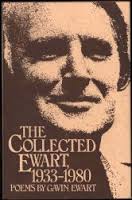
For some reason this reminded me of one of the amusing poems by Gavin Ewart whom I heard one delightful evening during the St Ives Festival at the Penwith Gallery in the early nineties. The poem is called “Office Politics”.

Eve is madly in love with Hugh
And Hugh is keen on Jim.
Charles is in love with very few
And few are in love with him.

Myra sits typing notes of love
With romantic pianist’s fingers.
Dick turns his eyes to the heavens above
Where Fran’s divine perfume lingers.

Nicky is rolling eyes and tits
And flaunting her wiggly walk.
Everybody is thrilled to bits
By Clive’s suggestive talk.

Sex suppressed will go berserk,
But it keeps us all alive.
It’s a wonderful change from wives and work
And it ends at half past five.

An obituary for Gavin Ewart appears here-http://www.independent.co.uk/news/people/obituary-gavin-ewart-1579164.html  Also this video by Ewart is wryly amusing too:-

Categories
Art Exhibition Reviews German Matters Penwith West Cornwall (and local history)

Louise Thomas -The invention of the real

“Louise was born in 1984 in London she studied at Falmouth school of art in Cornwall graduating in 2007. She was immediately picked up by SAATCHI/channel 4 collaboration ‘Sensations’. She exhibited internationally living in Cornwall, London and Paris for a while. After a residency in Iceland and living with Nuns in a convent in central London she settled in Berlin in 2013 where she currently lives and works.”

Logan's Rock by Louise Thomas

The above is a quotation from the artist’s personal statement. Louise has lived in a number of interesting environments. I couldn’t help smiling, when she described how when homeless in London, she wrote around to numerous agencies and the only supportive assistance she received was from the convent. She is currently based In Berlin and has it happens in the long Sonnenallee – a location in East Berlin made famous by Thomas Brussig in his ironic and witty novel, which has now been made into a film and performed as a play at BTZ.

Am kürzeren Ende der Sonnenallee 

Ships that are Wrecks

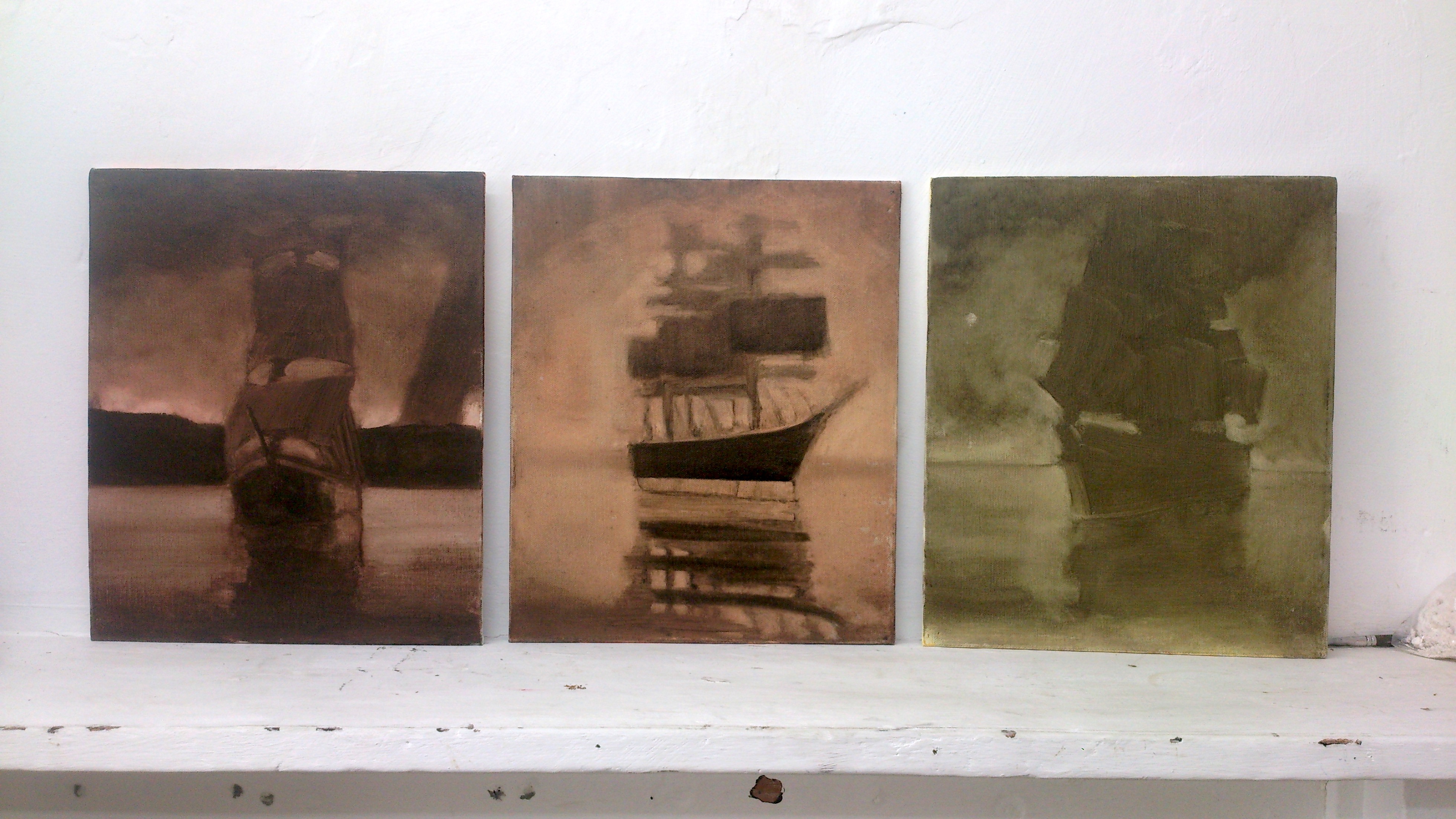
Currently, Louise Thomas has just completed a three month placement at Porthmeor Studios where her work has focussed largely upon an historical approach to the coastal landscape including ships and shipwrecks. About her work, Louise has written,”I construct magical realist narratives through collages, sculpture and painting. The enviroments or events depicted show contrast between real and magical elements. These elements are visible through my different methods of production and placement of resources. I find inspiration from a wide range of source material, from films I have made of abandoned interior spaces, to specific walking routes, to archive material of paintings hanging in museums. I perform extensive research and careful study of the subject matter, building a pool of scenarios to work from.”

“Through construction of models and collages I develop my ideas for painting. From the initial source material I make collages and if necessary bring in images from holiday brochures or photocopies from unique archives. I will research historic events, sourcing restoration records from museums or libraries. I usually end up with stage sets to play out scenarios. The models can be in clay, paper, plaster and other site specific materials. I work my way through various stages, addressing ideas of scale, colour, atmosphere until I find a valid reason to develop a painting. The historic elements run alongside fictional narrative I have developed; for example flooding the space, rebuilding it, imagining it thousand years from now or highlghting natural phenomenon.”

Lifesavers oil and Cornish china clay on two aluminium panels 60x40cm 2015


Categories
Art Exhibition Reviews German Matters

The Brutality of War – The Dresden Succession

The dark period after the First World War stimulated many responses in artists of the participating countries.

In Dresden, a realistic reaction was that taken by Otto Dix who had seen action from 1915 -as a member of a Field Artillery Regiment in that city. He also saw action in a machine gun unit and took part in the battle of the Somme. He was then transferred to the Eastern Front and then returned to Flanders. He was a pupil of Conrad Felixmüller and a founder member of the Dresden Succession https://en.wikipedia.org/wiki/Dresdner_Sezession. The disturbing images that he made from his traumatic memories from these fronts influenced the expressive style with which he depicted life in the Weimar Republic.

OD1


OD


Another fascinating figure who came to Dresden in 1918 and became the Chairman and founder member of this group was Conrad Felixmuller.

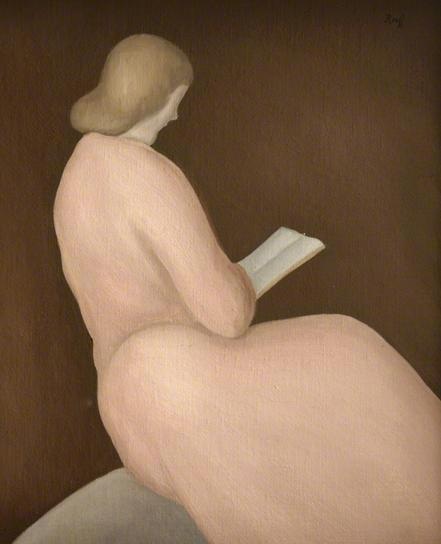
Londa vor dem Spiegel Felixmueller 1933
Londa vor dem Spiegel
Felixmueller 1933
Conrad Felixmueller Der Kuss 1930
Conrad Felixmueller
Der Kuss 1930
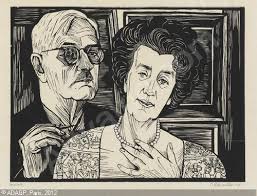
Conrad Felixmull-selbstbildnis-mit-frau


Categories
German Matters Poetry

Dein Kuß hat mir den Frühling gebracht. -Max Raabe

Liebesleid

Dein Kuß hat mir den Frühling gebracht. Denk’ an dich bei Tag und bei Nacht,
denk’ an dich, an dich immerzu. All mein Träumen bist nur du!
Und gehst du eines Tages von mir, geht auch meine Sehnsucht mit dir.
Herbstwind wird die Blätter verweh’n – unsre Liebe wird besteh’n.

Ich fühle mehr und mehr daß ich nur dir gehör’,
daß ich dir ganz verfalle, daß ich von allen dich nur begehr’.
Ich höre dein helles Lachen, und mir wird ums Herz so weh.
Sag mir, was soll ich machen, daß ich vor Sehnsucht nicht vergeh’?

Die Liebe kommt, die Liebe geht, solang’ ein Stern am Himmel steht,
solang am Strauch die Rosen blüh’n, wird stets ein Herz in heißer Lieb’ erglühn.
Und fühlst du dich geliebt, dann frag’ nicht. Und bist du mal betrübt, verzag nicht,
denn immer wird’s so sein wie heut’: Auf Liebesleid folgt Liebesfreud’!

Dein Kuß hat mir den Frühling gebracht. Als du mir entgegengelacht,
lag in deinem zärtlichen Blick eine ganze Welt voll Glück.
Nur du bist für mich das Leben. Kann nicht mehr ohne dich sein.
Alles will ich dir geben, denn dir gehör’ ich, dir allein!

Die Liebe kommt, die Liebe geht, …
Genau wie heut, für alle Zeit.

Translation at

http://lyricstranslate.com/en/max-raabe-liebesleid-lyrics.html#ixzz3qf9qISJG

Herr Max Raabe
Herr Max Raabe


Categories
Book Reviews German Matters Literature

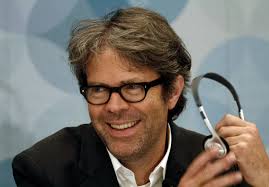
Jonathan Franzen’s Rage -Reviewing Philip Weinstein

Jonathan Franzen: The Comedy of Rage makes frequent mention of Franzen’s attendance at Swathmore College in Pennsylvania, where he graduated in 1977 and where the author, Philip Weinstein was, until last year Professor of English. An earlier graduate, the novelist James A. Michner left his entire estate of some 10 million dollars to the college and the proceeds from his works, including the one on which South Pacific was founded. It was at Swarthmore that Franzen met his wife, where she had been a gifted classmate. Weinstein, the author who teaches there, has personally known Franzen for over two decades and the latter has given him a personal interview and been otherwise in contact with him for some considerable time. If this all seems just a little blurred in its boundaries, not to say incestuous, then that might not matter. However, Franzen’s work closely concern itself with shame, guilt, incest, rage and humiliation.

JF1

This book strives to relate Franzen’s fraught personal life with his novels and his journalism for the New Yorker. Weinstein has recently published an acclaimed work, Becoming Faulkner which may be loosely termed a psycho-biography connecting that writer’s life with his work. The tone of this work, is reminiscent of the films; Tom and Viv about T.S.Eliot’s disastrous marriage and also Sylvia, about the difficult relationship between Plath and Ted Hughes. Brought up in Webster Groves in St Louis, Franzen appears to have lived in fear of his earnest and ambitious parents. His father was taciturn and averse to expressing feelings. Franzen also had difficulties with his mother, who was engulfing, over-demanding and inappropriately needy of her son. The suicide of a close friend and literary rival, David Foster Wallace was later to add to Franzen’s sense of alienation.

However, it appears that the sensitive Franzen immersed himself in his studies in German, finding his tutor a supportive and friendly figure. However, travelling to Munich and Berlin, the latter on a Fulbright scholarship, he became focussed on two complex writers; Kafka and Kraus. In accordance with Weinstein’s general thesis on his subject’s struggles with father figures, Franzen became fascinated with Kraus and also with the latter’s literary struggles with Heinrich Heine. According to Krauss who was Jewish but later converted, Heine, another cosmopolitan Jew was responsible for downgrading journalism with fancy French inventions like the popular newspaper supplement or Feuilleton. In a characteristic leap, these products of a superficial Viennese scribbling around a hundred years ago are compared, by Franzen, with the dumb-down products of social networking.  Franzen is concerned to re-educate his public with hard reading. His latest novel at 563 pages-shorter than those of say, Robert Musil or Thomas Mann-but scarcely a snip!JF2

Weinstein is most concerned with explaining Franzen’s development as a novelist. His first novel, The Twenty-Seventh City concerned itself with the decline and corruption in his home city, St Louis and his next novel about earthquakes in north-eastern Massachusetts. It appears that Franzen held somewhat overblown expectations that were perhaps based on an unmoderated and explosive rage now exacerbated by a failed marriage. Interestingly and simultaneously, another of his self-stylisations was as a kind of Charlie Schultz figure. His writing appears to have undergone a change upon the death of his father, his distressing relationship and also as his recognition that his own inappropriate literary role models, particularly Thomas Pynchon were unsuited to what he discovered he was best at writing. It also might be true to say, although Weinstein does not appear to explicitly say it, Franzen was publicly analysing his writing, almost as John Clare put it in lines-also taken by T.S.Eliot, “the self-consumer of my woes”. In any event, with the use of humour sometimes manic, Franzen was able to focus more productively on the anger within the family, generated from the past, and to enrich his narrative. There then follows an increased concern to involve the reader, to keep him interested and to keep him reading.

JF4

In his next book, The Corrections, Franzen dealt with the impact on his family of Alfred’s irreversible dementia. Alfred is essentially a personification of Franzen’s father. The book’s title is therefore ironic. However, Weinstein insists, that in this and later books greater recognition is given to his character’s identities and to allow them some freedom to develop. Weinstein goes on to discuss Franzen’s recently published book, Purity. Reviews of this book which praise both its entertainment value and its seriousness. They also mention that it makes allusions to Great Expectations. It also concerns itself with the Occupy Movement, state secrets and whistle-blowing.

Reading this book, I found myself wondering who might find it useful. Possibly students of American literature. However, the writing lacks clarity in places and sometimes sentences are so gnomic as to lack any sense. The account is repetitious and somewhat forlorn. Much reference has been made to Freud but little to the insights of his followers. I am sorry to say that I am unsure that Franzen’s popularity will benefit greatly from Weinstein’s book. Nonetheless, this is a brave attempt to address the work of a writer of considerable contemporary relevance.

For those who are interested in the Kraus Project and Vienna (again!) will enjoy the discussion at https://www.youtube.com/watch?v=O5SPtKK2NPk

This Newsnight interview is also worth viewing; amongst other issues he discusses his latest novel https://www.youtube.com/watch?v=nGIrNN0k7iU



Categories
Art and Photographic History German Matters Literature West Cornwall (and local history)

The Woman in Gold

I watched and thoroughly enjoyed but was also saddened by this brilliant film viewed as a DVD last night. I visited Vienna in October last year including the Belvedere. The first posters I saw going down into the U-bahn in Munich. Although the places and the actors too were sort of familiar as was the historical context, for instance from reading Eva Menase http://www.goethe.de/ins/au/lp/prj/bkm/rev/aut/men/enindex.htm and George Klaar http://www.independent.co.uk/news/obituaries/george-clare-memoirist-who-recalled-life-in-nazi-vienna-and-postwar-berlin-1726060.html

20141009_104321

The Jewish life in Vienna was so evocatively and poignantly rendered that it brought tears to my eyes. The music was interesting too for obvious reasons and the director’s commentary equally moving. Hence it was particularly interesting to discover in the Penwith Gallery to discover the work of Albert Reuss, who not only was in Vienna at this time but ended his life in Truro having lived in Mousehole nearby. Further info at http://www.artistsandart.org/2010/01/albert-reuss-1889-1976-austrian-artist.html

http://www.bbc.co.uk/arts/yourpaintings/artists/albert-reuss

Wig3

The film is also useful for people learning German as the Untertitel in English are so klein!!!

(This article also provides an opportunity to refer to my friend, Susan Soyinka on her family and researches at https://susansoyinka.wordpress.com/)

(c) Newlyn Art Gallery; Supplied by The Public Catalogue Foundation
Categories
Classics German Matters Literature

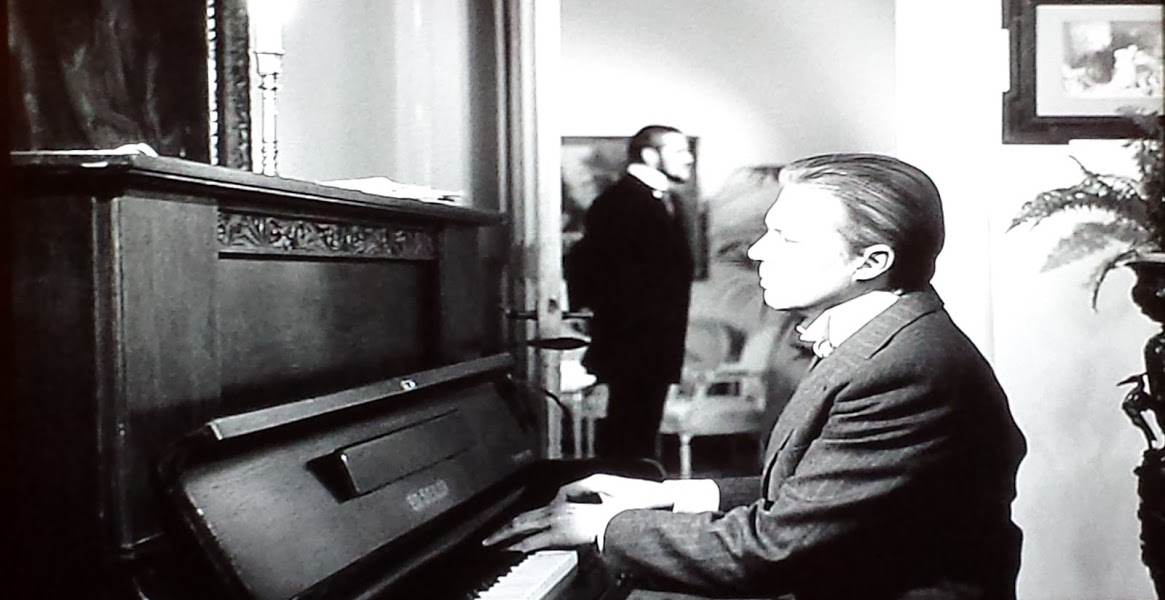
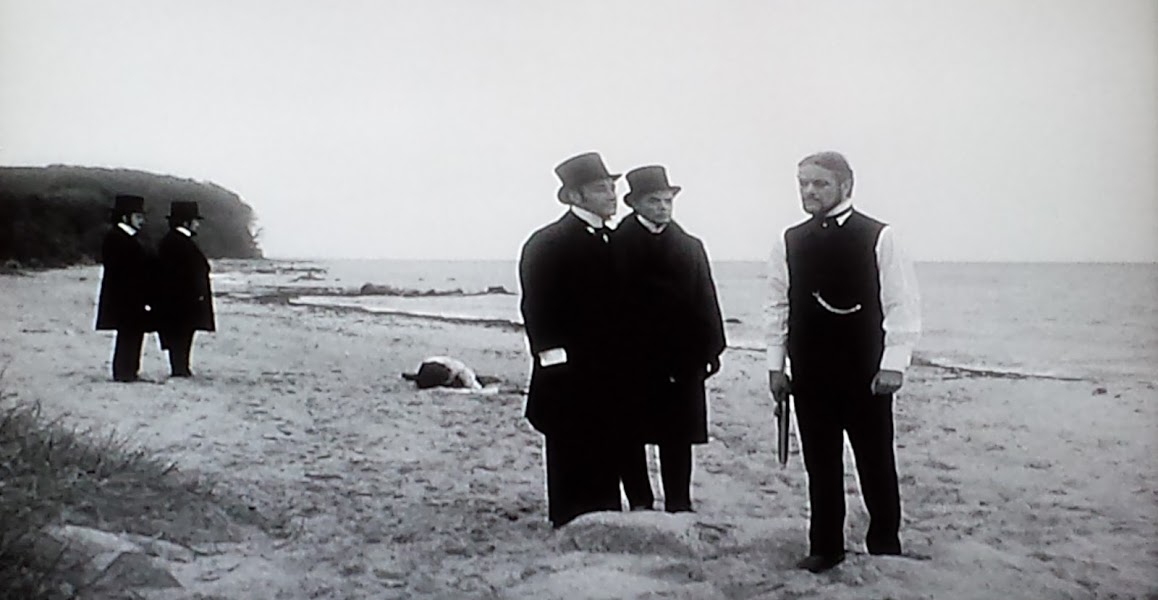
Fassbinder’s Effi Briest 1977

13dac8148cf086995776c8f80db142891de0180eTheodor Fontane wrote his novel in 1894-5 and it was first serialised in Deutsche Rundshau https://en.wikipedia.org/wiki/Deutsche_Rundschau and appeared as a novel ln book form in 1896. So far, I have only been able to read it in German in an abridged but excellent edition published by ELi Lektueren. It is a fascinating novel which treats with sensitivity the downfall of a young and imaginative girl, a “Naturkind” subject to the stifling and formal Prussian society. It also deals with various other themes and feelings which are discussed at length at https://de.wikipedia.org/wiki/Effi_Briest

There are also interesting film clips on You Tube. The plot is explained in 11 minutes at at

and the clip, giving some feeling of Fassbinder’s extraordinary film may be found st

Just as the book echoes with comparisons to Emma Bovary (1857) and with Anna Karennina(1877) in its poetic realism so the filming by Fassbinder in black and white has dream resonances that makes the whole film so evocative. It is not surprising that the filming took some two years nor that Hanna Schygulla.20151018_19292620151018_20205220151018_20270820151018_204629 (1)

Categories
Art and Photographic History Art Exhibition Reviews German Matters

The Berlin Art Fair 2015 (15th-20th September)

KLEISTER-Görlitzer-Straße-2014Berlin Art Fair actually lasts, not a week, but just five days. It is an event which stretches across the whole of central Berlin with for instance, more than 40 openings on just one evening. It comprises several separate art fairs; the ABC fair itself contains works from a hundred separate galleries and from 17 different countries. Another complete section is the POSITIONS fair and is a similarly large event spread across several large halls. Little wonder therefore that the brochure introduction by Christiane Meixner says, “Kunst kann schoen anstrengend sein”-art can certainly become stressful and hard on the feet too, as there is such a wide variety of art on display, and such a large quantity to see. There are, after all some 400 galleries in Berlin.

The significant fact that emerges from these crowded halls with a welter of visual display units and ingenious installations is the priority given to current social and political events. Much of the art on display concerned the ecology, relationship issues, gender identity, media simulacra but significantly as the refugees were streaming into Bavaria there were sketchess that addressed to designing buildings of safety for immigrants. As I write this review today, I have just heard too that the Berlinische Gallery will be making entry free to those escaping from strife in Africa and the Middle East.PG2

Perhaps, the artist who has attracted the most attention was Cindy Sherman. Her show displayed more than 60 photographs from every stage of the renowned American artist’s lengthy career. Sherman played both subject and artist by turns, displaying herself as a magazine centrefold, film starlet, or unhappy housewife, uncannily mimicking cultural stereotypes. She also experiments in exciting ways with the tropes of art history within her conceptual portraiture. Famed for the quiet horror of some of her images, these were works throughout her career which have been collected by the octogenarian Berlin collector, Thomas Olbricht. The works shown included the remarkable black and white “untitled film stills”.

PG3U.S. artist Paul McCarthy exhibited at the Schinkel Pavillon, a magical venue designed by the Bauhaus architect, Richard Paulick, once an official city guest house of the GDR. McCarthy worked with his son Damon for the Volksbühne, a program of walk-in installation, film, performance, music and painting, “Rebel Dabble Babble Berlin”(described as a meditation on architypes and oedipal tensions within family dynamics) accompanied by concerts, performances and discussions on Viennese Actionism, it was curated by Theo Altenberg under the motto “existence Palace”. In the Schinkel Pavillon, Paul McCarthy’s work dealt with the human body and its transitions; going to sleep, life and death, presence and illusion.

Many Berlin collectors grant the general public access to their spectacular collections, known as “Sammlungen”, during Berlin Art Week. Once the interest of famous critics and writers like Walter Benjamin and Stefan Zweig, this tradition is continued by wealthy software developers and Parisian architects. They all experience pleasure (Zeigefreude) in showing their magnificent assemblies. Naturally, their interests vary from concept art to retro-charm. The venues are equally spectacular from the brick dominated Backsteinarchitektur of what was once a margarine factory, with magnificent views over the Spree, to the claustrophobic walls of a former East German bunker now covered with works by Ai Weiwei (http://www.telegraph.co.uk/art/artists/inside-ai-weiweis-berlin-bunker/) and Alicja Kwade.( http://www.artberlin.de/kuenstler/alicja-kwade/)

The prospective joys of East Berlin

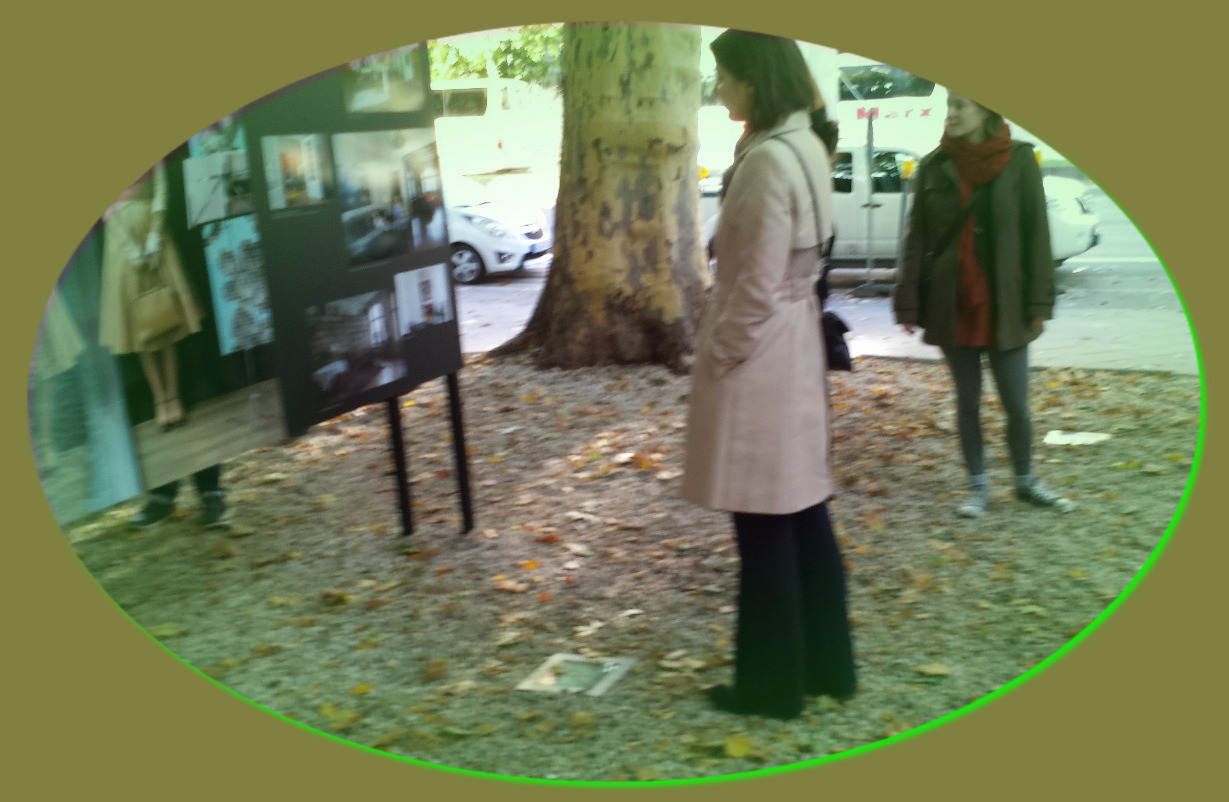
One of the encouraging developments during the Berlin Art Week was the emphasis placed upon independent and non-conformist work. There are many happenings taking place throughout the week and some of these may be referenced on You-tube. When I left Berlin, after a two week stay, I had to pay something like an extra 50 Euros in city-tax. I feel a little better about this now having discovered that one of its uses is to support a diverse network of Free Berlin Project Spaces. Since 2009 there have been something like 200 spaces around the city which retain the oddness and originality of an era when William Reich was being read in communes. Two are worthy of special mention. A park wall in Görlitzer Strasse in Kreuzberg has designed an outside project called “Kleister” or wallpaper paste. A group of photographers have stuck posters of their pictures on a park wall. The result will be marked soon by sun, rain, graffiti and theft! Another exhibition of interest because of its connection between places and images was the work of Stefan Schneider at Kurt-Kurt in the district of Moabit. One of images taken of old wooden boats on the beach at Dungeness has a particular lyrical charm.

Stefan Schneider at Kurt-Kurt

The whole art week is a tribute to the importance given to art in the capital city. The Art Week largely runs outside the exhibitions in the main galleries. However, the exhibition at the delightful Berlinische Galerie called “Radikal Modern” shows the incredible redevelopments of buildings and planning in general since 1960. The recovery of this city from the years of Nazi terror, bombing and Cold War division by The Wall is a tribute to the courage and imagination of its inhabitants that have recovered and built a new life from out of the rubble of the past. (http:/berlinischegalerie.de/ausstellungen-berlin/aktuell/radikal-modern/

From Radikal Modern at the Berlinische Galarie

)