I have a neat little book called ~” Poems of Cornwall” withdrawn from the County Library Service. The preface is by W.Herbert Thomas and is dated, “Penzance July !892”. A couple of months before the last down train from Paddington on Brunel’s broad gauge had run. It is a collection of some 30 poets of whom photographs of 18 appear inside the front cover. There is a poem by Sir Humphry Davy beneath an engraving of his statue.
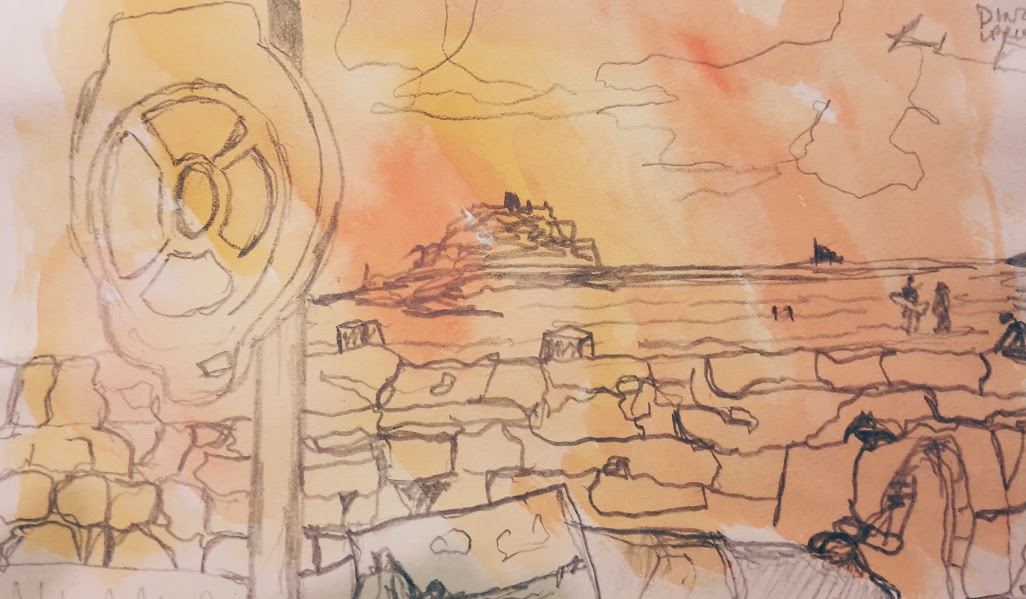
St Michael’s Mount
Majestic Michael rises – he whose brow
Is crown’d with castles; and whose rocky sides
Are clad with dusky ivy: he whose base,
Beat by the storm of ages, stands unmov’d
Amidst the wreck of things-the change of time.
That base, encircled by the azure waves,
Was once with verdure clad; the towering oaks
Here waved their branches green: the sacred oaks ,
Whose awful shades among the Druids stay’d
To cut the hallowed mistletoe, and hold
High converse with their gods.
Sketch of the Mount last week and my leg!
Interesting this connection that early scientists felt for poetry and nature. Most obviously found in Goethe perhaps. Davy enjoyed angling and travelled widely across Europe to fish, I believe on the Dalmatian coast-Shakespeare’s Illyria from Twelfth Night. Which information I seem to recall from that fascinating book,”The Age of Wonder” by Richard Holmes. Count Orsino’s castle became the Mount in that great production of Twelfth Night by Trevor Nunn in 1996. Returning to Davy’s poem, I suppose some of the vocabulary now sounds antiquated, although the original “awful” sounds like that recent commonly used word,”awesome”. I rather like the line -“Amidst the wreck of things-the change of time.” which reminds me somehow of that biography of Malcom Muggeridge which he entitled “Chronicles of Wasted Time”. A title which comes from the lovely sonnet 106 of Shakespeare:-
When in the chronicle of wasted time
I see descriptions of the fairest wights,
And beauty making beautiful old rhyme
In praise of ladies dead and lovely knights,
Then, in the blazon of sweet beauty’s best,
Of hand, of foot, of lip, of eye, of brow,
I see their antique pen would have express’d
Even such a beauty as you master now.
So all their praises are but prophecies
Of this our time, all you prefiguring;
And, for they look’d but with divining eyes,
They had not skill enough your worth to sing:
For we, which now behold these present days,
Have eyes to wonder, but lack tongues to praise.
Returning to the main thread -what is otherwise called (aus den „Wahlverwandtschaften“ von Johann Wolfgang von Goethe:) the roter Faden -“Poems in Cornwall”, the editor W.Herbert Thomas was in fact a journalist who is described as “the son of a mine-smith of St Day. For seven years a mining clark, he was afterwards a reporter for two years on the San Francisco “Examiner” and is now on the staff of the” Cornishman” -however I would like to draw attention to a short poem by W,F.Woodfield. It is rather poignant and all that is said of him is that he lived in Penzance, he wrote a collection called “Serpentine Worker” and ,”is now in Australia”.
The Emigrant’s Farewell to Mount’s Bay
Farewell Mount’s Bay! A long farewell
I bid thy rock-bound shore;
My heart nigh breaks with grief to think
I ne’er may see thee more.
From infancy I have watched thy waves,
And roamed thy rocks and sands;
But I must leave thee beauteous bay,
To toil in other lands.
My heart grows faint-tears blind me so,
Words fail my love to tell;
My very soul so yearns for thee
I scarce can say -farewell.
But Manhood bids me dry my tears,
And brace me for the fight;
Adieu, adieu belove’d bay!
Farewell my heart’s delight.
Sincerely felt lines at any rate. It gives us a feeling of the process of uprooting that is involved in emigration and ought, I think, make us consider the plight of refugees with sympathy and support.
Jesus kehrte dann in der Kraft des Geistes nach Galiläa zurück, und die Kunde von ihm verbreitete sich in der ganzen Umgegend.
15Er lehrte in ihren (= den dortigen) Synagogen und wurde (wegen seiner Lehre) von allen gepriesen.
16So kam er denn auch nach Nazareth, wo er aufgewachsen war, ging dort nach seiner Gewohnheit am nächsten Sabbattage in die Synagoge und stand auf, um vorzulesen.
17Da reichte man ihm das Buch des Propheten Jesaja; und als er das Buch aufrollte, traf er auf die Stelle, wo geschrieben steht (Jes 61,1-2; 58,6):
18»Der Geist des Herrn ist über mir (oder: ruht auf mir), weil er mich gesalbt (= ausgerüstet) hat, damit ich den Armen die frohe Botschaft bringe; er hat mich gesandt, um den Gefangenen die Freilassung und den Blinden die Verleihung des Augenlichts zu verkünden, die Unterdrückten in Freiheit zu entlassen,
19ein Gnadenjahr des Herrn auszurufen.«
20Nachdem er dann das Buch wieder zusammengerollt und es dem Diener zurückgegeben hatte, setzte er sich, und aller Augen in der Synagoge waren gespannt auf ihn gerichtet.
21Da begann er seine Ansprache an sie mit den Worten: »Heute ist dieses Schriftwort, das ihr soeben vernommen habt, zur Erfüllung gekommen!«
22Und alle stimmten ihm zu und staunten über die Worte der Gnade (oder: über die holdseligen Worte), die aus seinem Munde kamen, und sagten: »Ist dieser nicht der Sohn Josephs?«
23Da antwortete er ihnen: »Jedenfalls werdet ihr mir das Sprichwort vorhalten: ›Arzt, mache dich selber gesund!‹ Alle die großen Taten, die (von dir), wie wir gehört haben, in Kapernaum vollbracht worden sind, die vollführe auch hier in deiner Vaterstadt!«
24Er fuhr dann aber fort: »Wahrlich ich sage euch: Kein Prophet ist in seiner Vaterstadt willkommen.
25In Wahrheit aber sage ich euch: Viele Witwen gab es in Israel in den Tagen Elias, als der Himmel drei Jahre und sechs Monate lang verschlossen blieb, so daß eine große Hungersnot über die ganze Erde kam;
26und doch wurde Elia zu keiner einzigen von ihnen gesandt, sondern nur nach Sarepta im Gebiet von Sidon zu einer Witwe (1.Kön 17,1.9).
27Und viele Aussätzige gab es in Israel zur Zeit des Propheten Elisa, und doch wurde kein einziger von ihnen gereinigt, sondern nur der Syrer Naeman(2.Kön 5,14).«
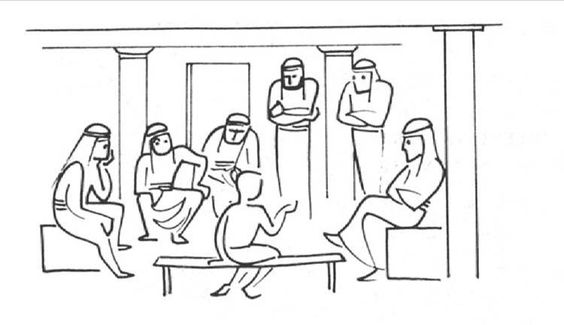
Max Liebermann -[Der zwölfjährige Jesus im Tempel] (1879)28Als sie das hörten, gerieten alle, die in der Synagoge anwesend waren, in heftigen Zorn:
29sie standen auf, stießen ihn aus der Stadt hinaus und führten ihn an den Rand (oder: auf einen Vorsprung) des Berges, auf dem ihre Stadt erbaut war, um ihn dort hinabzustürzen.
30Er ging aber mitten durch sie hindurch und wanderte weiter.
This is a fascinating passage to read in a different language and to pause to consider the meanings of what is being preached, considered or taught. For instance what exactly is meant here by 4.19 “ein Gnadenjahr des Herrn auszurufen”-proclaiming the year of the Lord” which may mean a period of time as well as an actual year. Pope Francis has proclaimed, for instance a Year of Mercy-“The Year runs from 8 December 2015 to 20 November 2016 and offers us the opportunity to reflect on how we might better radiate and reflect the tender love of God in our world and to seek to draw others into experiencing that love and mercy.” However, possibly with the ruined city of Aleppo in my mind and having seen 360 degree views of the destruction of such a city wrought by modern weaponry, my attention is drawn to verse 4.26 which concerns the Phonecian city of Sarepta between Tyre and Sidon and 4.27 which concerns Naaman in Syria. Now Naaman and the widow were both gentiles and the significance clearly concerns the divine blessing outside Nazereth and the preaching of the Gospel that is starting at this unique moment to incude the Gentiles.
However it seems to me to have a meaning for our own times:- Why are we bombing Syria? Where are the efforts for the peace process???The people, including helpless children are part of the human community. To neglect their needs and to continue to feel we have a right to immunity-especially after the significance of the Holocaust-is totally unacceptable. We live, as I fear Brexit has shown, in a right little, tight little island. However, come Theresa or even come Trump, the teaching remains clear-” um den Gefangenen die Freilassung und den Blinden die Verleihung des Augenlichts zu verkünden, die Unterdrückten in Freiheit zu entlassen,” -we are assured by Jesus through Isiah “The Spirit of the Lord is upon me, because he hath anointed me to preach the gospel to the poor; he hath sent me to heal the brokenhearted, to preach deliverance to the captives, and recovering of sight to the blind, to set at liberty them that are bruised.”
Jews Praying in the Synagogue on Yom Kippur by Maurycy Gottlieb
Although perhaps reminiscent of Caliban in The Tempest, the quote comes from Gregor Samsa in Kafka’s “Die Verwandandlung”-or Metamorphosis as it is known in English translation. However I found the quote on an interesting and intriguing video about Nietzsche’s categories of the Apollonian and the Dionysian by Claudia Simone Dorchain.
My interest in Nietzsche has been re-awakened by seeing the new film about “Lou Andreas Salome” in Berlin-actually at Eva Lichtspiele at Blissestraße 18-which is a great old-fashioned cinema. It reminds me of another old filmhouse in Vienna-(The Bellaria Kino) which is situated behind the Volkstheatre and in turn years ago to “The Scala” in the High Street in St Ives -which is where Boots Chemist is situated today. Anyway, for those who are interested this is what it says on the Eva Lichtspiele website:-
Die ‘Eva Lichtspiele’ gelten mit der Eröffnung 1913 unter dem Namen ‘Roland Lichtspiele’ als ältestes Filmtheater im Bezirk Wilmersdorf. In den 20er Jahren, nach einem Umbau und der gleichzeitigen Umbenennung des Kinos in den heutigen Namen, wurden hier die Filme auf Vorschlag des Betreibers mit Musikbegleitung präsentiert – zuerst durch eine Violinistin und später durch ein ganzes Orchester, das durch den Einbau eines zweiten Vorführapparates pausenlos im Einsatz war. Glücklicherweise blieb das Kino während des Zweiten Weltkrieges nahezu unbeschadet, so dass der Kinobetrieb durchgehend aufrechterhalten werden konnte und noch heute viele Einzelheiten des Gebäudes (wie z.B. der schöne elegante Neonschriftzug an der Fassade) auf die lange Kinogeschichte der ‘Eva Lichtspiele’ hinweisen.
Nietzsche I find difficult to come to grips with. Probably, I have read about him rather than reading him directly. Steeped in German classical studies and Schopenhauer, he has had a huge influence on his time but like Heidegger no friend of rationalism or socialist thinking. Although both not only raised interesting questions but demonstrate the continuity of philosophical history. Neo-Thomism and Catholicism in the case of the latter, Plato and Schopenhauer-and both of course were influenced by the Jena poet, Hölderlin.
As to Salome’s influence on Rilke; here is one view relating to her Russian origin:-
“In 1899 Rilke made the first of two pivotal trips to Russia with Salome, discovering what he termed his “spiritual fatherland” in both the people and the landscape. There Rilke met Leo Tolstoy, L. O. Pasternak (father of Boris Pasternak), and the peasant poet Spiridon Droschin, whose works Rilke translated into German. These trips provided Rilke with the poetic material and inspiration essential to his developing philosophy of existential materialism and art as religion. Inspired by the lives of the Russian people, whom the poet considered more devoutly spiritual than other Europeans, Rilke’s work during this period often featured traditional Christian imagery and concepts, but presented art as the sole redeemer of humanity.” This comes from https://www.poetryfoundation.org/poems-and-poets/poets/detail/rainer-maria-rilke
In any event this film-not the first on her -see the link below to Calvini’s version- is visually appealling making fascinating use of old picture postcards and raises questions over the many radical ideas, poetry music and of course, psychoanalysis. There is a very revealing chapter on her in Lisa Appignanesi and John Forrester’s “Freud’s Women”. I do hope this becomes available soon on DVD with English subtitles just like the Stefan Zweig film currently also playing in Berlin. Zweig too has written interestingly on Nietzsche-the book below is available in English translation. Reading about her and her circle, their poetry and music certainly has a calming effect on me.
Stefan Zweig has been the subject of new interest in recent years. Two new biographies have appeared quite recently and in addition his friendship with Joseph Roth has been the subject of fierce debate after an article in The London Review of Books by Michael Hoffmann. “Ostende. 1936, Sommer Der Freundschaft” by Volker Weidermann is a magnificent read on this relationship and the plight of exiles from Nazi Germany was published just last year and has been translated into English as “Summer before the Dark, Ostend Stefan Zweig and Joseph Roth;Ostend 1936“(Reviews may be read at https://www.amazon.co.uk/Summer-Before-Dark-Stefan-Joseph/dp/1782272038/ref=pd_bxgy_14_2?ie=UTF8&psc=1&refRID=JA0N7E4NR05FFN2CAHF9 )It was also Radio4’s Book of the week. The Sunday Times, for instance, said of this book;
‘For such a slim book to convey with such poignancy the extinction of a generation of “Great Europeans” is a triumph’. However Zweig’s life experiences also formed the background and leitmotif for the zany film and also a book by Wes Anderson, The Grand Budapest Hotel. One reader comments, “I also feel like I owe this movie a great deal, in that it turned me on to the works of Stefan Zweig, master Austrian storyteller, and my new favorite author”
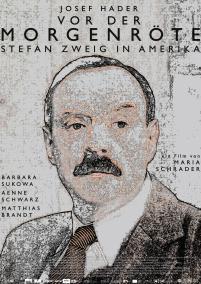
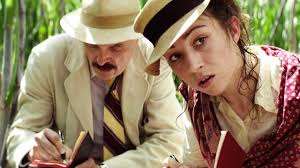
The new film just screening in Germany is called “Vor der Morgenroete” and features Josef Hader as Stefan Zweig and is produced by the actress, Maria Schrader who recently played a prominent role in the Channel 4 series, Deutschland 83.
The film consists of episodesfromthelifeof theAustrianwriterStefanZweiginexile. Attheheight of hisworldwidefame, heisdriventoemigrateand grows desperate in the faceofknowledge ofthedownfall of Europe, which like Rothhe already attempts to forsworn his fellow European intellectuals.This then is thestory of arefugee,thestoryofthelossof theold world of the Hapsburg K und Kandthesearchforanewhome in America.
StefanZweigwasa renownedauthorGermantogetherwithThomasMannthemost translated in histime.Already in 1934, ZweiglefthisnativeAustriatogointoexilefromwhichhedid not return. Inher compellingandsensual opulentfilmMariaSchradershowstheworld-famousauthorinsixepisodes from hislife;hisfirststayinBrazilandtheparticipation in theP.E.N.-CongressinBuenosAires in 1936aboutvisitingNewYork CityandhisfirstwifeFriderikein1941untilhisdeath in 1942in Petrópolis. There, Zweigwrotehisfamouswork“The Chess Game“.JosefHadershinesinthetitle roleof thefamousAustrianwriterandpacifistStefanZweig.BarbaraSukowaashisfirstwifeFriderike, also gave a convincing performance. Another strong impression was given by Aenne Schwarz as Zweig’s delicate and alluring second wife.http://www.youtube.com/watch?v=3wLiyFyfuB4
The film impressed me on several different levels. In 2015,I had visited in Munich, the following exhibition which showed much of the material, Zweig had collected and details of his first trips to America-http://www.literaturhaus-muenchen.de/ausstellung/items/141/vars/id-2015-stefanzweigausstellung.html It is clear that despite the recognition of his fame, Zweig found it difficult to settle in America;either in New York or in Yale or later in Brazil. (Verloren war die Welt von Gestern.) Yesterday’s world had disappeared, the Hotel Metropole in Vienna was now a Gestapo headquarters. Notably in Die Welt von Gestern, he noted how money came so readily to the Brownshirts and living in Salzberg he knew just how the racist menace grew. Sadly there are parallels with today and as Zweig remarked, Wer die Vergangenheit nicht versteht, versteht nichts wirklich.
Dein Mund, der schön geschweifte,
Dein Lächeln, das mich streifte,
Dein Blick, der mich umarmte,
Dein Schoß, der mich erwarmte,
Dein Arm, der mich umschlungen,
Dein Wort, das mich umsungen,
Dein Haar, darein ich tauchte,
Dein Atem, der mich hauchte,
Dein Herz, das wilde Fohlen,
Die Seele unverhohlen,
Die Füße, welche liefen,
Als meine Lippen riefen -:
Gehört wohl mir, ist alles meins,
Wüßt nicht, was mir das liebste wär,
Und gäb nicht Höll noch Himmel her:
Eines und alles, all und eins.
Information and a great photograph of Klabund, Alfred Henschke, appears at http://www.salonkultur.de/termine/autoren/Alfred_Henschke/56/#.V3TCc7grLIU
One translation by computer gives this in English as:-
Yourmouth,thebeautifullycurly
Yoursmilethattouchedme,
Yourlookthatembracedme,
Yourlap,whichmeattention
Yourarm,whichwrappedaround,.
YourWordthatmeumsungen
Yourhairin thereIpopped up,
Yourbreaththatbreathedme,
Yourheart,thewildfoals,
Thesoulopenly,
Thefeet,whichwere,
Whenmylipscalled: –
Mine, probably,everythingismine,.
Notknowwhataboutmethedearest,
And instead of hellwashereyetHeaven:
Oneandall,allandone.
Maybe Line 6 means something like “Your speech that rings around in my head”
Arte produces cultural programmes in English, French and German. The following programme which is in relatively easy German is well illustrated with drawings, original photographs and film clips and centres around Paris in the 1930s.
It is the period leading up to the Second World War and is particularly interesting on the splits between the Surrealists and the Communists leading up to the fight against Fascism particularly in the Spanish Civil War. It is also good on the developments in different forms of photography and the relationships of key figures like Louis Arragon, Max Jacob, the writer Andre Gide, Miro and of course, Picasso. The programme is worth watching for Picasso’s preliminary sketches of Guernica alone.
From the Arte Website we read that:-
Im Juni 1936 reist André Gide nach Moskau, wo er mit großem Pomp empfangen wird. Angesichts der sowjetischen Realität ist ihm der Prunk eher unangenehm. Kurz nachdem er nach Paris zurückgekehrt ist, trifft er sich mit André Malraux, der gerade aus Spanien eingetroffen ist, das sich im Bürgerkrieg befindet. Malraux hat die Fliegerstaffel „España“ aufgebaut und kämpft auf der Seite der Republikaner gegen Franco. Gide möchte den Reisebericht „Retour de l’U.R.S.S.“ veröffentlichen, der hart mit Moskau ins Gericht geht, doch seine Freunde und Malraux halten den Zeitpunkt für ungünstig. Der Aufstieg des Faschismus erfordere es, die UdSSR als einziges Bollwerk gegen den Nationalsozialismus zu unterstützen. Das Buch erscheint dennoch. Die Sowjets sind außer sich, die Deutschen jubeln.
Two interesting figures from this period were Andre Malraux and Louis Aragon. Malraux himself was an Art Historian and significantly helped to build part of the Spanish Republican Air Force- and author of La Condition humaine (Man’s Fate) and himself the subject of biographies by Olivier Todd and also Harold Bloom. He was always close to De Gaulle and became a Minister of Culture from 1958-1969. There is an interesting review of Todd’s book at http://www.nytimes.com/2001/05/31/style/31iht-malraux_ed3_.html (Photograph below)
Here is a poem by Louis Aragon; it is in French and English translation-
Old Meg she was a gipsy;
And liv’d upon the moors:
Her bed it was the brown heath turf,
And her house was out of doors.Her apples were swart blackberries,
Her currants, pods o’ broom;
Her wine was dew of the wild white rose,
Her book a church-yard tomb.Her brothers were the craggy hills,
Her sisters larchen trees;
Alone with her great family
She liv’d as she did please.No breakfast had she many a morn,
No dinner many a noon,
And ‘stead of supper she would stare
Full hard against the moon.But every morn, of woodbine fresh
She made her garlanding,
And every night the dark glen yew
She wove, and she would sing.And with her fingers old and brown
She plaited mats o’ rushes,
And gave them to the cottagers
She met among the bushes.Old Meg was brave as Margaret Queen,
And tall as Amazon:
An old red blanket cloak she wore,
A chip hat had she on.
God rest her aged bones somewhere–
She died full long agone!
A serviette, a glass of champagne taken outside a fish restaurant in the open-air Viktualienmarkt in Munich, all taken to celebrate the first day of spring, prompt Cees Nooteboom into Proustian reverie. Upon the paper napkin is written in blue capitals the word POSEIDON, the Greek god who has preoccupied Nooteboom’s thoughts for several summers. The blue colour reminds him of the sea viewed from Mediterranean garden of his villa in Menorca. Taking this prompting as a moment of benign synchronicity, he later begins a correspondence with this sea-deity. He seeks to inquire how this somewhat unreliable ancient Greek Olympian sees aeons of time and sends him letters and legenda; meditations and stories to be read, both poetic and tragic, from the arts and the contemporary world. He is not expecting a reply.
In the Odyssey, Poseidon is renowned for hating Odysseus who had blinded the Cyclops, Polyphemus who happened to be the god’s son. This is Homer’s view. Ovid would have known the god as Neptune and wrote about him in the ‘’Metamorphoses’’. Kafka wrote an essay in which he imagines Poseidon constantly submerged. So, Nooteboom wonders, in a notably poetic passage, how would he have viewed the first passage of the first boat on the surface above him. How does he feel about the decline of those very Greeks who worshipped him? Is he melancholy about his timeless vigil already an old man beneath the sea with only occasional excursions pulled about by tiny sea-horses, nature’s experiment in trans-gender parturition? Fascinated by the rhythms of animal behaviour and curious plants, Nooteboom’s meditative writing is enlivened by his close observation of the natural world.
Letters to Poseidon juxtaposes thoughts which are essentially theological with ponderings on inexplicable tragedies in the contemporary world from the Challenger disaster to the Arab spring. Uncomfortable topics of puzzling cruelty are subject to persistent interrogation which is addressed to an ancient deity- often depicted in statuary with his face turned away. However, there is also an interesting wrestle between belief and doubt beneath the surface. Here is an attempt to figure the Christian deity in relation to the ancient gods. It is almost that the averted gaze of the sea-god makes him more accessible to questioning. Dante and the early-German Christian mystic, Seuse are invoked and discussed whilst the reader is provided with routes to his own investigations from Nootebbom’s well-stocked mind.
The author is prominent as a novelist, art historian and as a traveller. Successive pieces are situated in, for example, in Seoul Museum of Art, a Zen garden in Kyoto, back in his study in Menorca, an island of the Dutch East Indian company in Nagasaki and back once more to Menorca to watch a blood moon. This continuous movement appears to have given rise to a certain Weltschmerz and in particular to a fascination with time and memory. This connection between time and space fascinates him as do geological aeons. He uses the Poseidon figure as a means to attempt to grasp the manner in which rocks are metamorphosed and ground to sediment over aeons. This is done in a leisurely discursive style that produces its own poetry. It requires that the reader find the patience to enjoy such digressions.
Here is a small example:-
‘’The curlews begin to call. I know they are close to the sea, but I have not yet seen them. Their Dutch name ‘’griel’’ is a much better match than ‘’curlew’’ for that drawn out, pleading sound they make. The owl I can hear nearby is another member of the secret service; it wears the darkness like a uniform and makes itself invisible.’’
The relaxed and tentative tone of the writing is at times penetrated by an image carrying anxiety which frequently refers to contemporary concerns. This is shown above where even an owl might appear as a Stasi interrogator. Despite its metaphysical tone, the prose mostly remains vivid. The issues addressed are the concerns of a man, possibly an elderly man, in search of a soul.
An unexpected feature of this book is the fifty or so pages at the end which provide photographs and reference material. I was some 30 pages into the book before I discovered these. This brought to mind the work of W.G.Seebald whose elegiac tone, Nooteboom’s travel memoir sometimes resembles. There are touches which reminded me of Lawrence Durrell’s ‘’The Alexandrian Quartet’’ and of the mysterious symmetries of Anne Michael’s ‘’Fugitive Pieces’’. This book will not be to everyone’s taste, as by nature, it is inconclusive but thought provoking. It asks fundamental questions about human behaviour ‘’’sub specie aeternitatis’’’-Baruch Spinoza’s term for the eternal perspective.
Reading Edith Hall’s book on the Ancient Greeks, develops a deep respect for the power of poetry. No poet was more effective in this regard than Homer recounting the sea adventures contained in the ‘’The Odyssey’’. It shaped the self-definition of a nation and engendered self-confidence. The mariners set out in their beautiful ships across the Aegean and established colonies to the West, in the Mediterranean as far as the Pillars of Hercules, to the East as far as the Levant and built trading cities in natural harbours along the fertile edges of the Black Sea. They were, as Plato wrote in the Phaedo, “around the sea, like frogs and ants around a pond.” They were encouraged by Delphic oracles and inspired by the company of diving dolphins.
The structure of Hall’s account is clearly set down at the start with a useful chronology from the Myceneans in 1500 B.C. to the close of the Delphic oracle in 395 A.D. providing a clear context for the following text. It also gives a framework that neatly conveys the interaction between individuals, resources, military conflicts, the arts, sports, social upheavals and importantly the contributions of recent research. Anyone reading this book will discover how much our understanding of the Greeks has developed currently from new excavations, discoveries and recent scientific techniques. The first four strongly interconnected qualities that Hall ascribes to the Greeks are that they were seagoing, suspicious of authority, individualistic and inquiring. Further, they were open to new ideas, witty, competitive, admired excellence in people of talent, were exceptionally articulate and were also addicted to pleasure.
This is, perhaps, an ideal book to take upon a Mediterranean cruise. Reading it is arguably a cheaper but comfortable substitute and it will certainly improve your geographical understanding. Some of the ancient names may well be unfamiliar to us today. Most will have heard of Knossos on Crete where back in the early Mycenean period the cattle were called by ironic names like Swift and Talkative or ‘’Oinops’’ which means wine-dark, just as Homer describes the sea. Then there is Massalia where the Greeks imported the vine and thus founded the French wine industry. Sicily, however, provided the setting for particularly notorious tyrants. Olbia, on the Black Sea, which is situated in Ukraine today, was difficult to colonise but eventually provided a sanctuary area for the worship of ‘’Apollo Delphinios’’, a sea-god of music, healing and prophecy.
Spartan Girls challenge Boys by Edgar Degas
In an interesting chapter on the Spartans, Edith Hall writes of the famous battle at Thermopylae where the courage of 300 sacrificed warriors, led by King Leonidas, created the conditions whereby Greece was saved from the influx of marauding Persians. The excellence of these Spartans consisted in their stern self-discipline and their blunt and pithy sense of humour which is therefore referred to as laconic. In a similar manner, the admiration of the Spartans is called Lacophilia after the area of Laconia which these Dorian Greeks subdued in the eighth century B.C. Spartan women appeared to have attained a degree of independence from their men folk and cultivated the worship of Artemis and festivals involving hyacinths. However, when you read of the treatment meted out to the wretched helots (slaves), recorded by Plutarch and also from Xenophon and Herodotus of the vicious clash of the armoured scrum that constituted hoplite battles, the reader begins to understand why the Spartans are summed up by the author in one adjective-inscrutable.
The adventurous Greek mind appears to have exerted its strength when the kingdom of Macedonia fell to Roman power after AD168. But as Horace wrote, ‘’Graecia captum ferum victorem cepit’’ –captive Greece took her fierce conqueror captive. It was the fluency of the Greek which made it not only the language of business but dominated both rhetoric and prose. Hegemony is after all a Greek word. Recounting these later times the account becomes even more vivid. The writings of the self-assured physician Galen were influenced the development of medicine for many centuries to come. The touching story of rhetorical superstar, as Hall terms Aristides, the inventor of the personal memoir but also a hypochondriac, has a contemporary appeal. It is nice to know that his faith in the benevolent healing deity, Asclepius, quieted his inner turmoil.
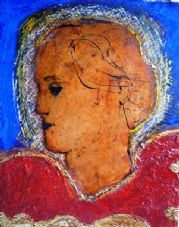
Classical Head by John Emanuel
Reading Edith Hall on the Ancients is a stirring adventure; a contemporary correspondence to what Keats must have felt when he opened Chapman’s translation of Homer. The experience is reminiscent too of a poem from the classicist Louis MacNeice who in his poem about the maritime mercenary Greek cry ‘’Thalassa, Thalassa’’ penned the following:-


![Max Liebermann -[Der zwölfjährige Jesus im Tempel] (1879)](https://penwithlit.com/wp-content/uploads/2016/08/6e0006245e664e1cc5d25b624c3e3493.jpg)







 penwithlit