Categories
Art and Photographic History Art Exhibition Reviews Penwith West Cornwall (and local history)

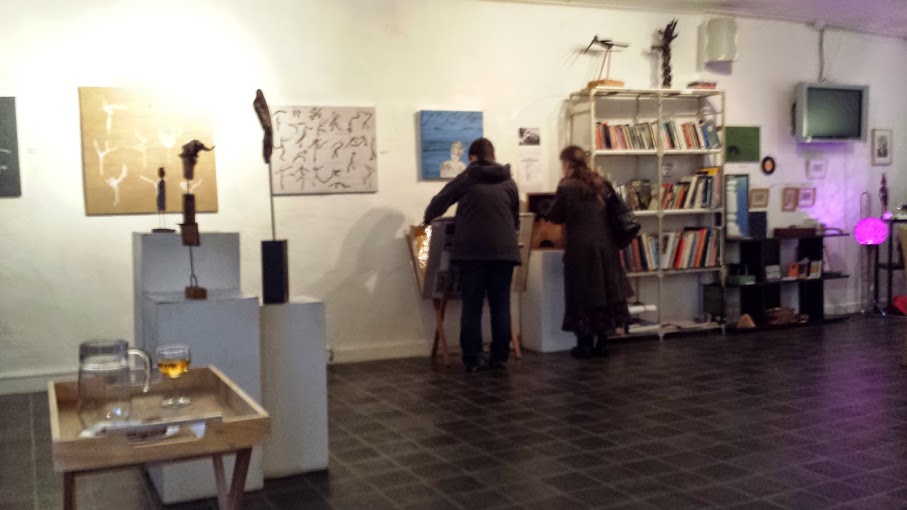
Krowji, Redruth,Kernow – Open Studios December 2014

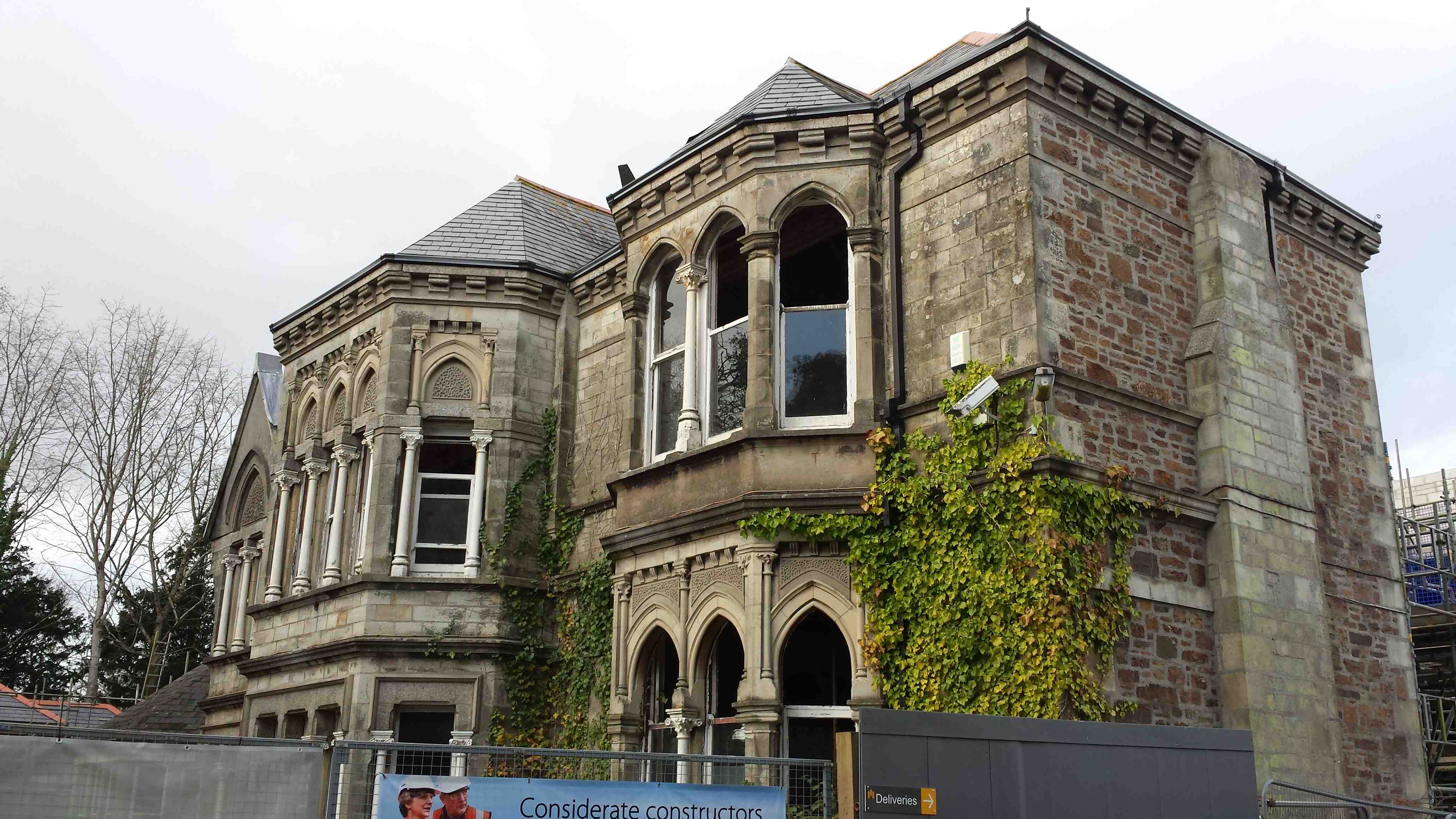
Krowji-Xmas-OS-2014-low-res_0Linda Crane1Getting to Krowji on a Sunday in December by public transport is a time-consuming business. Servicing the railway and circuitous bus routes turn a simple trip into an epic voyage. At least it affords time to see more new supermarkets, innovative centres in Pool and glimpses of neo-classical architecture in the grand manner. The upper stories of the façades remind one of the prosperity of this area in its heyday.

Under reconstruction in Redruth

Upon arrival, the bohemian atmosphere in The Melting Pot Cafe, the warmth and the leek and potato soup help to revive after the lengthy journey. The wall of clocks and masques and surreal paraphernalia suggest that a cabaret is about to begin and indeed there is a pianist in cap and bells already upon the stage. This has a timeless and dreamy ambience quite unique and sui generis.

http://www.outsidein.org.uk/linda-crane
Part image -Linda Crane

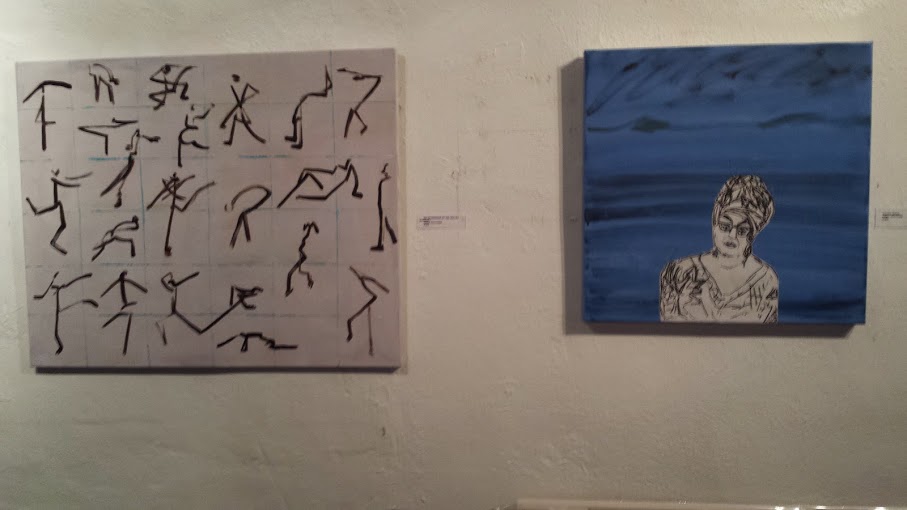
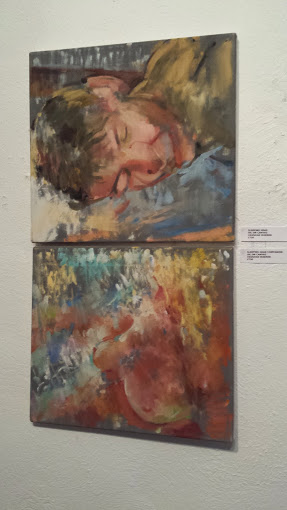
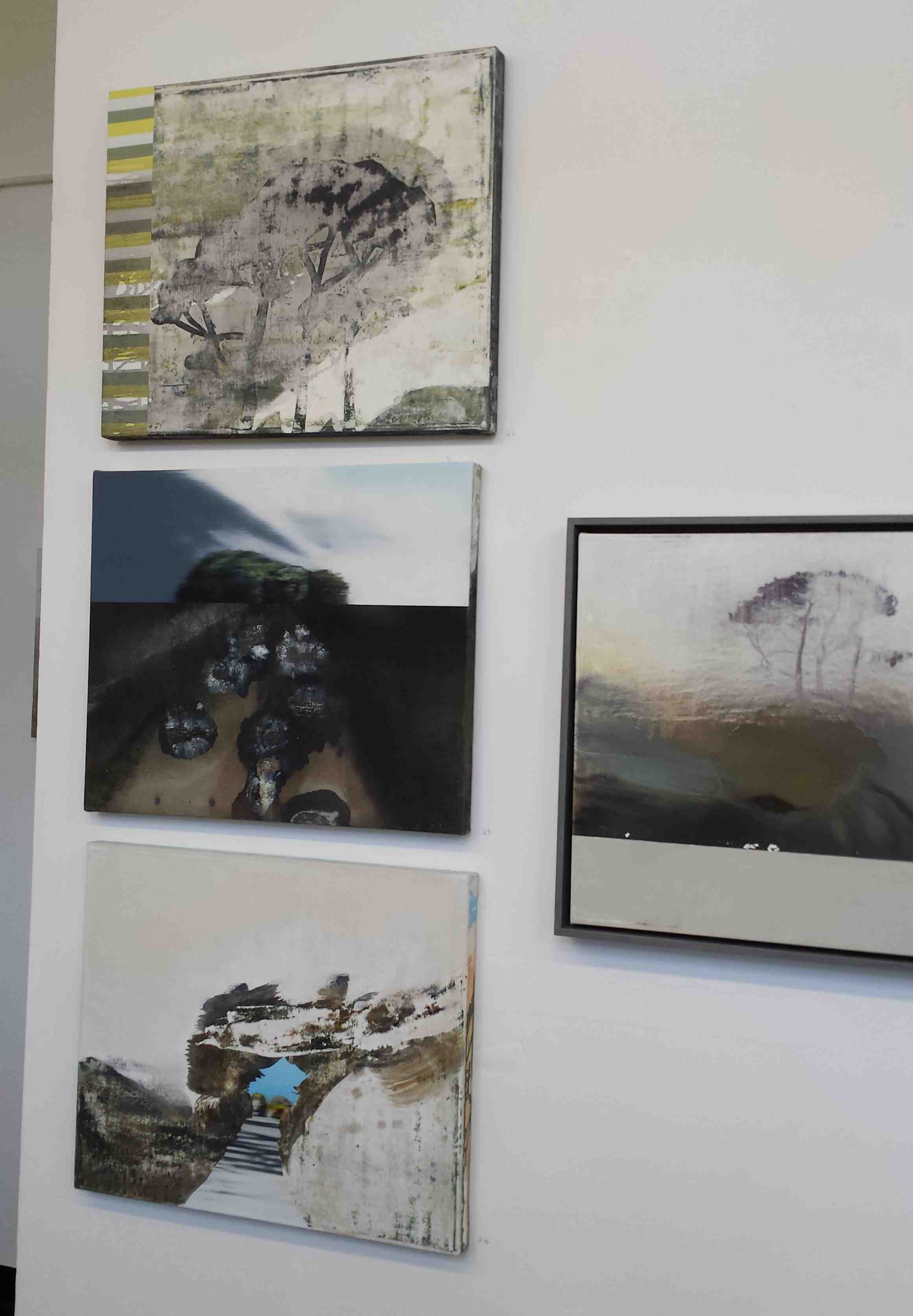
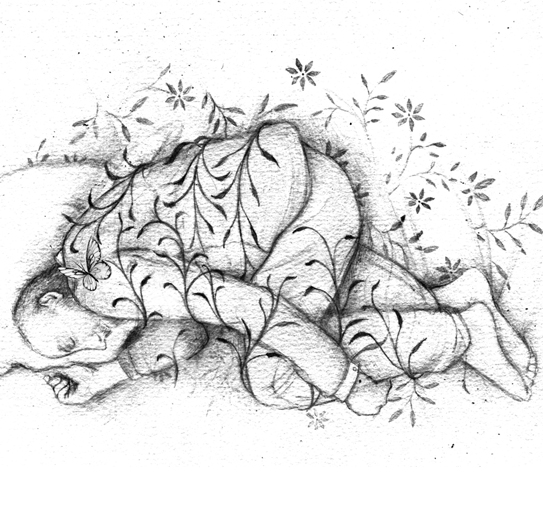
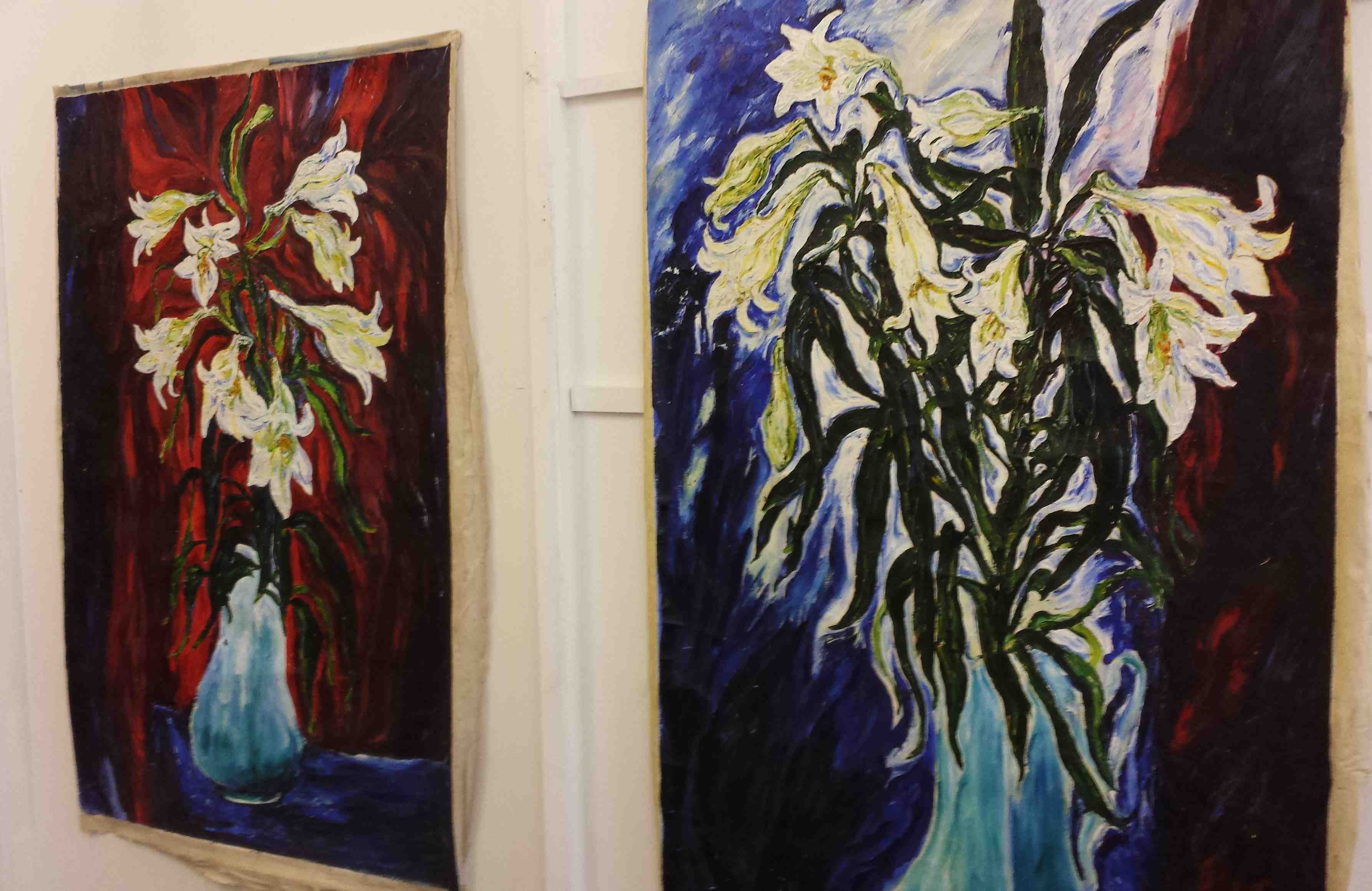
Moving around the crowded studios, there was a buzz which always seems stronger here where the art is being produced than visiting a gallery. I was particularly attracted to the work of Linda Crane -printmaking and painting but also small sculptures -including a small head which I thought reminiscent of Giacometti. The angular and elongated forms, the expressionist use of paint and the dramatic drawings were intriguing and attractive. My impression too was as though I felt a resonance both with Kokoschka and El Greco. Her work may be seen at http://www.sulisfineart.com/search/page/2?q=Linda+Crane and also at http://www.outsidein.org.uk/linda-crane where I was surprised to read of her work being in Penzance at the Redwing Gallery.

Flower Studies by Linda Crane

I think the fact that her atelier was empty increased my fascination with her display and her portfolio.I think my recent travels may also have influenced my susceptibilities. It is also interesting to research the influence of El Greco on Expressionism- as in the recent exhibition El Greco und die Moderne.(Dusseldorf 2012 http://www.smkp.de/en/exhibitions/archive/2012/el-greco.html)


Categories
Art and Photographic History Art Exhibition Reviews

Reviewing “Mr Turner ” by Mike Leigh

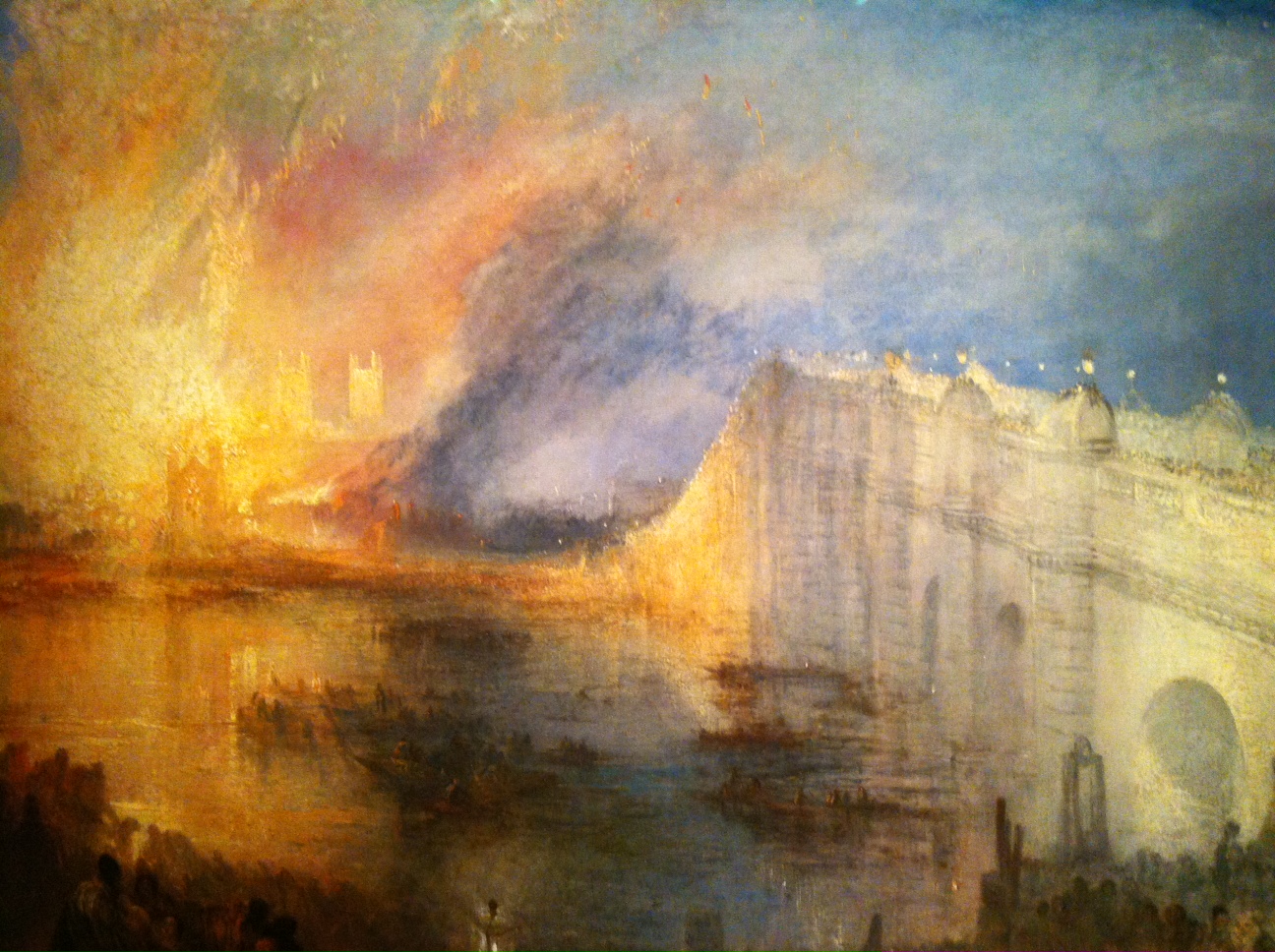
In my personal view, some of the most interesting aspects of “Mr Turner” was his constant interest in all types of scientific investigation. The development of new colours in laboratory conditions and his interest in photography were parts of the recent film that I found deeply engaging and in particular the cameo scene with Mrs Sommerville. This Eighteenth Century background has been splendidly covered by Richard Holmes in his “The Age of Wonder: How the Romantic Generation Discovered the Beauty and Terror of Science” 2009.(Shortlisted for the Samuel Johnson Prize and winner of the Royal Society Prize for Science Books). I am reliably informed that Turner read Goethe’s tremendous work on colour theory. How JMW Turner may have eavesdropped on the Royal Academy next door is interestingly discussed at http://www.bbc.co.uk/news/entertainment-arts-15719338 and his probable interest in the work of William Herschel is considered here.turner46 Flint Castle

Two typical reviews of Mike Leigh’s production can be read at The Guardian -http://www.theguardian.com/film/2014/oct/30/mr-turner-review-mike-leigh-timothy-spall

and The Telegraph -http://www.telegraph.co.uk/culture/film/filmreviews/10833174/Mr-Turner-review-supremely-enjoyable.html where Robbie Collin makes reference to Spall  as “like a mouthing, phlegmy Gruffalo”.

Here is a review (unedited) from my friend Vaughan Warren whose prolific work, inspired by Turner, appears at Penzance Public Library:-

‘Mr. Turner’, a film by Mike Leigh; a review by ‘Mr. Warren’.20140927_151818

Rated: 10+/10; perhaps?


Painting is a ‘rum’ business… of ‘nothingness’ and the like!


If one was unfamiliar with the mythology surrounding JMW Turner, or indeed oblivious to whom he was, then the film might appear meaningless and self- indulgent, even despite the fascinating but unlovable depiction by Timothy Spall; yet as a testament to ‘Englishness’ this film is sublime in all its mastery of misery and beauty but some have complained it is too long; it was not long enough! As it turns out I will argue that this film hides a lot more than it reveals at first glance, and its episodic nature has resulted in a rather fragmented view of the man, the painter, the myth?

Like JMW Turner, I was a student of the Royal Academy Schools, which moved from Somerset House to Burlington House, being there myself from 1978-1984, in Piccadilly, London; so I was bound to be rather hyper-critical yet responsive to such a homage to one of our greatest painters. The interactions at the Royal Academy Exhibition, as it was then, were bang on! Poor John Constable was born after Turner and died before Turner’s demise in 1851 and his whole life was overshadowed by this ‘monster’! Turner’s generosity in sharing ‘observations for improvements’  in others work was his gift to teaching; far removed from his disastrous lectures on Perspective at the Academy which were not for want of knowledge but the problem of communicating something so innate!

Travel in Turner’s time appeared idealistic; ferries along the Thames stopping at the new railway stations or venturing even further to the mouth of the Thames and Margate where of course he met Mrs. Booth whom he subsequently ‘bedded’ and lived as a harmonious family life as Turner possibly could have; but the restlessness continued… Turner never married but had two daughters by another woman, one Sarah Danby!

In reality JMW Turner was a short stocky rather shabby man who appeared to lack any social graces especially when it came to women and any concept of family, excepting his father William Turner, Turner’s ‘Daddy’,  whose resulting and inevitable death, was subtly hinted at by the scene of mixing Chrome Yellow oil pigment without protection as was the way in many painters studios, and upon reflection the skin condition of ‘the maid’ was probably a result of ‘Painters disease’, a result of exposure to lead and arsenic ever present in paints even to this day; not within the EU of course but still available in cheap but authentic pigments available from China.

The sumptuous filming caught well the tensions of the period with civilised facades hiding squalor and debauchery behind closed doors. In this respect and most others Timothy Spall was a perfect cast for the role, and Mike Leigh’s directing may have been drawing more upon his own families ‘trauma’. Indeed it is the way the sexual promiscuity of Turner was handled, sometimes with innuendo but at other times with a truly threatening behaviour and scenes of blatant groping. Is it for this reason that many women who have seen the film find Spall and by proxy Turner disgusting and ‘pig like,’ and would not recommend it!p-unframed

To address this Turner’s encounter with ‘Jessica’ at Petworth should have been extended to reveal a more tender and cultured side to his personality. It would have also drawn focus away from Turner as a typically landscape based artist, as his figures at Petworth are abstractions in a mannerist style far in advance of his landscapes which flourished later, and are some of the greatest depictions of figures in interiors we have in English Painting.

It was poor research that suggested that Turner made way for the Pre Raphaelites and photography, however the depiction of John Ruskin, the critic and champion of Turner, was a triumph and the film should have ended with Ruskin burning almost a third of Turner’s erotic figurative output, which we will now never know about. Instead the film ended with the realisation that, “The Sun is God”, and the wry smile of ‘Mrs’ Turner compared with the desolation of Turner’s lifelong companion in the form of his cousin as  maid / relative / sexually abused female! Indeed it was suggested that it was for Turner’s attentions that she appeared to live and endure knowing nothing else presumably, and this made her the victim of the man as ‘monster’?

One last technical point; although Turner was at the cutting edge of pigment use, his use, (even if available commercially before 1851), of Cobalt Blue over his preferred pigment known as Smalt is still a question of conjecture. Although Cobalt Blue was a known pigment used in ceramics it is a question of stability and lightfastness in oils that leads many conservationists and dealers to question the authenticity of alleged works by JMW Turner if elements of this material are found after chemical analysis.

Painting, art, film; is a ‘rum’ business indeed; or was it Sherry?Mr T at RA

—————————————————————————————————————————————————–

Another friend comments:-

Thank you for sharing the Cannes film festival review of  ‘ Mr Turner’. I’m going to see it on Tuesday so will be able to judge whether all the publicity has been accurate or otherwise. Around the time of his bi-centenary Leo McKern made a valiant attempt to portray the artist in the drama-documentary ‘ The Sun is God’ (supposedly his dying words
as bright sunlight burst through an overcast sky moments before his last breath at precisely 10 am on December 19 1851.) Though typically low budget that production admirably succeeded in conveying both the social conditions and prevailing atmosphere alongside the convincing character study itself. Were Mike Leigh to go one better he will have done well.
This is in reply to the following review from the BFI on Leigh’s success at Cannes:- www.bfi.org.uk/news-opinion/sight-sound-magazine/comment/festivals/cannes-2014-savouring-mr-turner


Categories
Art and Photographic History Art Exhibition Reviews German Matters

Otto Rudolf Schatz (Austria, 1900 – 1961)

Ballonverkäufer
Ballonverkäufer

Schatz came from a family of civil servants and attended the Vienna School of Applied Arts. With 22 years of commitment to the political left, the artist had already appeared as a book illustrator for Arthur Roessler and also for Josef Luitpold Stern. Schatz illustrated  books in the interwar period, especially literature from theStrom-Verlag(including Stefan Zweig , Jack LondonUpton Sinclair’s “Co-op” and Peter Roseggers “Jakob the Last”).

"The Hope," by Otto Rudolf Schatz.
“The Hope,” by Otto Rudolf Schatz.

1925 was the Great Treasure State Award, 1928-38 he was a member of the Hagenbund . He lived during the Second World War treasure in Brno, Prague and later in a sub-camp of Gross-Rosen concentration camp in Graditz admitted that he “jüdisch-versippt” -which apparently meant that by his marriage he was considered part of the Jewish “clan”. Schatz became, on his return, by the City Councillor for Culture. His first prize for the design of the Wiener Westbahnhofs  remained unrealized.

“Die Hoffnung” has the erotic interest that figures in much of Schatz’s work and is vaguely reminiscent of the sardonic style of Edward Burra, who has recently been the subject of a programme by Andrew Graham-Dixon called “I never tell anyone, anything”. This intriguing programme is available on You-Tube at https://www.youtube.com/watch?v=4BoLh8xgOdI

Extract from a painting by Edward Burra
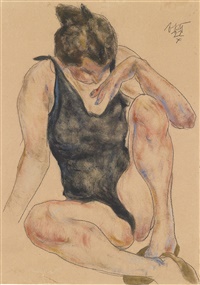
Sitzende im schwarzgrüne Trikot


Categories
Art and Photographic History Art Exhibition Reviews German Matters Uncategorized

Two Painters from Vienna and Bohemia- Sergius Pauser and Josef Dobrowsky

_sergius_pauser_86I came across this lovely painting by Sergius Pauser in the Leopold Museum in Vienna. Mädchen vor dem Spiegel was painted in 1931 and Öl auf Leinwand, 92×73 cm, so oil on linen. The limited range of colour, the tone and the style, that is to say, The New Objectivity (in German: Neue Sachlichkeit), along with the model’s expression give this painting an attractive and contemplative feeling. The subject is, of course, a common one for artists including Lovis Corinth (1918) and famously Picasso (1932). It is also similarly the subject of the self-portrait by Zenadia Serebryakova as mentioned in my earlier posting http://penwithlit.wordpress.com/2011/12/19/self-portraits-1900-1912-3-zinaida-serebryakova/. Other paintings by Pauser will be found at http://www.sergius-pauser.at/20141006_103104

Quoting from the above link, this passage is of considerable interest,”The writer Thomas Bernhard (1931-1989) wrote of Pauser: “Sergius Pauser uttered thoughts about people – Adalbert Stifter, for example – that I have never heard before or since; he succeeded in revealing the most concealed corners of poetic sensitivity; he was a tender and vigilant diviner on the landscape of world literature, a philosopher and an artist through and through.” And yet a painter like Sergius Pauser is barely known today; only a few of his works hang in Austrian galleries and many of his paintings cannot be traced due to the emigration of their owners.”

Pauser was considered unreliable by the Nazis and had a tough time as recorded by Wikipedia.de:-“In seiner Monographie berichtet Rupert Feuchtmüller (S. 22), dass Sergius Pauser im Herbst 1944 mit fünftausend sogenannten „Politisch Unzuverlässigen“ in ein Schanz-Lager bei Radkersburg gebracht wurde. Der Schauspieler Curd Jürgens, der auch bei diesem Transport war, schreibt über diese Zeit: „… Ich weiß, dass Sergius sowohl als auch Boeckl … recht viel Unangenehmes durchmachen mussten, da die SA-Bewacher mehr und mehr die Nerven verloren und dies an den Gefangenen ausließen.“ (Curd Jürgens in seinen „Erinnerungen“, Autobiographischer Roman, Droemer Knaur Verlag 1976)”

Here are three more paintings by Pauser that appeal to me. Amerikanerin 1948,

Luis Trenker mit Kamera, 1938
Amerikanerin
Amerikanerin

has an appealing delicacy and an optimistic and conversational appeal. The hardboard realism of Luis Trenker mit Kamera, 1938,Mischtechnik auf Hartplatte from an earlier period reminds me of a favourite painter, Christian Schad. I cannot find a colour image for Mädchen mit rotem Hut, 1942 Agathe Prinzessin von Ratibor but am intrigued to find that she was a Princess of a Polish town called Racibórz in Polish but very close to the Czech border and called Ratiboř.2010-07-12-18-06-00_wv_387_gallery_sergius_pauser


Josef Dobrowsky (* 22. September 1889 in Karlsbad, Böhmen; † 9. Januar 1964 in Tullnerbach) was a painter who worked in Vienna with Pauser and his work is currently on display as “Perception and Colour” in the Upper Belvedere http://www.belvedere.at/de/ausstellungen/ausstellungsvorschau/josef-dobrowsky—wahrnehmung-und-farbe-e152593

Dobrowsky-selbstportraet


Categories
Art and Photographic History Art Exhibition Reviews German Matters Uncategorized

Albin Egger-Lienz -Austrian painter of the Tyrol

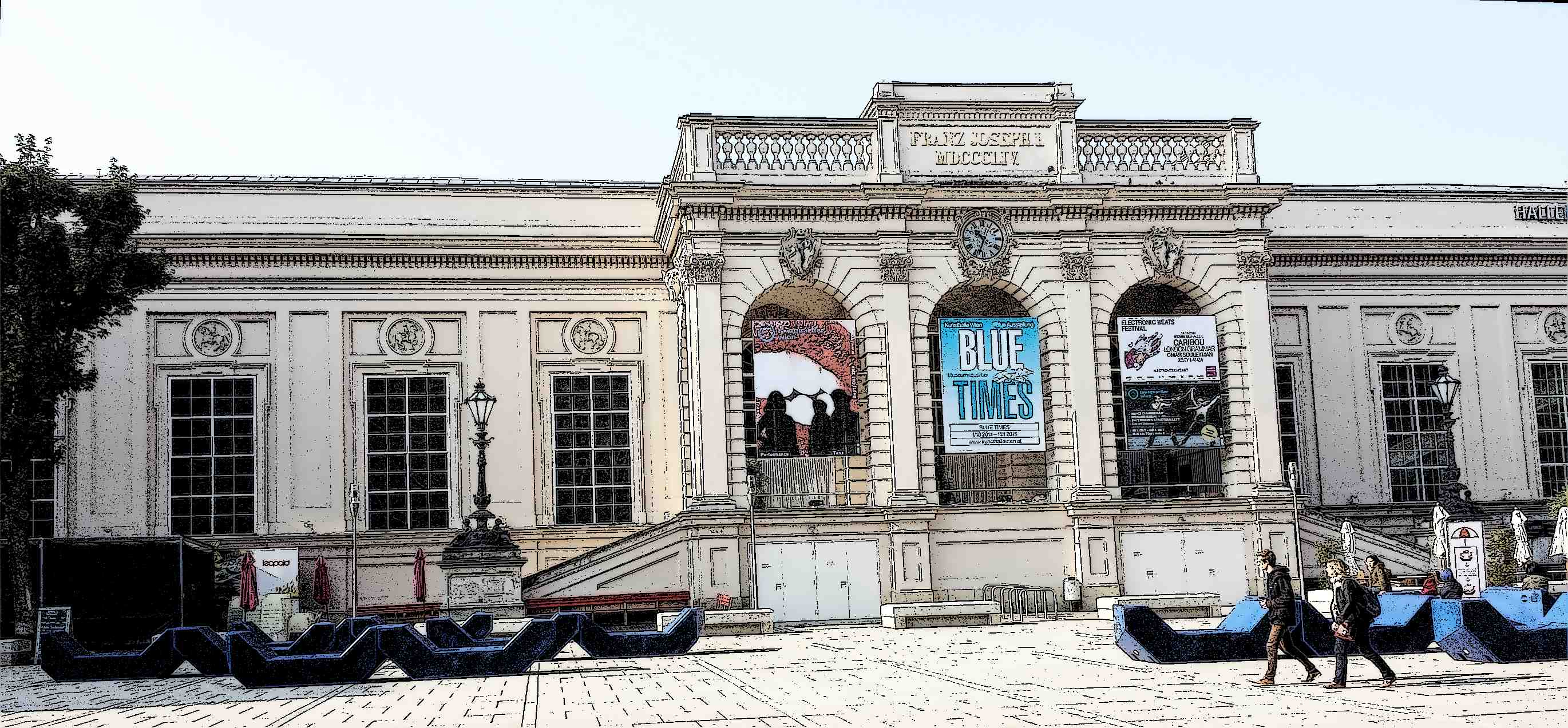
In the Leopold Museum in the Museum Quarter of Vienna, I discovered a number of artists about whom I had not previously heard. One of the most interesting was Egger-Lienz.


Museum Quarter in Vienna


Albin Egger-Lienz (* 29 January 1868 in Stribach , community Doelsach in Lienz ( East Tyrol ); † November 4 1926 in St. Justina inBolzano ( South Tyrol )) was an Austrian painter .

Self-Portrait
Self-Portrait

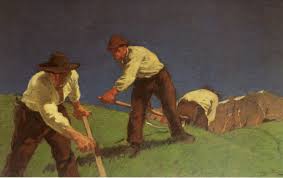
The oeuvre of Egger-Lienz includes many oil paintings. Several of his designs and drawings are available in various versions and images. Some subjects, such as the Mountain Mowers, are ​​lithographs.

Egger-Lienz1

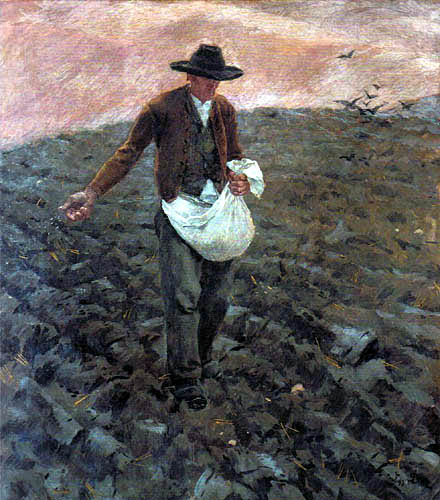
1904 Egger-Lienz turned to the theme of the sower, which  kept him busy until the 1920s. The prototype for this was Jean-François Millet (The Sower , 1851), the other  inspiration was actually a work of Giovanni Seganti. 36 major works were exhibited in 1901 at the Secession. Characteristic of Egger-Lienz is also the long time between recognising a source to  its development or use.

Egger-Lienz2

1904/05  in South Tyrol The Pilgrims  originated, whose formal conception parallels to Ferdinand Hodler’s picture The Truth (1903), which was exhibited along with 30 other works belonging to Hodler in the spring of 1904 in the Secession. Although the first drafts of The Pilgrims  showed in the middle a seated Madonna with Child, Egger-Lienz replaced them, under  Hodler;’s influence by the Crucified Christ. By means of this painting Egger-Lienz made ​​a breakthrough to his “monumental-decorative period”

Translated from http://de.wikipedia.org/wiki/Albin_Egger-Lienz and more information may be found at http://www.altertuemliches.at/gemaelde/albin-egger-lienz

Following in this bucolic vein here is a somewhat sad but evocative poem possibly inspired by Hesse’s Swabian countryside.

The Sower
The Sower

Dorfabend by Hermann Hesse


Der Schäfer mit den Schafen

Zieht durch die stillen Gassen ein,

Die Häuser wollen schlafen

Und dämmern schon und nicken ein.


Ich bin in diesen Mauern

Der einzige fremde Mann zur Stund,

Es trinkt mein Herz mit Trauern

Den Kelch der Sehnsucht bis zum Grund.


Wohin der Weg mich führet,

hat überall ein Herd gebrannt;

Nur ich hab nie gespüret,

Was Heimat ist und Vaterland.


This has been put to music as at http://www.recmusic.org/lieder/get_text.html?TextId=50581

Categories
Art and Photographic History Art Exhibition Reviews St Ives West Cornwall (and local history)

Mr Warren’s Turner- Penzance Public Library

As the winter storms hit Penzance, so does that great painter of storms, steam and whirling chaos, Joseph Mallord William Turner. Not the great English Romantic himself of course, whose late works are currently at the Tate Britain in London until January 25th next year, but as a film, Mr Turner, by Mike Leigh and in the form of an exhibition currently on view in Penzance Public Library, Turner and Me painted by Vaughan Warren R.A.S. Ancillary works by Vaughan are also on view on the first floor of The Arcade in Chapel Street.

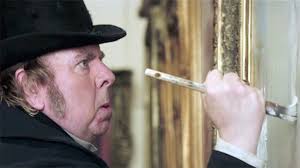
Timothy Spall in Mr Turner

In a year of sombre reflection upon the futility of war, the appearance of original films like Loach’s Jimmy’s Hall and Mr Turner, are inspiring visually. The technique of Loach and Leigh, both of whom use improvisation as a means to authenticity, is inspiring and instructive. Mr Turner has renewed interest in a rumbustious, querulous figure and promises to be exciting viewing. Turner was a protean traveller and visited Cornwall and painted the local landscape including Mounts Bay and the Tamar Valley. Sketches at St Ives established him, according to some authorities, as the founder of the painting tradition there. http://www.tate.org.uk/art/artworks/turner-st-ives-from-porthminster-beach-d41327 Timothy Spall, an exceptional actor and a keen sailor brings his talent and determination to portraying Turner in both his vitality and in his melancholy moods.Mount

Vaughan Warren  http://vaughanwarren.weebly.com/ has a tremendous enthusiasm for Turner and has won the Turner Award himself, as well as the Reynolds Medal and Landseer Award. He also has a track record of interest in the history of art which informs his work at a deep level. He also has an interest in local history. He and his partner Melanie Camp share an enthusiasm for Daphne Du Maurier’s novels and in particular Rebecca and its associated film which was, of course a Hitchcock classic. This has provided the inspiration for an Acrylic, a medium which Vaughan assures us Turner would have loved, The Wreck of the Rebecca, which appears in the current show. Vaughan Warren has found much inspiration too in the work of Julius Olsson, whose contribution in St Ives is the subject of much intriguing study by David Tovey, as well as Whistler, Mondrian and Kandinsky. The latter was an acquaintance of Naum Gabo, who also worked locally, is famous for his writings on the spiritual in art. Warren declares too his intention to strive,” towards an abstract beauty through paint and the image”.PSX_20141004_222450

The Victorian restrained grandeur of the public library in Penzance makes for a suitable context for Vaughan’s Turner inspirations. However, because they have to be mounted so high up above the installed illumination, they are not as visible as they might be. It is a reminder that despite the town having many galleries there is limited space in which even experienced artists can display. Turner’s palette is of great interest to Vaughan Warren and more details can be found at http://www.winsornewton.com/uk/discover/articles-and-inspiration/palettes-of-the-masters-jmw-turner

Self-portrait by Vaughan Warren
Mr Warren RAS
Mr Warren RAS

In the current display three works particularly appealed to me. The acrylic on canvas of St Michael’s Mount predominates because of its free use of colour. I also greatly liked small watercolour called Turneresque. It almost goes without saying that this painter shows great facility in all three mediums. The two pictures which are mounted in oval frames make a refreshing change here too. The small painting in the corner which appeals to me most however is Red Interior; Music Room whose contrasting colours remind me a little of Sickert and a little of Gwen John. Anyone who has the opportunity should see the film and Vaughan Warren’s work in Penzance.

In addition to the works displayed in the library there is an opportunity to view Vaughan’s drawing of Nelson’s death mask at the Redwing Gallery, Wood Street in Penzance. The display in Penzance Library may be viewed until mid-December.

On View at Penzance Library, Morrab Road, Penzance
Categories
Art and Photographic History Art Exhibition Reviews German Matters

Exploring Museums Quartier Wien -Egon Schiele usw

imageNot difficult to find in Vienna – it’s just after the parliament building and turn through the archway-simple and effective method for getting tickets and free WC if you ask at the desk. DSCN0571Brilliant wi-fi connection in the middle of the MQ and nice cappucino at the inside cafe. Have just been investigating service of EE in a T-mobile shop, the only place where I have to queue. imageApparently although capitalism may be international, the service to people is not. Perhaps this explains the why mobile phone producers produce a isolated and insular service that the Tory Party and UKIP would be proud?
Nothing prepares you for the size and vivid colour of the Schiele paintings. He produced some 170 self-portraits. Thecomposition and vitality of the collection is quite amazing. It was the great flu epidemic that curtailed the life of this highly prolific painter at the age of just 28. Add to these the drawings currently on show downstairs, the Klimt and other Austrian painters, you will have no difficulty in looking around for a minimum of four hours.image

Categories
Art and Photographic History Art Exhibition Reviews

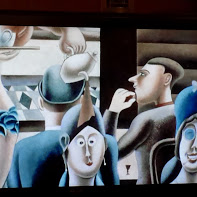
Hats, figures and enigmatic emblems; Pippa Young and others

At the opening of the exhibition Hats: An Anthology by Stephen Jones at the Victoria and Albert Museum, he is said to have commented;”Hats are a great antidote to what’s going on. It’s really their purpose to put a happy face on a sad world.”

Portrait of a Peasant with a Headdress


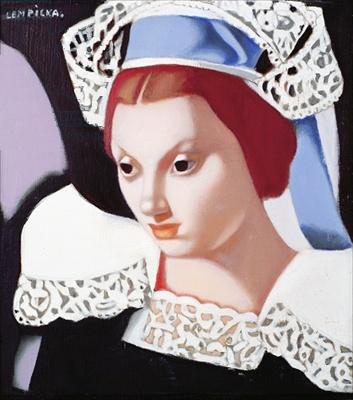
The image or drawing which is shown below has some of the intensity of a realist drawing by, say Kathe Kollwitz. Her naturalism shares the integrity which we associate with Van Gogh. Indeed her second cycle of works concerned the German Peasant War which began in 1525. However, this is not by Kollwtz, who seems to have rarely depicted persons with headdress, but by Tamara de Lempicka.

lempicka The pellucid definition and monumental stocky quality might also have suggested this in her sketch of a Russian peasant. Headgear was a recurring interest for Lempicka.

La Mexicane by Tamara De Lempicka

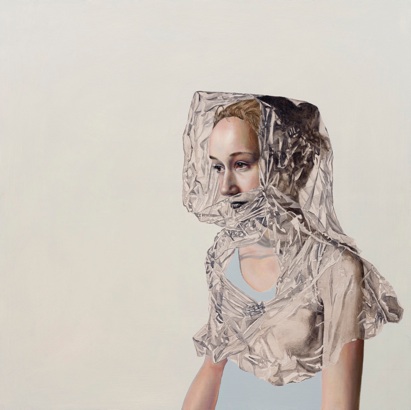
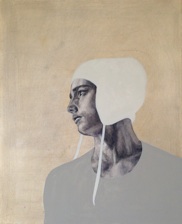
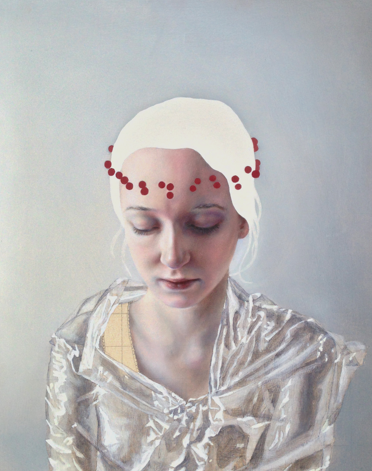
In Pippa Young’s paintings, http://www.pippayoung.co.uk/Art/Welcome.html which she specifically states are not to be considered as portraits, the headwear seems to confer meaning. It renders significance and gives import. Blank spaces and highly modelled backgrounds add to this general effect. She states, “Often the figures are posed to echo art-historical characters: Mantegna’s Saint Sebastian, or one of Vermeer’s subjects. When context is removed the figures become something else, oddly familiar; occupying an empty pictorial space, free from imposed narrative; timeless and unadorned.”

One theme which appears in the headdress then is a kind of 15th Century Flemish cap which is detailed at http://research.fibergeek.com/category/garbclothing/page/15/

Self Restraint by Pippa Young

However, many of the male figures appear with antlers or horns and give the impression of dreams and mythology. There is a wide variety of different meanings which can be attached to such headdress or headgear. They may be symbols of earthy virility or alternatively give a suggestion of darker activities. These matters are discussed at http://spellsandmagic.com/Horns.html and further unusual images of horned masks are at http://www.pinterest.com/susantooker/antler-crowns-and-headdresses/ In some of Pippa Young’s paintings the texture of the headwear or clothing looks rather like thin polythene sheeting and seem, possibly, to suggest environmental concerns.

Tim Thumb
Tim Thumb
Pippa Young

The ornate quality also resembles the exuberance of Chinese ethnic dress as at http://traditions.cultural-china.com/en/15Traditions5963.html.

ghost of a departed Pippa Young
ghost of a departed
Pippa Young
Self Absorbed Pippa Young
Self Absorbed
Pippa Young

Returning to thoughts about horns must remind some of Falstaff in Act 5 of The Merry Wives of Windsor where he is dressed as Herne the Hunter and taunted and humiliated for his bad behaviour. As Shakespeare makes him say earlier in the play,” The Windsor Bell has struck twelve; the minute draws on. Now the hot-blooded gods assist me! Remember, Jove, thou wast a bull for thy Europa, Love set on thy horns- O powerful love that in some respects makes a beast a man, in some others a man a beast!

Pippa Young’s figurative work is finely drawn and the palette which she uses adds to the mysterious and evocative quality in her work. Her present collection can be viewed at the Cornwall Contemporary  Gallery at http://cornwallcontemporary.com/HumanNature.html

Her work is in some respects interesting to contrast with that of Cristina Iotti whose work can be seen at  http://www.cristinaiotti.it/2013-2012/

http://www.cristinaiotti.it/2013-2012/
Covenant by Pippa Young
Covenant by
Pippa Young
Categories
Art Exhibition Reviews Penwith

John B Anderson 1945-1997, Cornish Artist

Head to Head at Penzance Public Library Nov/Dec 2013

These works were made in the last ten years of John B Anderson’s life. To quote from the notes at the library, “The fine lines adopted from his abstract period remain as precise: less indeed can be more. The work is observational, some of it quite quirky including bad hair days and some serene moments……… John B Anderson pushed his figurative work as far as he could towards abstraction: he then returned to a figurative style with a more restrained and pared back approach resulting in these fine line works.”

JBA3

At http://www.thisiscornwall.co.uk/Library-pays-tribute-John-B-Anderson/story-13244578-detail/story.html#axzz2leYQH1no there are further details including the remark that, “An artist who was to die in 1997 when in his early 50s, in recent years his paintings have been seen in various local venues, from Trereife Gallery to Penzance Arts Club, and the sequence of his works about to be shown in Penzance Library reveal his admiration for such as Van Gogh, Modigliani and Picasso, and his search for his own style through the figurative and the abstract.”

JBA2

JBA1

The following images scarcely do these paintings justice taken hurriedly with my mobile. They are hung rather high and difficult to see at their best advantage. However, their geometric style and their delicate colours make them very appealing and remind me in particular of the work of Oskar Schlemmer (4 September 1888 – 13 April 1943) who was a German paintersculptordesigner and choreographer associated with the Bauhaus school. Some of the images displayed may indicate this similarity as well as with the Bauhaus theatre designer, Lothar Schreyer.

Lothar Schreyer
Lothar Schreyer
Oskar Sclemmer Auf der Treppe
Oskar Sclemmer
Auf der Treppe
Oskar Schlemmer Postcard of Young Men
Oskar Schlemmer
Postcard of Young Men
Categories
Art and Photographic History Art Exhibition Reviews Penwith St Ives

Ida Car (Ида Карамян 8 April 1908 – 24 December 1974) in Truro;

“In 1960 Ida Kar (1908-74) became the first photographer to have a retrospective exhibition at a major London art gallery. Her portraits offer a fascinating insight into post-war cultural life and her subjects included some of the most celebrated figures from the art world of 1950s and 1960s Europe and Russia. A number of the artists Kar photographed also included artists from the St Ives School.” as it says at http://www.royalcornwallmuseum.org.uk/exhibitions/.mpu.ex.Ida

I saw this exhibition on Saturday and was truly moved at this small but fascinating exhibition and the sculptures that came with it which included Hepworth and Epstein. Lovely picture of Ida with Victor Musgrave with whom she lived in the 1940s in Cairo. Delightfully bohemian, her work is taken from the studios and ateliers of Paris and London. Even more exciting I found her photographs of St Ives in the 1950s. Her Braque portrait captures the essence of the artist-his eye sockets look as though they were a Picasso portrait brought to life. The portraits of Leach, Denis Mitchell whose reputation is still growing and Hepworth forming an armature from wire for a sculpture are all lively and moving. The original exhibition at the National Portrait Gallery is reviewed at http://www.theguardian.com/artanddesign/2011/mar/13/ida-kar-bohemian-photographer-review. There is a great review of her photographs at http://www.bbc.co.uk/news/entertainment-arts-11998337. Should you get to Truro Museum at the moment there is an intriguing collection, A Century of St Ives Art 1840-1940.

The Wharf, St Ives
The Wharf, St Ives
Ida with Victor Musgrave