Categories
Art and Photographic History Art Exhibition Reviews German Matters Uncategorized

Some German Photographers of the 1930s


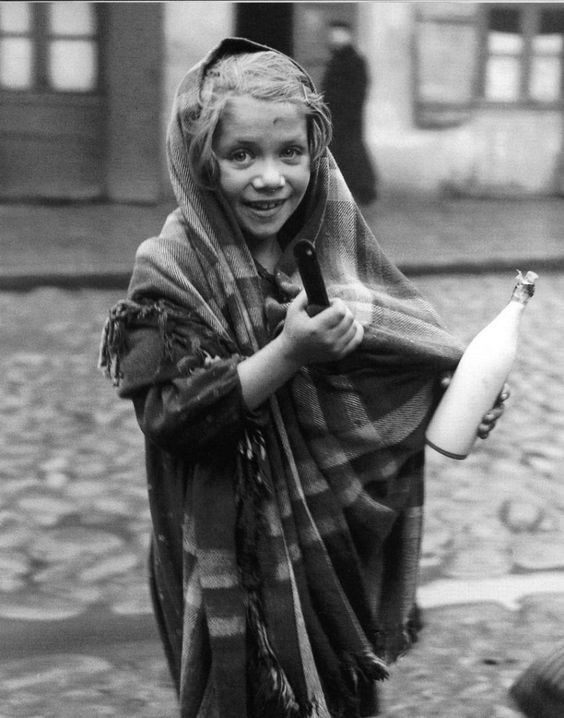
More than twenty years ago there was an excellent bookshop at the bottom of Station Hill in Truro. It was manned by a man who looked like a taller version of Alan Bennet who wore a white pullover and so the shop became known in our family as the “White Man’s”. He may well have read English at University because there was an excellent stock of poetry, criticism and literary collections. It was in the front part of the shop that art and photography books were stocked. It was here that I discovered a magnificent book of photographs by Roman Vishniac. (https://en.wikipedia.org/wiki/Roman_VishniacI }that was called “Children of a Vanished World” and was more than I could then afford. It was, however, quite stunning to peruse and an astonishing invocation of the past. As one reviewer on Amazon writes:-

“In this book we can see the faces of the children who disappeared a few years later in the Shoah. Just look at them, they are children like all the others in the world; beautiful, funny, playing, studying, and so on. Lives which were brutally cut in the most monstrous way in human history. If they had lived, they would have been merchants, rabbis, doctors, lawyers; some of them would have been known as novelists, scientists, and so on. Why had the world to live without their talents they wanted to show us?”

Roman Vishniac
Roman Vishniac

Vishniac photographed many subjects including microscopic biological specimens but it is this collection about the Shtetel which made him famous. In a way it provides a complement to the magical paintings of Chagall. Also I started to read “Shtetel” by Eva Hoffmann which is also interesting on this topic.p2

20131023_130837

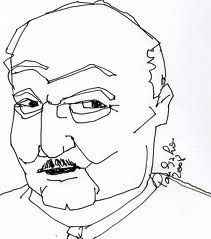
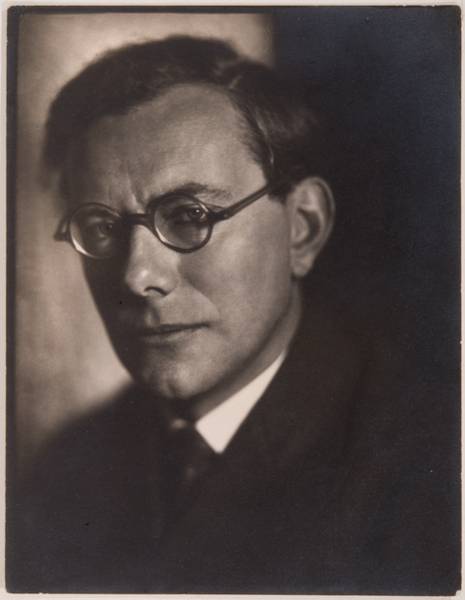
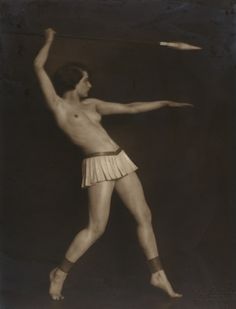
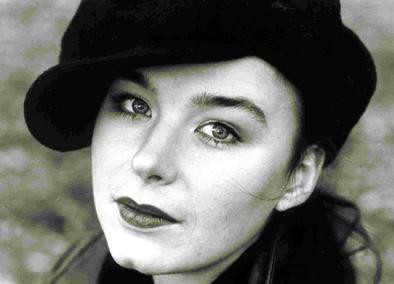
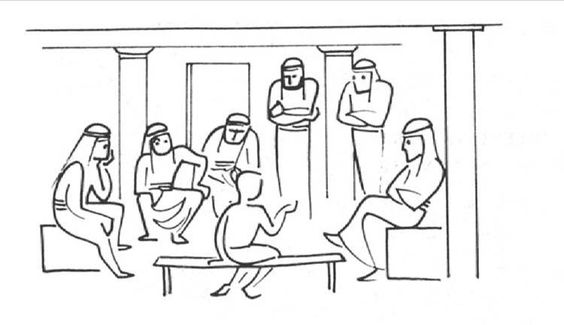
However, more recently,it is the Berlinische Galerie which opened my eyes to two further interesting photographers in their collection-http://www.berlinischegalerie.de/en/museum-berlin/forschung/grant/ These are Steffi Brandl and Erich Salomon. Brandl’s work is remarkable for it’s portrait and figure photography. Her compositions are unfailingly interesting and captivating. So captivating that I made sketches whist viewing them.p4p5 These are sophisticated photographs that work to capture the essence of the subjects in the lens. She was born in Vienna in 1899 as Stephanie Olsen and trained there under Trude Fleischmann and then married an architect, Ernst Brandl   moving to Berlin in 1926. She had a studio at 211 on the Kurfurstendamm and was forced to emigrate to England in 1933-she moved to New York where she died in 1966.

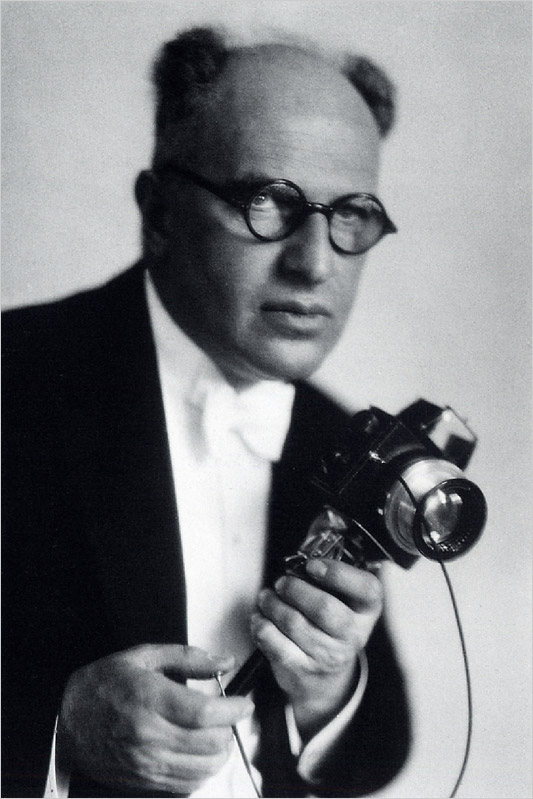
Erich Salomon’s work is similarly of great interest. In talking of his technique, wikipedia.de says the following:-

Übliche Arbeitsgeräte der Pressefotografen waren seinerzeit unhandliche Plattenkameras für Glasnegative bis 13 × 18 cm. Salomon erwarb wenige Monate nach seinen ersten fotografischen Erfahrungen eine Ermanox-Kamera. Diese war ein neu entwickelter, relativ kleiner Fotoapparat mit dem seinerzeit lichtstärksten serienmäßig hergestellten Objektiv (1:2) und einem Schlitzverschluss, der Belichtungszeiten von 1/20–1/1000 sec erlaubte. Mit der Ermanox waren Momentaufnahmen auch bei schwachem Licht, Fotos in Innenräumen ohne Stativ und Blitzlichtmöglich. Als fotografisches Bildmaterial dienten Glasplatten von 4,5 × 6 cm in Einzelkassetten, von denen man problemlos eine größere Anzahl bei sich tragen konnte. 1930 kam eine Leicahinzu – noch leichter und unauffälliger als die Ermanox.

Esentially this says that press photographers used to have to use large glass plates 13x18cm in size, However, Salomon developed the technique by using a newly developed Ermanox camera which was small with a mass produced lens that allowed exposure times of 1/20 to 1/1000 sec and could therefore be used in low light conditions i.e. indoor photography using flash so that the size of the plates were considerably reduced.and a number of plates could be stored in the box which the photographer manhandled. Hence a series of shots might be made.By the 1930s the even smaller and less conspicuous Leica was developed.

erich_salomon

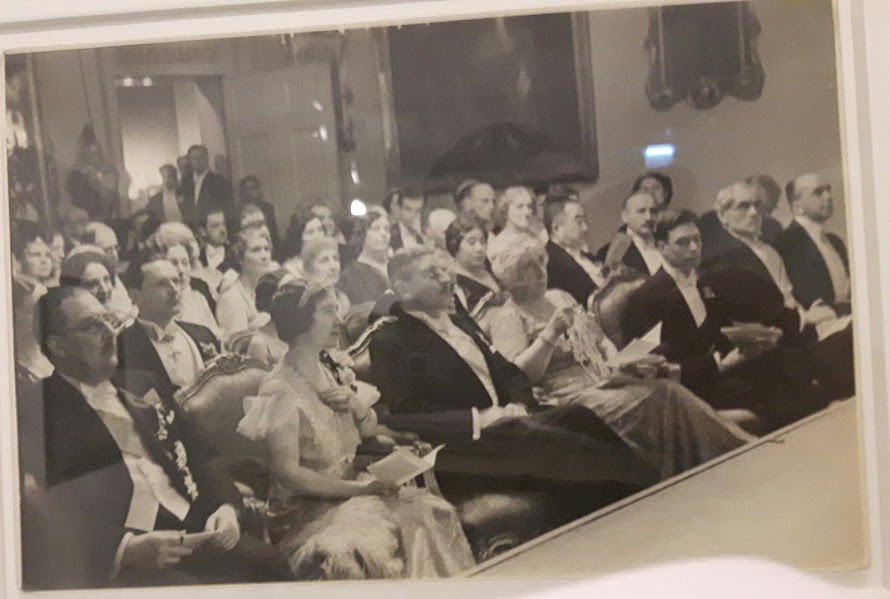
Much more can be said about the dramatic life of this photographer who would indeed make a good subject for a film. Among the images which interested me that Salomon made was a photograph in 1938 taken in the Austrian Embassy in London. It shows, of course King George and the young Queen but also the Austrian Chancellor Kurt Alois Josef Johann Schuschnigg whose attempts to keep Austria independent were just about to fail before the Anschluss. After the invasion by Nazi Germany he was arrested, kept in solitary confinement and eventually interned in various concentration camps. Salomon’s fate was worse- as a Jew attempting to escape he was caught in 1940 in the Low Countries and died in Auschwitz in 1944. erich

Categories
German Matters Literature Poetry

Mascha Kaléko: Kinder reicher Leute

Introduction

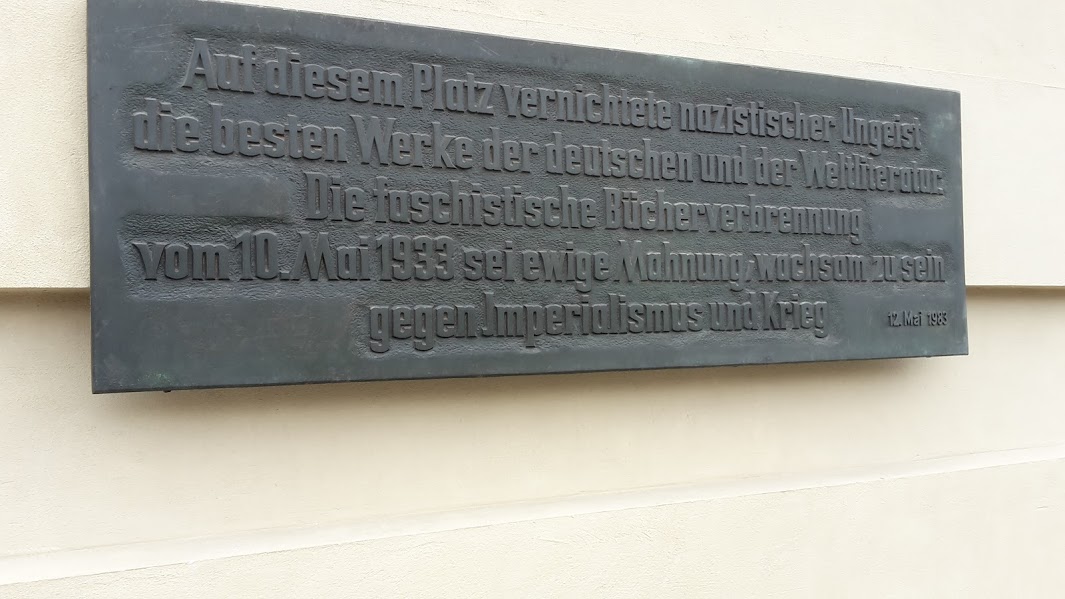
I have just been skim reading the Wikipedia.de entry about Mascha Kaleko and how she visited the famous literary Romamian Cafe which was in what is now Breitscheidplatz near the even more famous  Kaiser-Wilhelm-Gedächtniskirche, Also that she had attended a Volksschule in Frankfurt and then attended in Berlin the Humboldt University.BV In the fateful year 1933, her book, Lyrische Stenogrammheft or “Lyrical Shorthand Notebook”-was published and the philosopher Heidegger  wrote to her to say that he thought it showed that she understood everything that being mortal meant. Remarkably her work escaped the Nazi book burnings in May because they had not realised she was Jewish.MK

After the war, Kaléko in Germany again aquired a reading public.  Lyrische Stenogrammheft  was published by Rowohlt (1956). By 1960 it was hoped to give her the Fontane prize of the Akademie der Künste in West Berlin.  Since a former SS member was in the jury, Hans Egon Holthusen, she rejected this offer. The Managing Director of the Academy, Herbert von Buttlar somewhat excused Holthusens  SS membership  and it seems undiplomatically recommended such “emigrants” to stay away. That same year she left America for the sake of her husband and went with him to Jerusalem.There, she suffered much under the linguistic and cultural isolation and lived disappointed and lonely


Mascha Kaléko: Kinder reicher Leute

Sie wissen nichts von Schmutz und Wohnungsnot,
Von Stempelngehn und Armeleuteküchen.
Sie ahnen nichts von Hinterhausgerüchen,
Von Hungerlöhnen und von Trockenbrot.

Sie wohnen meist im herrschaftlichen Haus,
Zuweilen auch in eleganten Villen.
Sie kommen nie in Kneipen und Destillen
Und gehen stets nur mit dem Fräulein aus.

Sie rechnen sich schon jetzt zur Hautevolée
Und zählen Armut zu den größten Sünden
– Nicht mal ein Auto…? Nein, wie sie das finden!
Ihr Hochmut wächst mit Pappis Portemonnaie.

Sie kommen meist mit Abitur zur Welt
– Zumindest aber schon mit Referenzen –
Und ziehn daraus die letzten Konsequenzen:
Wir sind die Herren, denn unser ist das Geld.

Mit vierzehn finden sie, der Armen Los
Sei zwar nicht gut. Doch werde übertrieben–.
Mit vierzehn schon! – Wenn sie nur vierzehn blieben.
Jedoch die Kinder werden einmal groß…

Categories
Art and Photographic History German Matters Penwith West Cornwall (and local history)

The Penzance Arcades Project; Prinzessinnengarten Sonntag Flohmarkt in Kreuzberg

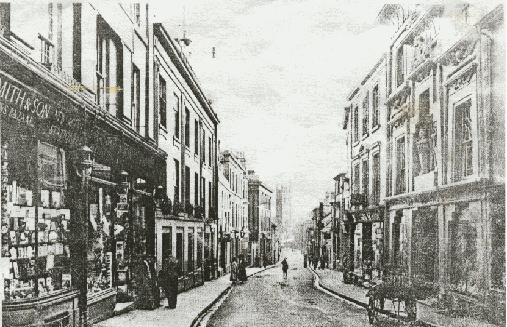
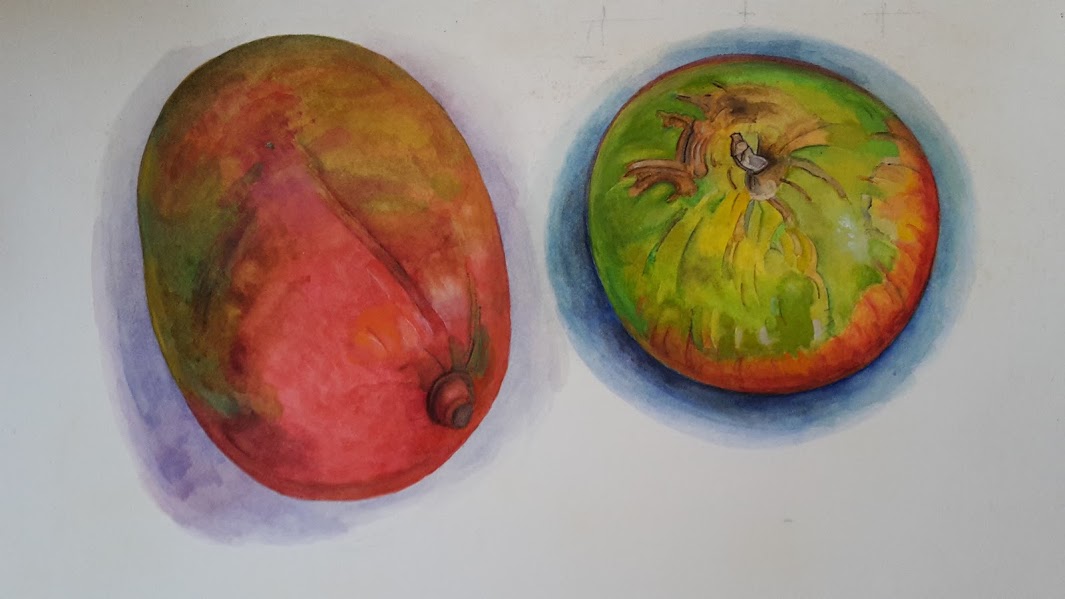
I like rooting around in secondhand shops, in fleamarkets and car boot sales-see my posting on Rosudgeon market. The Arcade building at the top of Chapel Street is often missed by visitors in search of other delights such as the Exchange Gallery. img42A long time ago-I will need to consult the Penwith Local History Group to discover when-certainly before the Srcond World War this building was W>H.Smith as the photograph shows.Chapel Street. Chapel Street Further details of the intriguing history of this street may be found at http://www.chapelstreet.co.uk/accommodation.html In any event the upstairs and downstairs regions are well worth a visit-these photographs show some sketches that I was able to purchase for a very modest price.F

F2

F3


On the hunt for books rather than pictures, much fun is to be had in the Fleamarket in Prinzessinnengarten-close to Moritzplatz on the U-bahn. It always seems to be very hot weather when I have visited and a good reason to have a cool Weissebier at the trestle tables under the trees and to read the Sunday newspapers. There is always an interesting range of literature in at least three languages. There are a good range of other items including records, CDs, dresses and jeans. There is often a music group on hand and the atmosphere reminds me of St Ives in the Sixties or the summer exhibition at Falmouth Art School. There is a big emphasis on green issues, multiculturalism and the folk all seem jolly and entspannend. Further details may be found at http://prinzessinnengarten.net/de/was-passiert-im-garten/projekte/regelmaessige-veranstaltungen-in-der-gartensaison/F7F6

F5


Categories
German Matters Literature Poetry

Wut und Zorn over the widow in Sarepta in Sidon and Naaman in Syria; Kein Prophet ist in seiner Vaterstadt willkommen

lotton Annie Vallotton drawings _Good news bible Collins Fontana 1976 British and foreign bible societies 146 Queen Victoria Street London
Annie Vallotton drawings _Good news bible
Collins Fontana 1976

Luke (Lukas) 4.14

Jesus kehrte dann in der Kraft des Geistes nach Galiläa zurück, und die Kunde von ihm verbreitete sich in der ganzen Umgegend.

15Er lehrte in ihren (= den dortigen) Synagogen und wurde (wegen seiner Lehre) von allen gepriesen.

16So kam er denn auch nach Nazareth, wo er aufgewachsen war, ging dort nach seiner Gewohnheit am nächsten Sabbattage in die Synagoge und stand auf, um vorzulesen.

17Da reichte man ihm das Buch des Propheten Jesaja; und als er das Buch aufrollte, traf er auf die Stelle, wo geschrieben steht (Jes 61,1-2; 58,6):

18»Der Geist des Herrn ist über mir (oder: ruht auf mir), weil er mich gesalbt (= ausgerüstet) hat, damit ich den Armen die frohe Botschaft bringe; er hat mich gesandt, um den Gefangenen die Freilassung und den Blinden die Verleihung des Augenlichts zu verkünden, die Unterdrückten in Freiheit zu entlassen,

19ein Gnadenjahr des Herrn auszurufen.«

20Nachdem er dann das Buch wieder zusammengerollt und es dem Diener zurückgegeben hatte, setzte er sich, und aller Augen in der Synagoge waren gespannt auf ihn gerichtet.

21Da begann er seine Ansprache an sie mit den Worten: »Heute ist dieses Schriftwort, das ihr soeben vernommen habt, zur Erfüllung gekommen!«

22Und alle stimmten ihm zu und staunten über die Worte der Gnade (oder: über die holdseligen Worte), die aus seinem Munde kamen, und sagten: »Ist dieser nicht der Sohn Josephs?«

23Da antwortete er ihnen: »Jedenfalls werdet ihr mir das Sprichwort vorhalten: ›Arzt, mache dich selber gesund!‹ Alle die großen Taten, die (von dir), wie wir gehört haben, in Kapernaum vollbracht worden sind, die vollführe auch hier in deiner Vaterstadt!«

24Er fuhr dann aber fort: »Wahrlich ich sage euch: Kein Prophet ist in seiner Vaterstadt willkommen.

25In Wahrheit aber sage ich euch: Viele Witwen gab es in Israel in den Tagen Elias, als der Himmel drei Jahre und sechs Monate lang verschlossen blieb, so daß eine große Hungersnot über die ganze Erde kam;

26und doch wurde Elia zu keiner einzigen von ihnen gesandt, sondern nur nach Sarepta im Gebiet von Sidon zu einer Witwe (1.Kön 17,1.9).

27Und viele Aussätzige gab es in Israel zur Zeit des Propheten Elisa, und doch wurde kein einziger von ihnen gereinigt, sondern nur der Syrer Naeman(2.Kön 5,14).«

Max Liebermann -[Der zwölfjährige Jesus im Tempel] (1879)
28Als sie das hörten, gerieten alle, die in der Synagoge anwesend waren, in heftigen Zorn:

29sie standen auf, stießen ihn aus der Stadt hinaus und führten ihn an den Rand (oder: auf einen Vorsprung) des Berges, auf dem ihre Stadt erbaut war, um ihn dort hinabzustürzen.

30Er ging aber mitten durch sie hindurch und wanderte weiter.

This is a fascinating passage to read in a different language and to pause to consider the meanings of what is being preached, considered or taught. For instance what exactly is meant here by 4.19 “ein Gnadenjahr des Herrn auszurufen”-proclaiming the year of the Lord” which may mean a period of time as well as an actual year. Pope Francis has proclaimed, for instance a Year of Mercy-“The Year runs from 8 December 2015 to 20 November 2016 and offers us the opportunity to reflect on how we might better radiate and reflect the tender love of God in our world and to seek to draw others into experiencing that love and mercy.” However, possibly with the ruined city of Aleppo in my mind and having seen 360 degree views of the destruction of such a city wrought by modern weaponry, my attention is drawn to verse 4.26 which concerns the Phonecian city of Sarepta between Tyre and Sidon  and 4.27 which concerns Naaman in Syria. Now Naaman and the widow were both gentiles and the significance clearly concerns the divine blessing outside Nazereth and the preaching of the Gospel that is starting at this unique moment to incude the Gentiles.

However it seems to me to have a meaning for our own times:- Why are we bombing Syria? Where are the efforts for the peace process???The people, including helpless children are part of the human community. To neglect their needs and to continue to feel we have a right to immunity-especially after the significance of the Holocaust-is totally unacceptable. We live, as I fear Brexit has shown, in a right little, tight little island. However, come Theresa or even come Trump, the teaching remains clear-” um den Gefangenen die Freilassung und den Blinden die Verleihung des Augenlichts zu verkünden, die Unterdrückten in Freiheit zu entlassen,” -we are assured by Jesus through Isiah “The Spirit of the Lord is upon me, because he hath anointed me to preach the gospel to the poor; he hath sent me to heal the brokenhearted, to preach deliverance to the captives, and recovering of sight to the blind, to set at liberty them that are bruised.

Jews Praying in the Synagogue on Yom Kippur by Maurycy Gottlieb
Categories
Book Reviews German Matters Literature Poetry Uncategorized

“Bin ich ein Tier, dass Musik mich beruehrt?”

Although perhaps reminiscent of Caliban in The Tempest, the quote comes from Gregor Samsa in Kafka’s “Die Verwandandlung”-or Metamorphosis as it is known in English translation. However I found the quote on an interesting and intriguing video about Nietzsche’s categories of the Apollonian and the Dionysian by Claudia Simone Dorchain.

My interest in Nietzsche has been re-awakened by seeing the new film about “Lou Andreas Salome” in Berlin-actually at Eva Lichtspiele at Blissestraße 18-which is a great old-fashioned cinema.  It reminds me of another old filmhouse in Vienna-(The Bellaria Kino) which is situated behind the Volkstheatre and in turn years ago to “The Scala” in the High Street in St Ives -which is where Boots Chemist is situated today. Anyway, for those who are interested this is what it says on the Eva Lichtspiele website:-

Die ‘Eva Lichtspiele’ gelten mit der Eröffnung 1913 unter dem Namen ‘Roland Lichtspiele’ als ältestes Filmtheater im Bezirk Wilmersdorf. In den 20er Jahren, nach einem Umbau und der gleichzeitigen Umbenennung des Kinos in den heutigen Namen, wurden hier die Filme auf Vorschlag des Betreibers mit Musikbegleitung präsentiert – zuerst durch eine Violinistin und später durch ein ganzes Orchester, das durch den Einbau eines zweiten Vorführapparates pausenlos im Einsatz war. Glücklicherweise blieb das Kino während des Zweiten Weltkrieges nahezu unbeschadet, so dass der Kinobetrieb durchgehend aufrechterhalten werden konnte und noch heute viele Einzelheiten des Gebäudes (wie z.B. der schöne elegante Neonschriftzug an der Fassade) auf die lange Kinogeschichte der ‘Eva Lichtspiele’ hinweisen.

Nietzsche I find difficult to come to grips with. Probably, I have read about him rather than reading him directly. Steeped in German classical studies and Schopenhauer, he has had a huge influence on his time but like Heidegger no friend of rationalism or socialist thinking. Although both not only raised interesting questions but demonstrate the continuity of philosophical history. Neo-Thomism and Catholicism in the case of the latter, Plato and Schopenhauer-and both of course were influenced by the Jena poet, Hölderlin.

As to Salome’s influence on Rilke; here is one view relating to her Russian origin:-

“In 1899 Rilke made the first of two pivotal trips to Russia with Salome, discovering what he termed his “spiritual fatherland” in both the people and the landscape. There Rilke met Leo Tolstoy, L. O. Pasternak (father of Boris Pasternak), and the peasant poet Spiridon Droschin, whose works Rilke translated into German. These trips provided Rilke with the poetic material and inspiration essential to his developing philosophy of existential materialism and art as religion. Inspired by the lives of the Russian people, whom the poet considered more devoutly spiritual than other Europeans, Rilke’s work during this period often featured traditional Christian imagery and concepts, but presented art as the sole redeemer of humanity.” This comes from https://www.poetryfoundation.org/poems-and-poets/poets/detail/rainer-maria-rilke

In any event this film-not the first on her -see the link below to Calvini’s version- is visually appealling making fascinating use of old picture postcards and raises questions over the many radical ideas, poetry music and of course, psychoanalysis. There is a very revealing chapter on her in Lisa Appignanesi and John Forrester’s “Freud’s Women”. I do hope this becomes available soon on DVD with English subtitles just like the Stefan Zweig film currently also playing in Berlin. Zweig too has written interestingly on Nietzsche-the book below is available in English translation. Reading about her and her circle, their poetry and music certainly has a calming effect on me.

The following clip is also revealing:-

LAS

Categories
Book Reviews German Matters Literature Poetry

Stefan Zweig’s last days in exile in America -“Vor Der Morgenroete”

Stefan Zweig has been the subject of new interest in recent years. Two new biographies have appeared quite recently and in addition his friendship with Joseph Roth has been the subject of fierce debate after an article in The London Review of Books by Michael Hoffmann. “Ostende. 1936, Sommer Der Freundschaft” by Volker Weidermann is a magnificent read on this relationship and the plight of exiles from Nazi Germany was published just last year and has been translated into English as “Summer before the Dark, Ostend Stefan Zweig and Joseph Roth;Ostend 1936“(Reviews may be read at https://www.amazon.co.uk/Summer-Before-Dark-Stefan-Joseph/dp/1782272038/ref=pd_bxgy_14_2?ie=UTF8&psc=1&refRID=JA0N7E4NR05FFN2CAHF9 )It was also Radio4’s Book of the week. The Sunday Times, for instance, said of this book;
‘For such a slim book to convey with such poignancy the extinction of a generation of “Great Europeans” is a triumph’.SZ However Zweig’s life experiences also formed the background and leitmotif for the zany film and also a book by Wes Anderson, The Grand Budapest Hotel. One reader comments, “I also feel like I owe this movie a great deal, in that it turned me on to the works of Stefan Zweig, master Austrian storyteller, and my new favorite author”

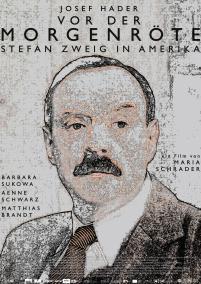
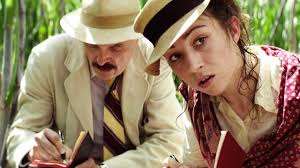
The new film just screening in Germany is called “Vor der Morgenroete” and features Josef Hader as Stefan Zweig and is produced by the actress, Maria Schrader who recently played a prominent role in the Channel 4 series, Deutschland 83.SZ2Vor der Morgenröte Plakat web_1

The film consists of  episodes from the life of the Austrian writer Stefan Zweig in exile. At the height of his worldwide fame, he is driven to emigrate and grows desperate in the face of knowledge of the downfall of Europe, which like Roth he already attempts to forsworn his fellow European intellectuals. This then is the story of a refugee, the story of the loss of the old world of the Hapsburg K und K and the search for a new home in America.SZ3

Stefan Zweig was a renowned  author German together with Thomas Mann the most translated in his time. Already in 1934, Zweig left his native Austria to go into exile from which he did not return. In her compelling and sensual opulent film Maria Schrader shows the world-famous author in six episodes from his life; his first stay in Brazil and the participation in the P.E.N.-Congress in Buenos Aires in 1936 about visiting New York City and his first wife Friderike in 1941 until his death in 1942 in Petrópolis. There, Zweig wrote his famous work “The Chess Game“. Josef Hader shines in the title role of the famous Austrian writer and pacifist Stefan Zweig. Barbara Sukowa as his first wife Friderike, also gave a convincing performance. Another strong impression was given by Aenne Schwarz as Zweig’s delicate and alluring second wife.http://www.youtube.com/watch?v=3wLiyFyfuB4

The film impressed me on several different levels. In 2015,I had visited in Munich, the following exhibition which showed much of the material, Zweig had collected and details of his first trips to America-http://www.literaturhaus-muenchen.de/ausstellung/items/141/vars/id-2015-stefanzweigausstellung.html It is clear that despite the recognition of his fame, Zweig found it difficult to settle in America;either in New York or in Yale or later in Brazil. (Verloren war die Welt von Gestern.) Yesterday’s world had disappeared, the Hotel Metropole in Vienna was now a Gestapo headquarters. Notably in Die Welt von Gestern, he noted how money came so readily to the Brownshirts and living in Salzberg he knew just how the racist menace grew. Sadly there are parallels with today and as Zweig remarked, Wer die Vergangenheit nicht versteht, versteht nichts wirklich. 


Categories
German Matters Uncategorized

Winterfeld Market,Berlin-a great experience

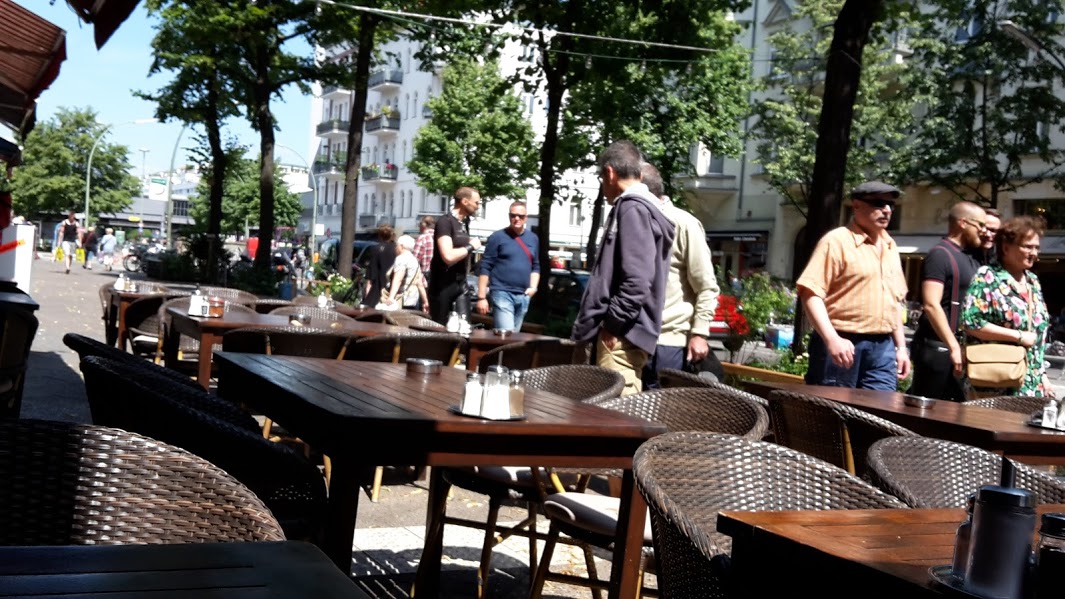
As most of Schoenefeld prepared for a huge Rainbow Festival, I ventured out into the neighbouring streets through Massenstrasse to the good-humoured crowd in Winterfeld Market. There was some comical exchanges between the punters and the stall holders. Myself, I was looking for a new and cheap hat to relieve the heat from the powerful Sun. There were plenty of hats on sale; I had lost a lovely hat that my daughter had given me in a windy day at Wansee when my beautiful, smart and I thought English looking hat was taken by a Windstoß or Böe blew my hat into a gated secluded villa. In the market there was a variety of hats for sale and yet more expensive at around 15 Euros than I wanted to pay-for just a few days. I thought I found what I was looking for only to discover it was fuer Kinder-and didn’t fit meine klein Kopf!W1

The variety of stalls with delicious cool fruit drinks, summer dresses, wurst stalls and varieties of olives, kebabs and much pickled cabbage on sale. The market is dominated by the lovely neo-Gothic St Matthias Church. In the heat, the smells from cooked meat and fish aded to the atmosphere. More details are at http://blog.sofitel-berlin-kurfurstendamm.com/unmissable-food-market-at-winterfeldtplatz/W

Interesting too was the multi-culti feel of the area. Finding Buddhas in a row outside the Catholic Church was a thought-provoking experience. After turning the corner, there was a great trio of singers who sang in an interesting accent-one sounded Liverpudlian.Wy When they sang, “Bei Mir bist du Schoene”, a tune with a lot of personal feeling for me, I could not resist a few mostly joyful tears. The music in the open air was beautiful and another couple of ladies sang more songs which had a Klezmer feel. It appears that there is a lovely community theatre here under threat from more capitalist development. Community cultural developments like this are so important for people’s development and expression. What a really lovely day!W6WxW4

Categories
German Matters Literature Poetry Uncategorized

“Yiddish songs pass like eternal prayers from generation to generation, from the heart to the mind, from the mind to the soul.” Elie Wiesel

Spiel mir ein kleines Leid auf Jiddisch

Issai Kulvianski Meine Eltern 1 1925 Berlimische Galerie
Issai Kulvianski
Meine Eltern 1
1925 Berlimische Galerie
Spiel mir ein kleines Leid auf Jiddisch,
Das Freude bringen soll und keinen bösen Überaschungen,
Das alle Menschen, groß wie klein,verstehen,
Von Mund zu Mund soll es gehen.
    Spiel,spiel,spiel Musikant,
    Du weißt schon, was ich meine und was ich will!
    Spiel, spiel mir ein Leid,
    Spiel eine Melodie, das Herz hat und Gefül.
Eine Leid ohne Seufzer und Tränen.
Spiel so, alles hören können,
Das alle sehen:ich liebe und kann noch singen!
Schöner noch und besser als zuvor.
    Spiel…
Spiel mir das Lied von Frieden-
Von Wirklem Frieden und nicht nur von einem Traum.
Daß alle Völker groß und klein
Sich miteinander verstehen sollen,
Ohne Kreig und Streit miteinander umgehen.
    Spiel…..
Laßt uns zusammen singen,
Wie gute Freunde, wie Kinder von einer Mutter.
Es ist meines einziges Verlangen, daß es frei und frank herausklingt,
Mein eigener und aller Menschen Gesang!
    Spiel,spiel,spiel Musikant,
    Du weißt schon, was ich meine und was ich will!
    Spiel, spiel mir ein Leid,
    Spiel eine Melodie, das Herz hat und Gefül.
(Source Jiddische Leider Hai & Topsy Frankl Fischer Maerz 1981)
(Information on the painter above is at http://thinknow-thinknow.blogspot.de/2013/10/a-mysterious-artist-issai-kulvianski.html }

Categories
German Matters Literature Poetry Uncategorized

More Klabund! A Love Poem

LIEBESLIED

Klabund

Dein Mund, der schön geschweifte,
Dein Lächeln, das mich streifte,
Dein Blick, der mich umarmte,
Dein Schoß, der mich erwarmte,
Dein Arm, der mich umschlungen,
Dein Wort, das mich umsungen,
Dein Haar, darein ich tauchte,
Dein Atem, der mich hauchte,
Dein Herz, das wilde Fohlen,
Die Seele unverhohlen,
Die Füße, welche liefen,
Als meine Lippen riefen -:
Gehört wohl mir, ist alles meins,
Wüßt nicht, was mir das liebste wär,
Und gäb nicht Höll noch Himmel her:
Eines und alles, all und eins.

Information and a great photograph of Klabund, Alfred Henschke, appears at http://www.salonkultur.de/termine/autoren/Alfred_Henschke/56/#.V3TCc7grLIU

One translation by computer gives this in English as:-

Your mouth, the beautifully curly
Your smile that touched me,
Your look that embraced me,
Your lap, which me attention
Your arm, which wrapped around,.
Your Word that me umsungen
Your hair in there I popped up,
Your breath that breathed me,
Your heart, the wild foals,
The soul openly,
The feet, which were,
When my lips called: –
Mine, probably, everything is mine,.
Not know what about me the dearest,
And instead of hell was here yet Heaven:
One and all, all and one.

Maybe Line 6 means something like “Your speech that rings around in my head”

Categories
Art and Photographic History German Matters

Berlin in the frame

http://www.bruecke-museum.de/

These are photographs of Berlin which I took in October 2013 and using a program from https://www.tuxpi.com/photo-effects/shape-tool, I tried some of the effects. I am not sure what exactly I think of the results.

An interesting piece on photographing people in Berlin is at:-http://www.iheartberlin.de/2016/06/01/what-we-learned-from-berlin/

Off Unter den Linden
Kurfürstendamm
Kurfürstendamm
Joseph Roth Diele
Joseph Roth Diele

Photo Shape Editor: https://www.tuxpi.com/photo-effects/shape-tool